
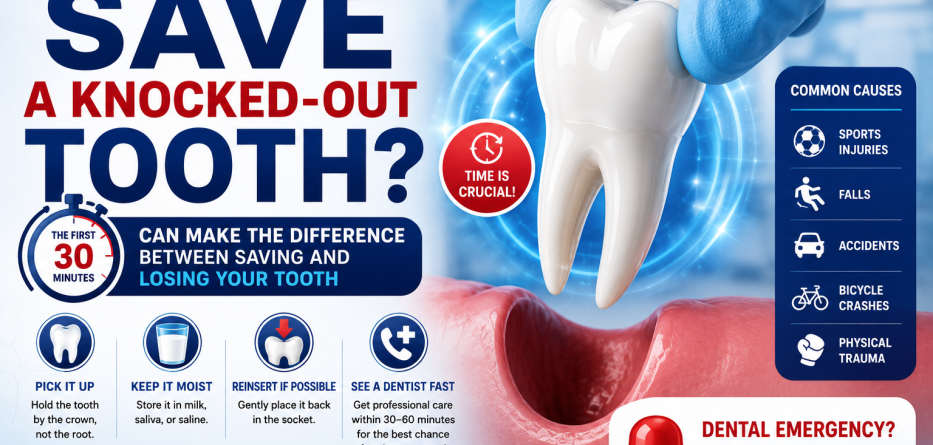
A knocked-out tooth can be a frightening experience, whether it happens during a sports injury, fall, accident, or unexpected impact. The good news is that in many cases, a knocked-out permanent tooth can be successfully saved and reattached if the right steps are taken quickly.
Time is the most critical factor. Acting within minutes can significantly improve the chances of saving the tooth and avoiding more extensive dental treatment later. Understanding what to do—and what not to do—can make all the difference in preserving your smile.
In this guide, we’ll explain how to handle a knocked-out tooth, when it can be saved, and the emergency steps you should take before reaching a dentist.
Can a Knocked-Out Tooth Be Saved?
Quick Answer
Yes, a knocked-out permanent tooth can often be saved if it is reinserted into the socket or properly stored and treated by a dentist within 30 to 60 minutes.
The sooner treatment begins, the greater the likelihood that the tooth can successfully reattach to the surrounding tissues.
What Is a Knocked-Out Tooth?
A knocked-out tooth, also known as an avulsed tooth, occurs when a tooth is completely displaced from its socket due to trauma.
Common causes include:
- Sports injuries
- Falls
- Car accidents
- Physical altercations
- Bicycle accidents
- Playground injuries
A knocked-out permanent tooth is considered a true dental emergency.
Why Time Matters
The cells on the root surface begin to die once the tooth is removed from its socket.
Best Time Frames for Success
| Time After Injury | Chance of Saving Tooth |
|---|---|
| Within 30 Minutes | Excellent |
| 30–60 Minutes | Good |
| 1–2 Hours | Reduced |
| Over 2 Hours | Significantly Lower |
Immediate action greatly improves treatment outcomes.
Step-by-Step: What to Do If a Tooth Gets Knocked Out
Step 1: Stay Calm
Although the situation can be stressful, staying calm allows you to act quickly and correctly.
Locate the tooth immediately.
Step 2: Pick Up the Tooth Correctly
Always handle the tooth by the crown (the visible chewing surface).
Avoid
- Touching the root
- Scrubbing the tooth
- Removing attached tissue fragments
Damage to the root surface can reduce the chance of successful reattachment.
Step 3: Gently Rinse the Tooth
If the tooth is dirty:
- Rinse gently with milk or saline solution.
- If unavailable, use clean water briefly.
Do Not
- Scrub the tooth
- Use soap
- Dry the tooth
The goal is to preserve the living cells on the root.
Step 4: Reinsert the Tooth If Possible
If you feel comfortable doing so:
- Carefully place the tooth back into the socket.
- Ensure it faces the correct direction.
- Bite gently on gauze or a clean cloth to keep it in place.
This is often the best option for preserving the tooth.
Step 5: Store the Tooth Properly
If reinsertion isn’t possible, keep the tooth moist.
Best Storage Options
- Cold milk
- Saline solution
- Inside the cheek (for adults only)
- Tooth preservation kits
Avoid
- Wrapping the tooth in tissue
- Storing it dry
- Leaving it exposed to air
Dry storage dramatically reduces survival rates.
Step 6: Contact an Emergency Dentist Immediately
Seek professional care as quickly as possible.
A dentist will:
- Evaluate the tooth
- Clean the socket
- Reposition the tooth if necessary
- Stabilize it with a splint
- Monitor healing
Prompt treatment is critical for success.
What Happens at the Dentist?
Emergency treatment usually involves:
Examination
The dentist assesses the following:
- Tooth condition
- Root damage
- Bone injury
- Gum injury
Reimplantation
If the tooth has not already been reinserted, the dentist may place it back into the socket.
Stabilization
A flexible splint may be attached to neighboring teeth for several weeks.
Follow-Up Care
Additional treatment may include:
- Root canal therapy
- Monitoring bone healing
- Regular evaluations
Can Baby Teeth Be Reinserted?
No.
If a baby tooth is knocked out, it should generally not be reinserted.
Attempting to replace a primary tooth may damage the developing permanent tooth underneath.
Parents should still contact a dentist for evaluation and guidance.
Signs You Need Immediate Emergency Dental Care
Seek urgent treatment if:
- A permanent tooth has been knocked out
- Significant bleeding continues
- Severe pain develops
- Jaw injury is suspected
- Multiple teeth are involved
These situations require immediate professional attention.
What If the Tooth Cannot Be Saved?
Sometimes the damage is too severe or treatment is delayed.
Modern dentistry offers several replacement options:
Dental Implants
The most durable and natural-looking replacement option.
Dental Bridges
Replace missing teeth by anchoring to neighboring teeth.
Partial Dentures
Removable appliances that restore appearance and function.
Your dentist can recommend the best solution based on your individual needs.
How to Prevent Knocked-Out Teeth
Prevention is always better than emergency treatment.
Protective Measures
- Wear sports mouthguards
- Use helmets during activities
- Avoid chewing hard objects
- Address protruding teeth with orthodontics
- Follow workplace safety guidelines
Custom mouthguards provide the highest level of protection.
Long-Term Outlook After Reimplantation
The prognosis depends on:
- Time outside the mouth
- Storage conditions
- Root damage
- Patient age
- Quality of treatment
Many successfully reimplanted teeth function for years with proper care and monitoring.
Frequently Asked Questions
Can a knocked-out tooth really be saved?
Yes. Many permanent teeth can be successfully saved if treated quickly.
How long can a tooth survive outside the mouth?
The best outcomes occur within 30 to 60 minutes after injury.
Should I put a knocked-out tooth in water?
No. Water can damage root cells. Milk is generally a better storage medium.
Can a dentist reattach a knocked-out tooth?
Yes. Dentists can often reimplant and stabilize the tooth if treatment is prompt.
What happens if the tooth can’t be saved?
Replacement options such as dental implants, bridges, or dentures may be recommended.
Is a knocked-out baby tooth an emergency?
Yes, but baby teeth are usually not reinserted. A dentist should still evaluate the injury.
Conclusion
So, can you save a knocked-out tooth?
In many cases, yes—but quick action is essential. Handling the tooth properly, keeping it moist, and seeking emergency dental care within the first hour can dramatically increase the chances of successful reimplantation.
Knowing what to do during a dental emergency can help preserve your natural tooth, reduce complications, and protect your long-term oral health. If a tooth is ever knocked out, remember: every minute counts.
