

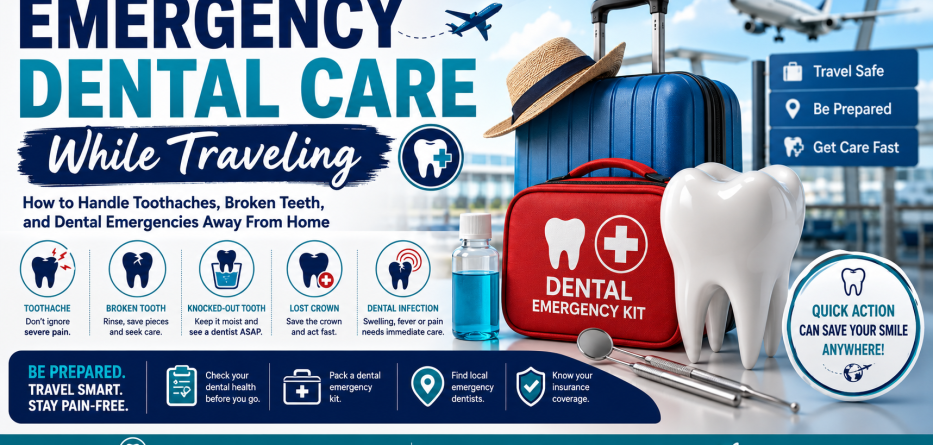
Traveling is exciting, whether you’re heading on vacation, a business trip, or visiting family. However, dental emergencies can happen unexpectedly and quickly turn an enjoyable trip into a stressful experience. A sudden toothache, broken tooth, lost crown, or dental infection can cause significant discomfort and disrupt your travel plans.
Knowing how to handle a dental emergency while traveling can help minimize pain, prevent complications, and ensure you receive the care you need as quickly as possible.
In this guide, we’ll cover common dental emergencies travelers face, what immediate steps to take, how to find emergency dental care, and tips to avoid dental problems during your trip.
What Is Considered a Dental Emergency While Traveling?
A dental emergency is any oral health problem that requires immediate attention to relieve pain, stop bleeding, save a tooth, or prevent an infection from worsening.
Common Travel Dental Emergencies
- Severe toothache
- Knocked-out tooth
- Chipped or broken tooth
- Lost filling or crown
- Dental abscess
- Broken dentures
- Damaged braces or wires
- Gum swelling or infection
Prompt treatment can often prevent more serious complications.
Why Dental Emergencies During Travel Can Be Challenging
Being away from your regular dentist presents unique challenges.
Common Difficulties
- Finding a qualified emergency dentist
- Language barriers in foreign countries
- Limited access to dental records
- Travel insurance concerns
- Difficulty locating after-hours care
Preparation and quick action can help overcome these obstacles.
Emergency #1: Severe Toothache While Traveling
A severe toothache can make sightseeing, eating, and sleeping difficult.
What to Do
- Rinse your mouth with warm water.
- Floss carefully to remove trapped food.
- Take over-the-counter pain medication if appropriate.
- Apply a cold compress for swelling.
- Contact a local dentist as soon as possible.
Avoid
- Placing aspirin directly on the gums
- Ignoring persistent pain
A toothache may indicate infection or advanced decay that requires professional treatment.
Emergency #2: Knocked-Out Tooth
A knocked-out permanent tooth requires immediate action.
What to Do
- Pick up the tooth by the crown.
- Avoid touching the root.
- Rinse gently if dirty.
- Reinsert it into the socket if possible.
- If not, store it in milk or saliva.
- Seek emergency dental care immediately.
Time Matters
The best chance of saving the tooth is within 30 to 60 minutes after the injury.
Emergency #3: Broken or Cracked Tooth
Accidents, falls, and biting hard foods can cause tooth fractures.
Immediate Steps
- Rinse your mouth with warm water.
- Save broken tooth fragments.
- Apply a cold compress.
- Avoid chewing on the affected side.
- Contact an emergency dentist.
Prompt treatment can prevent infection and additional damage.
Emergency #4: Lost Filling or Crown
A lost filling or crown can expose sensitive tooth structures.
What to Do
- Save the crown if possible.
- Use temporary dental cement from a pharmacy if available.
- Avoid chewing on the affected tooth.
- Schedule emergency dental treatment.
Temporary solutions should never replace professional care.
Emergency #5: Dental Abscess
A dental abscess is a serious infection that requires immediate attention.
Symptoms
- Severe tooth pain
- Facial swelling
- Fever
- Bad taste in the mouth
- Swollen gums
Immediate Care
- Rinse with warm saltwater.
- Stay hydrated.
- Contact an emergency dentist immediately.
Warning
Untreated infections can spread beyond the mouth and become serious medical emergencies.
How to Find Emergency Dental Care While Traveling
Contact Your Regular Dentist
Many dentists can:
- Offer guidance over the phone
- Recommend a trusted provider
- Transfer records if needed
Search Local Dental Clinics
Look for:
- Emergency dental services
- Same-day appointments
- Positive patient reviews
Use Hotel or Travel Assistance Services
Many hotels and travel providers can help locate nearby dental clinics.
Contact Your Travel Insurance Provider
Your insurer may recommend approved dental providers and explain coverage details.
What to Pack in a Dental Travel Emergency Kit
A small dental emergency kit can be invaluable during travel.
Essential Items
- Dental floss
- Pain relievers
- Temporary dental cement
- Orthodontic wax
- Gauze pads
- Small container with lid
- Salt packets
- Antibacterial mouth rinse
These items can provide temporary relief until professional care is available.
Dental Emergencies During International Travel
If you’re traveling abroad:
Keep Important Information Available
Carry:
- Dental insurance details
- Emergency contacts
- Medical history
- Medication list
- Copies of recent dental records if possible
Consider Translation Assistance
Knowing a few basic dental terms or using translation apps can help communicate symptoms effectively.
Preventing Dental Emergencies Before Your Trip
Many travel-related dental emergencies can be avoided.
Schedule a Dental Checkup
Visit your dentist before traveling if:
- You have untreated dental problems
- You recently had dental work
- You experience occasional tooth pain
Avoid Risky Foods
Be cautious with:
- Hard candies
- Ice cubes
- Popcorn kernels
- Extremely hard nuts
Wear a Mouthguard
If participating in sports or adventure activities, wear appropriate protective gear.
When to Visit the Emergency Room Instead of a Dentist
Some dental emergencies require immediate medical attention.
Go to the ER If You Experience the Following:
- Severe facial swelling
- Difficulty breathing
- Difficulty swallowing
- Uncontrolled bleeding
- Suspected jaw fracture
- Significant facial trauma
These situations may involve serious medical complications beyond routine dental care.
Frequently Asked Questions
What should I do if I have a toothache while traveling?
Rinse with warm water, take appropriate pain medication, and contact a local dentist as soon as possible.
Can a knocked-out tooth be saved while traveling?
Yes. Quick action within 30–60 minutes significantly improves the chances of saving the tooth.
Does travel insurance cover dental emergencies?
Some travel insurance plans include emergency dental coverage. Review your policy before traveling.
Should I see a dentist immediately for a cracked tooth?
Yes. Prompt evaluation helps prevent infection and further damage.
What should be included in a dental emergency travel kit?
Pain relievers, dental floss, temporary dental cement, gauze, orthodontic wax, and antibacterial rinse are recommended.
Conclusion
Dental emergencies can happen anywhere, including while you’re traveling. Knowing how to respond quickly and effectively can reduce pain, protect your oral health, and even save a tooth.
Whether you’re dealing with a severe toothache, broken tooth, lost crown, or dental infection, prompt action and professional care are essential. Preparing ahead with a dental checkup and emergency travel kit can help ensure that unexpected dental problems don’t ruin your trip.
A little preparation today can make all the difference when a dental emergency occurs away from home.

