
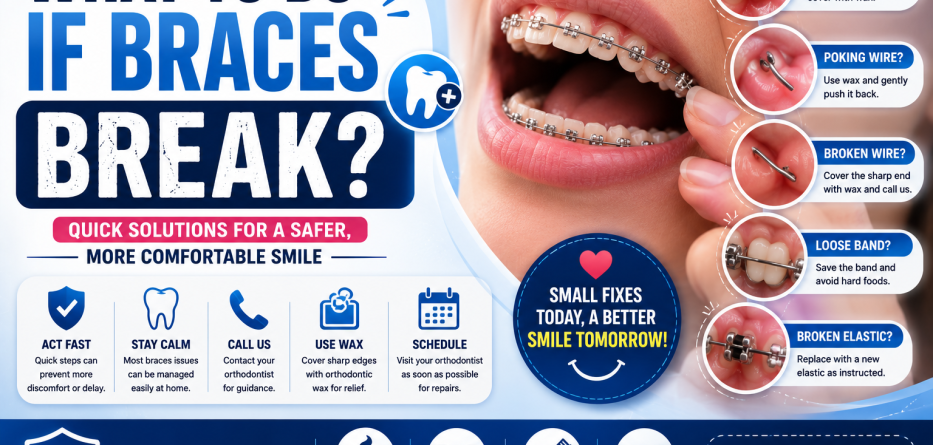
Braces are an effective orthodontic treatment that helps straighten teeth and improve oral health. However, like any dental appliance, braces can occasionally break or become damaged. A loose bracket, poking wire, broken band, or damaged retainer can cause discomfort and may interfere with your treatment progress if not addressed promptly.
Knowing what to do if your braces break can help prevent further damage, reduce pain, and keep your orthodontic treatment on track until you can visit your orthodontist.
In this guide, we’ll cover the most common braces emergencies, immediate first-aid solutions, and when to seek professional orthodontic care.
Are Broken Braces an Emergency?
Not all broken braces require immediate emergency treatment, but they should never be ignored.
Minor Braces Issues
These can often wait a few days:
- Loose bracket
- Poking wire
- Missing elastic band
- Slightly bent wire
Serious Orthodontic Emergencies
Contact your orthodontist immediately if you experience:
- Severe pain
- Significant swelling
- Trauma to the mouth
- Broken appliance causing injury
- Difficulty eating or speaking
Prompt treatment helps prevent delays in your orthodontic progress.
Common Reasons Braces Break
Braces can become damaged for several reasons.
Common Causes
- Eating hard foods
- Chewing sticky candy
- Sports injuries
- Teeth grinding
- Playing with braces using fingers or tongue
- Poor oral habits
Understanding these causes can help prevent future problems.
What to Do If a Bracket Becomes Loose
A loose bracket is one of the most common orthodontic problems.
Signs of a Loose Bracket
- Bracket moves along the wire
- Bracket feels detached from the tooth
- Mild discomfort while chewing
What to Do
- Leave the bracket attached if possible.
- Avoid touching or pulling it.
- Cover sharp areas with orthodontic wax.
- Contact your orthodontist to schedule a repair.
Avoid
- Attempting to remove the bracket yourself.
- Using glue or household adhesives.
What to Do If a Wire Is Poking Your Cheek or Gums
As teeth shift, orthodontic wires may occasionally extend beyond the brackets.
Temporary Solutions
- Apply orthodontic wax to the sharp end.
- Use a cotton swab to gently reposition the wire.
- Rinse with warm saltwater.
When to Call the Orthodontist
If the wire causes persistent pain, bleeding, or irritation, schedule an appointment as soon as possible.
What to Do If an Orthodontic Wire Breaks
A broken archwire can become uncomfortable and interfere with treatment.
Immediate Steps
- Cover the sharp end with orthodontic wax.
- Avoid chewing hard foods.
- Contact your orthodontist promptly.
Do not attempt to cut the wire unless specifically instructed by your orthodontist.
What to Do If a Band Comes Loose
Orthodontic bands are metal rings that fit around certain teeth.
If a Band Falls Off
- Save the band if possible.
- Avoid chewing sticky or hard foods.
- Schedule a repair appointment.
A loose band can reduce treatment effectiveness if left untreated.
What to Do If Rubber Bands Break
Many orthodontic patients wear elastic bands to improve bite alignment.
If a Rubber Band Breaks
- Replace it using your orthodontist’s instructions.
- Use only approved replacement elastics.
- Continue wearing them as directed.
Never substitute household rubber bands.
What to Do If a Spacer Falls Out
Spacers create room between teeth before certain orthodontic procedures.
If a Spacer Comes Out
Contact your orthodontist for guidance.
In some cases, replacement may not be necessary if sufficient space has already developed.
What to Do If You Swallow a Braces Component
Swallowing a small orthodontic component is uncommon but can happen.
What to Do
- Stay calm.
- Monitor for symptoms.
- Contact your orthodontist for advice.
Seek Immediate Medical Attention If You Experience
- Difficulty breathing
- Persistent coughing
- Chest pain
- Difficulty swallowing
Inhaled components require emergency medical care.
How to Relieve Discomfort Until Your Appointment
Broken braces can cause temporary irritation.
Helpful Remedies
- Orthodontic wax
- Warm saltwater rinses
- Cold compresses
- Soft foods
- Over-the-counter pain relievers (if appropriate)
These measures can help improve comfort while waiting for treatment.
Foods to Avoid When Braces Are Damaged
To prevent additional problems, avoid:
Hard Foods
- Ice
- Nuts
- Hard candy
- Popcorn kernels
Sticky Foods
- Caramel
- Chewing gum
- Taffy
Crunchy Foods
- Chips
- Hard crackers
- Raw carrots
Choose soft foods until repairs are completed.
How to Prevent Braces from Breaking
Good habits can significantly reduce orthodontic emergencies.
Prevention Tips
- Follow dietary guidelines.
- Wear a mouthguard during sports.
- Avoid chewing on pens or pencils.
- Maintain proper oral hygiene.
- Attend scheduled orthodontic appointments.
- Avoid using teeth as tools.
These simple precautions help protect your braces and keep treatment progressing smoothly.
When to Contact Your Orthodontist Immediately
Call your orthodontist if you experience:
- Severe pain
- Significant swelling
- Broken appliances causing injury
- Major wire damage
- Trauma affecting braces
- Infection symptoms
Prompt care prevents complications and treatment delays.
Frequently Asked Questions
Is a broken bracket an emergency?
Usually not. However, you should contact your orthodontist to schedule a repair as soon as possible.
Can I continue wearing braces if a wire breaks?
Yes, but you should contact your orthodontist promptly and use orthodontic wax to protect soft tissues.
What happens if I don’t fix broken braces?
Untreated damage can delay treatment progress and may lead to discomfort or additional orthodontic problems.
Can I cut a poking wire myself?
Only if specifically instructed by your orthodontist. Improper cutting can create additional issues.
How quickly should broken braces be repaired?
Most issues should be addressed within a few days to avoid treatment delays.
Conclusion
Broken braces can be frustrating, but most orthodontic emergencies can be managed safely until professional treatment is available. Understanding what to do if braces break helps reduce discomfort, prevent additional damage, and keep your orthodontic treatment on track.
Whether you’re dealing with a loose bracket, broken wire, or damaged appliance, taking the right steps and contacting your orthodontist promptly will help ensure a smooth and successful treatment journey toward a healthier, straighter smile.
