

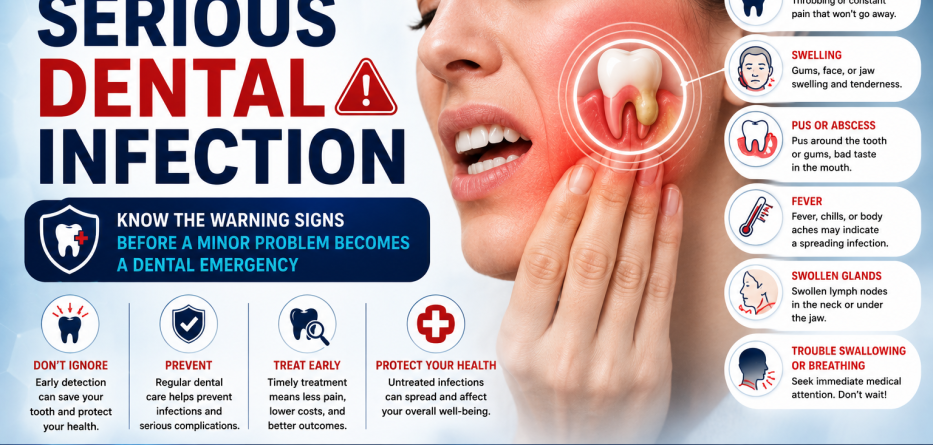
A dental infection is more than just a painful toothache. When left untreated, an infection in the tooth, gums, or surrounding tissues can spread to other parts of the body and lead to serious health complications. Recognizing the warning signs early can help prevent tooth loss, severe pain, and potentially life-threatening conditions.
Many people assume dental infections will go away on their own, but this is rarely the case. In most situations, professional dental treatment is necessary to eliminate the infection and protect your oral and overall health.
In this article, we’ll discuss the common signs of a serious dental infection, possible causes, treatment options, and when to seek emergency dental care.
What Is a Dental Infection?
A dental infection occurs when bacteria enter the tooth, gums, or surrounding tissues and begin to multiply. This often results in inflammation, pain, swelling, and the formation of pus.
Common types of dental infections include:
- Tooth abscess
- Gum abscess
- Periodontal infection
- Root canal infection
- Periapical abscess
Without treatment, the infection can spread to nearby tissues, the jawbone, sinuses, and even the bloodstream.
What Causes Dental Infections?
Dental infections typically develop when bacteria gain access to the inner structures of the tooth or gum tissue.
Common Causes
- Untreated cavities
- Cracked or broken teeth
- Gum disease
- Poor oral hygiene
- Failed dental restorations
- Dental trauma
- Weakened immune system
Regular dental checkups can help identify these issues before an infection develops.
Warning Signs of a Serious Dental Infection
1. Severe, Persistent Tooth Pain
One of the earliest signs of a dental infection is intense or continuous tooth pain.
The pain may:
- Throb constantly
- Worsen when chewing
- Radiate to the jaw, ear, or neck
- Become more severe over time
Persistent pain should never be ignored.
2. Swelling in the Gums, Face, or Jaw
Swelling often indicates that the infection is spreading beyond the affected tooth.
You may notice:
- Puffy gums
- Facial swelling
- Jaw swelling
- Tenderness around the infected area
Facial swelling is considered a serious warning sign and requires prompt evaluation.
3. Pus Around the Tooth or Gums
Pus is a clear indication of infection.
Signs may include:
- White or yellow discharge
- Swollen gum boils
- Bad taste in the mouth
- Fluid drainage from the gums
The presence of pus typically indicates an abscess requiring professional treatment.
4. Persistent Bad Breath
Chronic bad breath that doesn’t improve with brushing or mouthwash may signal a bacterial infection.
This occurs because bacteria release foul-smelling compounds as they multiply.
If bad breath is accompanied by pain or swelling, a dental examination is recommended.
5. Fever
A fever may indicate that the infection is affecting your body’s immune system.
Symptoms may include:
- Elevated body temperature
- Chills
- Sweating
- Fatigue
A fever combined with dental pain or swelling should be treated as a medical concern.
6. Swollen Lymph Nodes
The lymph nodes under the jaw and in the neck may become enlarged when the body is fighting infection.
Signs include:
- Tenderness in the neck
- Swelling beneath the jawline
- Pain when touching the area
Swollen lymph nodes often indicate that the infection is becoming more widespread.
7. Difficulty Chewing or Biting
Inflammation and infection can make it painful to chew food.
You may experience:
- Sharp pain when biting
- Sensitivity to pressure
- Difficulty eating certain foods
This symptom often suggests involvement of the tooth root or surrounding tissues.
8. Sensitivity to Hot and Cold
An infected tooth may become extremely sensitive to:
- Hot drinks
- Cold beverages
- Sweet foods
If sensitivity persists long after exposure to temperature changes, it may indicate nerve involvement.
9. Bad Taste in the Mouth
An unpleasant taste can occur when an abscess drains into the mouth.
Patients often describe it as:
- Bitter
- Metallic
- Foul-tasting
This symptom frequently accompanies pus discharge.
10. Difficulty Swallowing or Breathing
This is one of the most serious signs of a spreading dental infection.
Seek emergency medical care immediately if you experience:
- Difficulty swallowing
- Difficulty breathing
- Swelling affecting the throat
- Rapidly spreading facial swelling
These symptoms may indicate a severe infection that requires urgent treatment.
When Does a Dental Infection Become an Emergency?
A dental infection becomes an emergency when it begins affecting surrounding tissues or overall health.
Seek Immediate Care If You Have:
- Significant facial swelling
- Fever
- Difficulty breathing
- Difficulty swallowing
- Severe pain
- Rapidly spreading infection
- Excessive pus drainage
Prompt treatment can prevent hospitalization and serious complications.
Potential Complications of Untreated Dental Infections
Ignoring a dental infection can lead to serious health risks.
Possible Complications
- Tooth loss
- Jawbone infection
- Gum destruction
- Sinus infections
- Bloodstream infection (sepsis)
- Hospitalization
In rare cases, untreated infections can become life-threatening.
How Dentists Treat Dental Infections
Treatment depends on the severity and location of the infection.
Common Treatments
Root Canal Therapy
Removes infected tissue while preserving the natural tooth.
Drainage of Abscess
Releases accumulated pus and reduces pressure.
Antibiotics
May be prescribed when the infection has spread or is causing systemic symptoms.
Tooth Extraction
Necessary when a tooth cannot be saved.
Early treatment often allows for more conservative options.
How to Prevent Dental Infections
Preventive care is the best defense against serious dental infections.
Prevention Tips
- Brush twice daily
- Floss every day
- Attend regular dental checkups
- Treat cavities early
- Avoid tobacco products
- Replace damaged restorations promptly
- Maintain a healthy diet
Good oral hygiene significantly reduces infection risk.
Frequently Asked Questions
How do I know if my dental infection is serious?
Signs such as facial swelling, fever, pus, difficulty swallowing, and severe pain may indicate a serious infection.
Can a dental infection go away on its own?
No. Most dental infections require professional treatment to eliminate the source of infection.
Is a tooth abscess dangerous?
Yes. Untreated abscesses can spread to surrounding tissues and potentially become life-threatening.
Should I go to the emergency room for a dental infection?
Yes, if you experience difficulty breathing, swallowing, significant swelling, or a high fever.
What happens if a dental infection spreads?
The infection can spread to the jaw, sinuses, neck, bloodstream, and other parts of the body.
Conclusion
Recognizing the signs of a serious dental infection is essential for protecting both your oral and overall health. Symptoms such as severe tooth pain, swelling, pus, fever, and difficulty swallowing should never be ignored.
The sooner a dental infection is diagnosed and treated, the greater the chances of preserving the affected tooth and preventing serious complications. If you notice any warning signs, contact your dentist immediately to receive prompt and effective care.

