

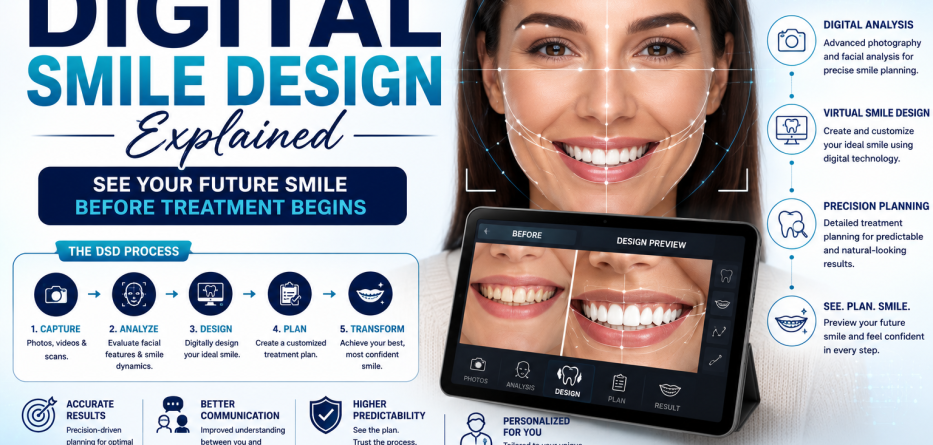
A beautiful smile can boost confidence, improve first impressions, and enhance overall quality of life. Thanks to advancements in dental technology, achieving the perfect smile is now more predictable than ever. One of the most innovative developments in cosmetic dentistry is Digital Smile Design (DSD).
Digital Smile Design is a modern treatment planning system that uses digital technology to analyze, design, and preview a patient’s future smile before treatment even begins. By combining facial analysis, photography, video, and advanced software, dentists can create highly personalized smile transformations that align with a patient’s facial features and aesthetic goals.
In this guide, we’ll explain what Digital Smile Design is, how it works, its benefits, and why it’s becoming a popular choice for smile makeover treatments.
What Is Digital Smile Design?
Digital Smile Design (DSD) is a digital planning process that allows dentists to design a patient’s ideal smile using advanced imaging and software technology.
Rather than relying solely on traditional impressions and visual estimations, DSD uses digital tools to create a customized treatment plan based on the following:
- Facial proportions
- Lip position
- Gum line
- Tooth shape
- Tooth size
- Smile dynamics
Quick Definition
Digital Smile Design is a technology-driven cosmetic dentistry process that allows patients and dentists to visualize and plan smile enhancements before treatment begins.
How Does Digital Smile Design Work?
The DSD process involves several carefully planned steps.
Step 1: Digital Photography and Video Analysis
The dentist captures the following:
- High-resolution facial photographs
- Smile photographs
- Intraoral images
- Short videos of facial movements
These records help evaluate how the smile interacts with facial expressions.
Step 2: Digital Smile Analysis
Specialized software analyzes:
- Facial symmetry
- Tooth proportions
- Lip dynamics
- Gum display
- Smile line
The goal is to create a smile that complements the patient’s overall appearance.
Step 3: Virtual Smile Design
Using advanced software, the dentist digitally designs the proposed smile.
Adjustments may include:
- Tooth length
- Tooth width
- Tooth position
- Tooth color
- Smile curvature
Patients can preview potential results before treatment starts.
Step 4: Treatment Planning
Once the design is approved, the dentist develops a customized treatment plan.
This may involve:
- Veneers
- Teeth whitening
- Dental crowns
- Orthodontics
- Dental implants
- Gum contouring
Step 5: Mock-Up and Smile Trial
In many cases, patients can experience a temporary mock-up of their future smile.
This allows them to:
- Evaluate aesthetics
- Assess comfort
- Request modifications
The result is greater confidence and satisfaction.
Why Is Digital Smile Design Important?
Traditional cosmetic dentistry often relied heavily on the dentist’s artistic interpretation.
Digital Smile Design improves communication and precision by allowing both dentist and patient to participate in the planning process.
Key Benefits
- Greater treatment accuracy
- Enhanced patient involvement
- Improved predictability
- Better communication
- Personalized smile outcomes
Benefits of Digital Smile Design
1. See Your Future Smile Before Treatment
One of the biggest advantages of DSD is visualization.
Patients can preview how their smile may look before making treatment decisions.
Benefits include:
- Reduced uncertainty
- Increased confidence
- Better treatment acceptance
2. Highly Personalized Results
Every smile is unique.
DSD takes into account the following:
- Facial shape
- Age
- Gender
- Personality
- Aesthetic preferences
This creates a smile that looks natural and harmonious.
3. Improved Treatment Planning
Digital tools allow dentists to identify potential challenges early.
Advantages include:
- More accurate measurements
- Better case analysis
- Enhanced treatment coordination
This reduces surprises during treatment.
4. Better Communication
Digital Smile Design improves communication between
- Dentist and patient
- Cosmetic dentist and laboratory
- Specialists involved in treatment
Everyone works toward the same visual goal.
5. Increased Treatment Predictability
Because treatment is digitally planned, outcomes become more predictable.
Patients know what to expect before treatment begins.
Who Is a Good Candidate for Digital Smile Design?
Digital Smile Design is ideal for individuals seeking cosmetic improvements such as the following:
- Discolored teeth
- Chipped teeth
- Worn teeth
- Uneven teeth
- Gaps between teeth
- Crooked teeth
- Missing teeth
It is commonly used for comprehensive smile makeover cases.
Treatments That Can Be Planned Using DSD
Porcelain Veneers
DSD helps design the ideal shape and size of veneers.
Dental Crowns
Digital planning improves aesthetics and function.
Orthodontic Treatment
Aligners and braces can be integrated into smile design plans.
Dental Implants
Implant placement can be guided by the final smile design.
Gum Contouring
Digital analysis helps achieve balanced gum aesthetics.
Digital Smile Design vs Traditional Smile Makeovers
| Feature | Digital Smile Design | Traditional Planning |
|---|---|---|
| Smile Preview | Yes | Limited |
| Facial Analysis | Comprehensive | Basic |
| Patient Involvement | High | Moderate |
| Precision | Excellent | Good |
| Predictability | High | Moderate |
| Communication | Enhanced | Traditional |
DSD provides a more interactive and patient-centered experience.
Technology Behind Digital Smile Design
Modern DSD systems often incorporate the following:
- Digital photography
- Intraoral scanners
- CAD/CAM technology
- 3D imaging
- Smile design software
- Digital wax-ups
These technologies work together to improve precision and efficiency.
Is Digital Smile Design Worth It?
For many patients, the answer is yes.
Benefits include:
- Greater confidence in treatment decisions
- More predictable results
- Personalized smile aesthetics
- Improved communication
- Enhanced patient satisfaction
The ability to preview outcomes often makes cosmetic dental treatment more comfortable and less stressful.
Frequently Asked Questions
What is Digital Smile Design?
Digital Smile Design is a digital planning system that allows dentists and patients to visualize smile improvements before treatment begins.
Is Digital Smile Design only for cosmetic dentistry?
It is primarily used for cosmetic treatments but can also support restorative and implant dentistry.
Can I see my new smile before treatment?
Yes. One of the main advantages of DSD is the ability to preview proposed results.
Is Digital Smile Design accurate?
Yes. Advanced software and digital imaging provide highly accurate treatment planning.
Does DSD improve treatment outcomes?
Digital planning helps improve predictability, communication, and patient satisfaction.
Conclusion
Digital Smile Design has transformed the way cosmetic dentistry is planned and delivered. By combining advanced technology, facial analysis, and personalized treatment planning, DSD allows patients to visualize their future smiles before treatment begins.
Whether you’re considering veneers, dental implants, crowns, orthodontics, or a complete smile makeover, Digital Smile Design offers a more predictable, customized, and patient-focused approach. As digital dentistry continues to evolve, DSD is quickly becoming one of the most valuable tools for creating beautiful, confident smiles.

