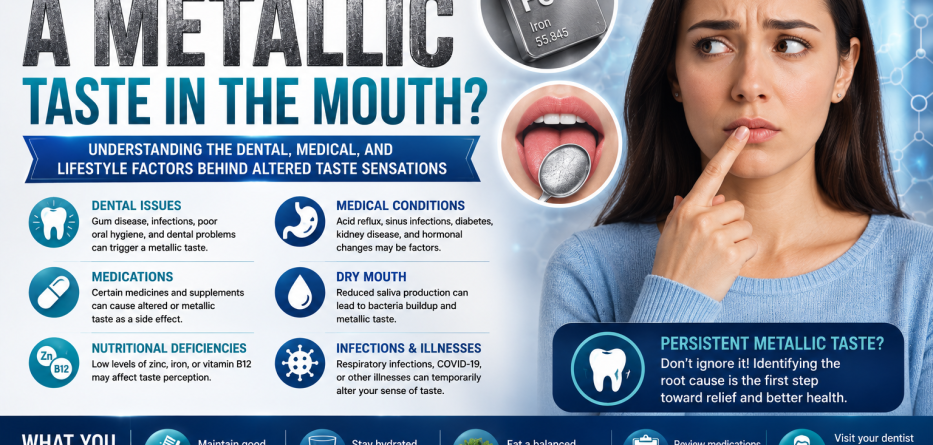
Have you ever noticed a persistent metallic taste in your mouth even when you haven’t eaten anything unusual? While it may seem like a minor inconvenience, a metallic taste can sometimes indicate an underlying dental, medical, or lifestyle-related issue.
Known medically as dysgeusia, a metallic taste can affect how food tastes, reduce appetite, and impact overall quality of life. The good news is that in many cases, the cause is temporary and treatable.
In this article, we’ll explore the most common causes of a metallic taste in the mouth, when to seek professional help, and what you can do to improve your symptoms.
What Is a Metallic Taste in the Mouth?
A metallic taste occurs when you experience an unusual flavor that resembles metal, coins, or blood.
This sensation may be
- Constant
- Intermittent
- Mild or severe
- Accompanied by other symptoms
A metallic taste often results from changes in taste perception, oral health problems, medications, or underlying medical conditions.
Quick Definition
A metallic taste in the mouth is an altered sense of taste that may be caused by oral health issues, medications, infections, nutritional deficiencies, or medical conditions affecting taste and smell.
Common Causes of a Metallic Taste in the Mouth
1. Poor Oral Hygiene
One of the most common causes is inadequate oral hygiene.
Bacteria buildup can lead to:
- Plaque accumulation
- Gum disease
- Tooth decay
- Oral infections
These conditions may produce unpleasant tastes and odors.
What to Do
- Brush twice daily
- Floss regularly
- Use antibacterial mouthwash
- Schedule professional dental cleanings
2. Gum Disease
Gingivitis and periodontal disease can affect the gums and surrounding tissues.
Symptoms may include:
- Bleeding gums
- Swelling
- Bad breath
- Metallic taste
As bacteria multiply around the gums, unpleasant tastes often develop.
3. Certain Medications
Many prescription and over-the-counter medications can alter taste perception.
Common examples include:
- Antibiotics
- Blood pressure medications
- Antidepressants
- Antihistamines
- Chemotherapy drugs
- Diabetes medications
The metallic taste usually improves after medication adjustments or completion.
4. Vitamin and Mineral Deficiencies
Nutritional deficiencies can interfere with normal taste function.
Common deficiencies include:
- Zinc deficiency
- Vitamin B12 deficiency
- Iron deficiency
These nutrients play important roles in maintaining healthy taste receptors.
5. Dental Infections and Abscesses
An untreated tooth infection can cause the following:
- Metallic taste
- Bad breath
- Swelling
- Severe tooth pain
Dental abscesses require prompt treatment to prevent complications.
6. Dry Mouth (Xerostomia)
Saliva helps cleanse the mouth and maintain proper taste function.
Reduced saliva production may result from:
- Dehydration
- Medications
- Medical conditions
- Radiation therapy
A dry mouth often contributes to altered taste sensations.
7. Respiratory Infections
Colds, sinus infections, and other respiratory illnesses can temporarily affect taste and smell.
Common causes include:
- Sinusitis
- Flu
- Allergies
- Upper respiratory infections
Symptoms often improve once the infection resolves.
8. COVID-19 and Viral Illnesses
One of the well-known symptoms of COVID-19 was altered taste and smell.
Patients sometimes reported the following:
- Metallic taste
- Loss of taste
- Distorted taste sensations
Although most individuals recover fully, symptoms can occasionally persist.
9. Pregnancy
Hormonal changes during pregnancy can affect taste perception.
Many pregnant women experience the following:
- Metallic taste
- Food aversions
- Changes in smell sensitivity
These symptoms are typically most noticeable during the first trimester.
10. Acid Reflux (GERD)
Gastroesophageal reflux disease (GERD) occurs when stomach acid flows back into the esophagus.
This can create:
- Sour taste
- Metallic taste
- Burning sensation
- Chronic throat irritation
Managing reflux often improves taste-related symptoms.
11. Exposure to Chemicals or Metals
Certain environmental exposures may contribute to a metallic taste.
Possible sources include:
- Mercury
- Lead
- Copper
- Industrial chemicals
Persistent symptoms should be evaluated by a healthcare professional.
12. Neurological Conditions
Taste perception depends on healthy nerve function.
Some neurological disorders may affect taste, including:
- Multiple sclerosis
- Parkinson’s disease
- Bell’s palsy
- Head injuries
These cases often require specialized medical evaluation.
When Is a Metallic Taste a Dental Problem?
A metallic taste is often related to oral health when accompanied by the following:
- Bleeding gums
- Tooth pain
- Swollen gums
- Bad breath
- Dental infections
A dentist can evaluate whether the cause is related to the following:
- Gum disease
- Tooth decay
- Oral infections
- Dental restorations
Early treatment can prevent more serious complications.
How Is a Metallic Taste Diagnosed?
Your dentist or physician may perform the following:
Dental Examination
To check for:
- Gum disease
- Tooth decay
- Infections
Medical Evaluation
To identify:
- Medication side effects
- Nutritional deficiencies
- Systemic health conditions
Blood Tests
May be recommended to evaluate the following:
- Iron levels
- Vitamin B12
- Zinc levels
- Other nutritional concerns
How to Get Rid of a Metallic Taste in the Mouth
Improve Oral Hygiene
- Brush regularly
- Floss daily
- Use mouthwash
- Clean your tongue
Stay Hydrated
Drinking water helps reduce dry mouth and flush away bacteria.
Chew Sugar-Free Gum
Stimulates saliva production and freshens the mouth.
Address Underlying Conditions
Treatment may involve:
- Managing gum disease
- Treating infections
- Adjusting medications
- Correcting nutritional deficiencies
Prevention Tips
To reduce the risk of developing a metallic taste:
- Maintain excellent oral hygiene
- Visit your dentist regularly
- Stay hydrated
- Eat a balanced diet
- Avoid tobacco products
- Manage chronic health conditions
Preventive care helps support both oral and overall health.
Frequently Asked Questions
Is a metallic taste in the mouth serious?
Not always. Many causes are temporary and harmless, but persistent symptoms should be evaluated by a healthcare professional.
Can gum disease cause a metallic taste?
Yes. Gum disease can produce bleeding, bacterial buildup, and unpleasant tastes.
Which vitamin deficiency causes a metallic taste?
Zinc deficiency, vitamin B12 deficiency, and iron deficiency are common contributors.
Can dehydration cause a metallic taste?
Yes. Reduced saliva production can alter taste sensations and contribute to a metallic taste.
When should I see a dentist?
You should schedule a dental evaluation if the metallic taste is persistent or accompanied by gum problems, tooth pain, swelling, or bad breath.
Conclusion
A metallic taste in the mouth can result from a wide range of causes, including poor oral hygiene, gum disease, medications, nutritional deficiencies, infections, and medical conditions. While many cases are temporary, persistent symptoms should never be ignored.
Maintaining good oral hygiene, staying hydrated, and seeking professional evaluation when necessary can help identify the underlying cause and restore normal taste function. If you’re experiencing an ongoing metallic taste, a dental examination is often an excellent first step toward finding relief.