
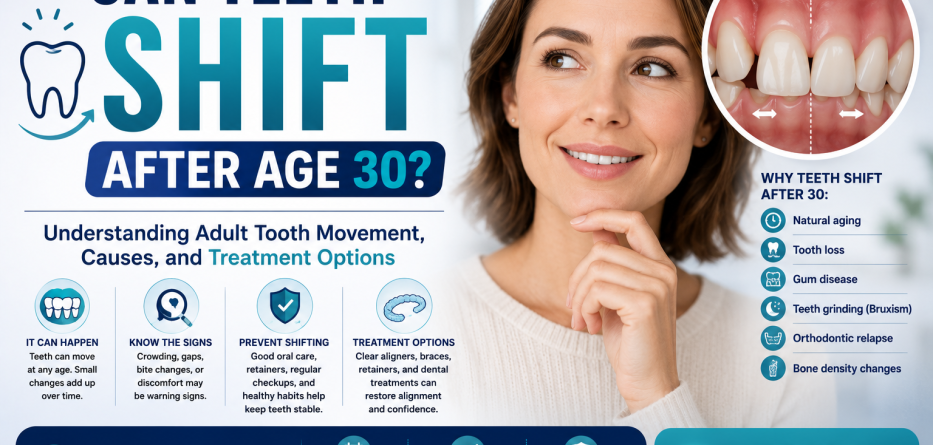
Many people assume that once their adult teeth have fully developed, their smile will remain unchanged for life. However, the reality is quite different. Teeth can continue to move throughout adulthood, even after the age of 30. In fact, many adults notice crowding, spacing, or bite changes as they get older.
If you’ve recently observed your teeth looking slightly crooked, overlapping, or shifting position, you’re not alone. Tooth movement is a common part of aging and can be influenced by several factors, including bone changes, tooth loss, gum disease, and lifestyle habits.
In this article, we’ll explore why teeth shift after age 30, the most common causes, potential risks, and what you can do to maintain a healthy, properly aligned smile.
Can Teeth Really Shift After Age 30?
Quick Answer
Yes, teeth can shift after age 30.
Although tooth movement is generally slower in adults than in children, the teeth and surrounding bone structures remain dynamic throughout life. Small changes can accumulate over time, resulting in noticeable crowding, spacing, or bite alterations.
Many adults experience some degree of tooth movement as part of the natural aging process.
Why Do Teeth Shift as We Age?
Teeth are supported by:
- Jawbone
- Periodontal ligaments
- Gum tissue
These structures constantly adapt to changes in pressure, bone remodeling, and overall oral health.
As we age, these supporting tissues can change, allowing teeth to gradually move into new positions.
Common Causes of Teeth Shifting After Age 30
1. Natural Aging Process
The jaw continues to undergo subtle changes throughout adulthood.
Research suggests that the dental arch may gradually narrow with age, causing the following:
- Crowded front teeth
- Minor overlap
- Changes in bite alignment
This is particularly common in the lower front teeth.
2. Tooth Loss
Missing teeth create gaps that neighboring teeth naturally try to fill.
Without proper replacement, nearby teeth may
- Tilt
- Drift
- Rotate
- Create bite problems
This is one reason dentists often recommend replacing missing teeth with implants, bridges, or dentures.
3. Gum Disease
Gum disease can weaken the structures that support teeth.
Advanced periodontal disease may lead to:
- Bone loss
- Loose teeth
- Tooth migration
- Increased spacing
In severe cases, tooth shifting can occur rapidly.
4. Teeth Grinding (Bruxism)
Chronic grinding or clenching places excessive force on the teeth and supporting structures.
Potential effects include the following:
- Tooth wear
- Bite changes
- Tooth movement
- Jaw discomfort
Many adults grind their teeth during sleep without realizing it.
5. Wisdom Teeth Pressure
Although wisdom teeth are not always responsible for crowding, impacted or erupting wisdom teeth may contribute to changes in tooth positioning in some individuals.
A dental evaluation can determine whether wisdom teeth are affecting alignment.
6. Orthodontic Relapse
Adults who previously wore braces may notice teeth gradually shifting back toward their original positions.
This phenomenon is called orthodontic relapse.
Common causes include:
- Not wearing retainers
- Natural tissue changes
- Aging-related movement
Retention is essential for maintaining orthodontic results.
7. Bone Density Changes
The jawbone continuously remodels throughout life.
Changes in bone density may influence:
- Tooth stability
- Tooth positioning
- Overall bite structure
These changes become more common with aging.
Signs Your Teeth May Be Shifting
Watch for these warning signs:
- Crowded front teeth
- New gaps between teeth
- Changes in bite alignment
- Difficulty flossing
- Increased food trapping
- Tooth overlap
- Jaw discomfort
Early detection allows for simpler treatment options.
Is Teeth Shifting a Problem?
Minor tooth movement is often harmless.
However, significant shifting can contribute to:
Oral Health Problems
- Increased plaque buildup
- Difficulty cleaning teeth
- Higher cavity risk
- Gum disease
Functional Problems
- Bite misalignment
- Uneven tooth wear
- Jaw pain
- Chewing difficulties
Cosmetic Concerns
- Crooked smile
- Reduced confidence
- Visible crowding
Addressing shifting teeth early can help prevent more complex problems later.
How to Prevent Teeth From Shifting After 30
Wear Retainers
If you’ve had orthodontic treatment, retainers remain one of the most effective ways to prevent relapse.
Replace Missing Teeth Promptly
Tooth replacement options include:
- Dental implants
- Dental bridges
- Partial dentures
Replacing missing teeth helps maintain proper alignment.
Maintain Healthy Gums
Good oral hygiene supports the structures that keep teeth stable.
Daily care should include:
- Brushing twice daily
- Flossing regularly
- Professional cleanings
Manage Teeth Grinding
A custom nightguard can reduce excessive pressure on teeth and help preserve alignment.
Attend Regular Dental Checkups
Routine examinations allow dentists to identify early signs of tooth movement.
Treatment Options for Shifted Teeth
Clear Aligners
Many adults choose clear aligner systems to correct mild to moderate alignment issues.
Benefits include:
- Nearly invisible appearance
- Removable convenience
- Comfortable treatment
Traditional Braces
Braces remain highly effective for correcting complex tooth movement.
Retainers
Minor shifting may sometimes be corrected using specialized retainers.
Restorative Dentistry
Dental implants and bridges can help stabilize surrounding teeth when shifting is caused by tooth loss.
Can Clear Aligners Work After Age 30?
Absolutely.
Teeth can move at almost any age when appropriate orthodontic forces are applied.
Many adults in their 30s, 40s, 50s, and beyond successfully straighten their teeth using clear aligners or braces.
Age is rarely a barrier to orthodontic treatment.
Frequently Asked Questions
Is it normal for teeth to shift after 30?
Yes. Mild tooth movement is a common part of the natural aging process.
Why are my bottom front teeth becoming crowded?
Age-related changes in the dental arch often contribute to crowding in the lower front teeth.
Can shifting teeth be corrected?
Yes. Clear aligners, braces, retainers, and restorative treatments can often correct tooth movement.
Do wisdom teeth cause teeth to shift?
Wisdom teeth may contribute in some cases, but they are not always the primary cause.
Can teeth shift even if I had braces?
Yes. Orthodontic relapse can occur if retainers are not worn consistently.
Conclusion
So, can teeth shift after age 30?
The answer is yes. Tooth movement can occur throughout adulthood due to aging, gum disease, tooth loss, grinding, orthodontic relapse, and changes in jawbone structure. While some shifting is normal, significant changes can affect oral health, function, and appearance.
The good news is that modern dentistry offers many effective solutions to prevent and correct tooth movement. By maintaining good oral hygiene, attending regular dental visits, replacing missing teeth, and wearing retainers when necessary, you can protect your smile and maintain proper alignment for years to come.
