
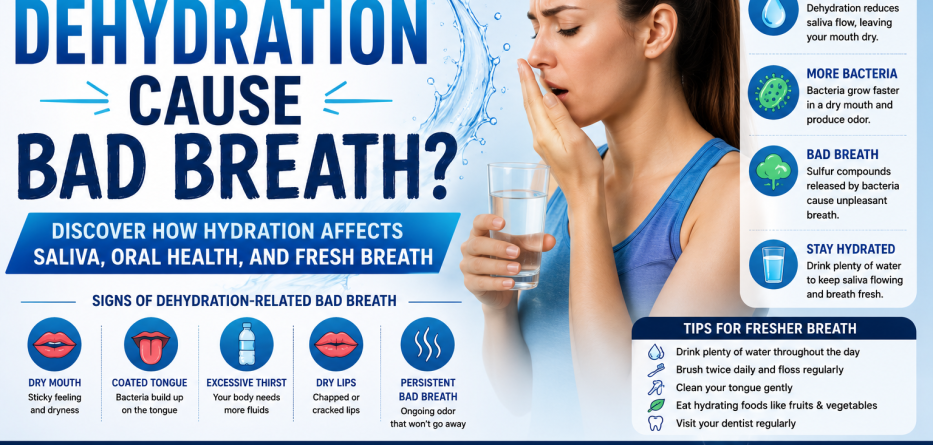
Bad breath, also known as halitosis, affects millions of people worldwide and can impact confidence, social interactions, and overall well-being. While poor oral hygiene, gum disease, and certain foods are common causes of bad breath, many people are surprised to learn that dehydration can also contribute significantly to unpleasant breath odor.
Your mouth relies on saliva to keep it clean, neutralize acids, and wash away bacteria. When the body becomes dehydrated, saliva production decreases, creating an environment where odor-causing bacteria can thrive.
In this article, we’ll explore the connection between dehydration and bad breath, common symptoms, prevention strategies, and when to seek professional dental care.
Can Dehydration Cause Bad Breath?
Quick Answer
Yes, dehydration is one of the most common and often overlooked causes of bad breath.
When your body doesn’t have enough water, saliva production decreases. Reduced saliva allows bacteria, food particles, and dead cells to accumulate in the mouth, leading to unpleasant odors.
Keeping your body properly hydrated helps maintain healthy saliva flow and supports fresher breath.
Why Is Saliva Important for Fresh Breath?
Saliva does much more than keep your mouth moist.
Functions of Saliva
- Washes away food particles
- Neutralizes acids
- Reduces bacterial growth
- Protects tooth enamel
- Supports digestion
- Maintains oral tissue health
A healthy adult produces approximately 0.5 to 1.5 liters of saliva each day.
When saliva levels decrease, the mouth becomes an ideal environment for odor-causing bacteria.
How Dehydration Leads to Bad Breath
Reduced Saliva Production
The most direct connection between dehydration and bad breath is dry mouth.
When you are dehydrated:
- Salivary glands produce less saliva
- Bacteria multiply more rapidly
- Food debris remains longer in the mouth
- Sulfur compounds accumulate
These sulfur compounds are responsible for many cases of bad breath.
Increased Bacterial Growth
Certain bacteria naturally live in the mouth.
Without adequate saliva, these bacteria feed on the following:
- Food particles
- Dead cells
- Proteins in the mouth
As they break down these materials, they release volatile sulfur compounds (VSCs), which produce unpleasant odors.
Dry Tongue Surface
The tongue often harbors large numbers of bacteria.
When the mouth becomes dry:
- Bacteria accumulate on the tongue
- Coating on the tongue thickens
- Odors become more noticeable
This is one reason why bad breath is often worse upon waking.
Common Signs of Dehydration-Related Bad Breath
If dehydration is contributing to your bad breath, you may also experience:
Symptoms of Dry Mouth
- Sticky feeling in the mouth
- Dry or cracked lips
- Thick saliva
- Increased thirst
- Difficulty swallowing
- Dry throat
Oral Symptoms
- Persistent bad breath
- Coated tongue
- Increased plaque buildup
- Mouth discomfort
These symptoms often improve after restoring hydration levels.
Situations That Increase the Risk of Dehydration
Several factors can contribute to dehydration and dry mouth.
Inadequate Water Intake
Simply not drinking enough water is one of the most common causes.
Hot Weather
Excessive sweating can reduce overall hydration.
Exercise
Physical activity increases fluid loss.
Illness
Conditions involving:
- Fever
- Vomiting
- Diarrhea
can rapidly cause dehydration.
Alcohol Consumption
Alcohol has a dehydrating effect and can reduce saliva production.
Excessive Caffeine
Large amounts of caffeinated beverages may contribute to dehydration in some individuals.
Morning Breath and Dehydration
Many people notice stronger bad breath after waking up.
Why Morning Breath Happens
During sleep:
- Saliva production naturally decreases
- The mouth becomes drier
- Bacteria multiply
- Odor-producing compounds accumulate
If you are already mildly dehydrated before bed, morning breath may be even more noticeable.
Drinking water before and after sleep can help reduce this effect.
Other Causes of Bad Breath
While dehydration is common, it is not the only cause.
Poor Oral Hygiene
Plaque and food debris can produce unpleasant odors.
Gum Disease
Bacterial infections of the gums often cause chronic bad breath.
Tooth Decay
Untreated cavities may contribute to odor.
Smoking and Tobacco Use
Tobacco products dry the mouth and increase bacterial growth.
Certain Foods
Examples include:
- Garlic
- Onions
- Certain spices
Medical Conditions
Bad breath may occasionally be linked to:
- Sinus infections
- Acid reflux
- Diabetes
- Respiratory infections
Persistent bad breath should be evaluated by a healthcare professional.
How to Prevent Dehydration-Related Bad Breath
Drink More Water
Water is the most effective way to combat dehydration.
General recommendations include:
- Drinking water throughout the day
- Increasing intake during exercise
- Staying hydrated in hot weather
Maintain Good Oral Hygiene
Brush twice daily and floss regularly.
Clean Your Tongue
Tongue cleaning removes bacteria and debris that contribute to odors.
Limit Alcohol and Tobacco
Reducing these habits can improve both hydration and breath freshness.
Use Sugar-Free Gum
Chewing sugar-free gum stimulates saliva production and helps keep the mouth moist.
Foods That Help Support Hydration
Some foods contain high amounts of water and can support hydration.
Hydrating Foods
- Watermelon
- Cucumbers
- Strawberries
- Oranges
- Celery
- Lettuce
These foods contribute to overall fluid intake while supporting oral health.
When Should You See a Dentist?
Schedule a dental visit if bad breath:
- Persists despite hydration
- Continues after improving oral hygiene
- Is accompanied by gum bleeding
- Is associated with tooth pain
- Occurs alongside oral infections
A dentist can identify underlying dental issues that may be contributing to chronic halitosis.
Frequently Asked Questions
How quickly can dehydration cause bad breath?
Bad breath can develop within hours if dehydration significantly reduces saliva production.
Will drinking water immediately improve bad breath?
Water often provides temporary improvement by moistening the mouth and washing away bacteria.
Can dry mouth cause chronic bad breath?
Yes. Persistent dry mouth is a common cause of ongoing halitosis.
Is bad breath always caused by poor oral hygiene?
No. Dehydration, medical conditions, medications, and dietary factors can also contribute.
How much water should I drink to prevent dry mouth?
Fluid needs vary, but staying consistently hydrated throughout the day helps support healthy saliva production.
Conclusion
So, can dehydration cause bad breath?
Absolutely. Dehydration reduces saliva production, allowing odor-causing bacteria to multiply and create unpleasant smells in the mouth. Because saliva plays a critical role in maintaining oral health, staying hydrated is one of the simplest and most effective ways to support fresh breath.
While drinking more water can often improve dehydration-related bad breath, persistent halitosis may indicate an underlying dental or medical issue. Combining proper hydration with good oral hygiene and regular dental checkups is the best strategy for maintaining a healthy mouth and fresh breath.
