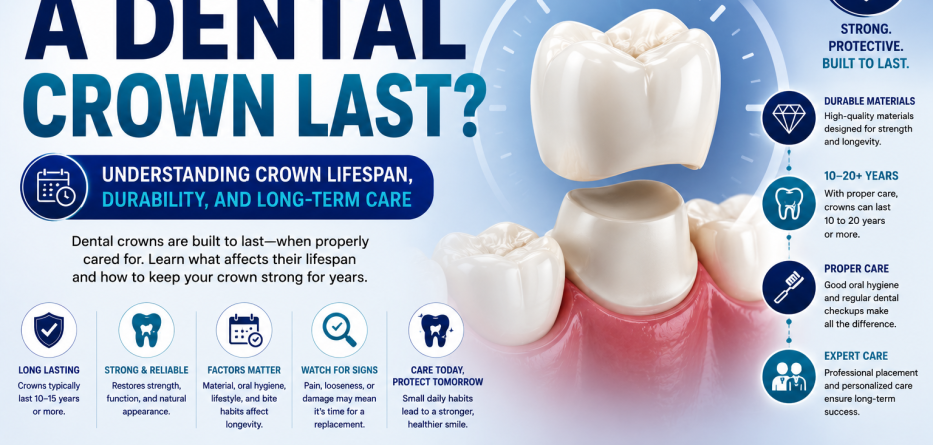
Dental crowns are one of the most common restorative dental treatments used to repair damaged, weakened, or cosmetically imperfect teeth. Whether you’ve recently received a crown or are considering one, a common question is, “How long should a dental crown last?”
The good news is that modern dental crowns are highly durable and can provide many years of reliable function when properly maintained. However, their lifespan depends on several factors, including the type of crown, oral hygiene habits, lifestyle choices, and the condition of the underlying tooth.
In this guide, we’ll explore how long dental crowns typically last, what affects their longevity, signs that a crown may need replacement, and tips to help maximize its lifespan.
What Is a Dental Crown?
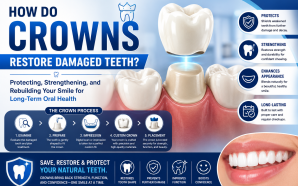
A dental crown is a custom-made cap that covers a damaged or weakened tooth. It restores the tooth’s
- Shape
- Size
- Strength
- Appearance
- Function
Crowns are commonly used for:
- Severely decayed teeth
- Cracked or fractured teeth
- Root canal-treated teeth
- Large fillings
- Cosmetic smile improvements
- Dental implant restorations
Once cemented into place, a crown functions much like a natural tooth.
How Long Does a Dental Crown Typically Last?
Average Lifespan of Dental Crowns
Most dental crowns last between 10 and 15 years, although many can remain functional for 20 years or longer with excellent care.
| Crown Material | Average Lifespan |
|---|---|
| Porcelain | 10–15 Years |
| Porcelain-Fused-to-Metal (PFM) | 10–15 Years |
| Zirconia | 15–20+ Years |
| Gold Alloy | 20+ Years |
| E-Max (Lithium Disilicate) | 10–15+ Years |
Many patients keep their crowns much longer than the average lifespan when they maintain excellent oral hygiene and attend regular dental visits.
Factors That Affect How Long a Dental Crown Lasts
1. Crown Material
The material used significantly influences durability.
Zirconia Crowns
Benefits:
- Extremely strong
- Resistant to fractures
- Excellent longevity
Porcelain Crowns
Benefits:
- Natural appearance
- Ideal for front teeth
Potential drawback:
- More susceptible to chipping than zirconia
Gold Crowns
Benefits:
- Exceptional durability
- Minimal wear on opposing teeth
Potential drawback:
- Less aesthetically pleasing
2. Oral Hygiene Habits
Although crowns cannot develop cavities, the tooth underneath can still decay.
Poor oral hygiene may lead to:
- Decay around crown margins
- Gum disease
- Crown failure
Daily care should include:
- Brushing twice daily
- Flossing carefully around the crown
- Regular dental cleanings
Good oral hygiene is one of the most important factors affecting crown longevity.
3. Teeth Grinding (Bruxism)
Teeth grinding places excessive pressure on crowns.
Potential consequences include the following:
- Cracks
- Chips
- Crown loosening
- Premature wear
Patients with bruxism often benefit from wearing a custom nightguard.
4. Bite Forces and Chewing Habits
Certain habits can shorten crown lifespan.
Examples include:
- Chewing ice
- Biting hard candies
- Opening packages with teeth
- Nail biting
These activities increase the risk of crown damage.
5. Crown Placement Location
Crowns placed on back teeth experience significantly greater chewing forces than those on front teeth.
Molars are subjected to:
- Heavy biting pressure
- Grinding forces
- Repetitive wear
As a result, posterior crowns may experience more stress over time.
6. Quality of Dental Work
The skill of the dentist plays an important role.
Proper crown placement ensures the following:
- Accurate fit
- Proper bite alignment
- Strong bonding
- Reduced risk of complications
High-quality dental work often leads to longer-lasting restorations.
Signs Your Dental Crown May Need Replacement
Even durable crowns eventually wear out.
Watch for the following warning signs:
Crown Loosening
A loose crown can allow bacteria to enter underneath.
Visible Cracks or Chips
Damage can compromise strength and appearance.
Tooth Sensitivity
New sensitivity may indicate decay or crown deterioration.
Gum Recession
Receding gums can expose crown margins.
Pain When Chewing
Discomfort may signal an underlying problem.
If you notice any of these symptoms, schedule a dental evaluation promptly.
Can a Dental Crown Last a Lifetime?
In some cases, yes.
While most crowns are expected to last 10–15 years, many remain functional for 20 years or more.
Long-term success depends on:
- Material quality
- Oral hygiene
- Professional maintenance
- Healthy lifestyle habits
No dental restoration is guaranteed to last forever, but proper care can significantly extend its lifespan.
How to Make Your Dental Crown Last Longer
Follow Excellent Oral Hygiene Practices
Brush twice daily using fluoride toothpaste and floss carefully around the crown.
Visit Your Dentist Regularly
Routine examinations help identify problems before they become serious.
Wear a nightguard.
Protect your crown if you grind or clench your teeth.
Avoid Hard Foods and Objects
Protect the crown from unnecessary stress.
Maintain Overall Oral Health
Healthy gums and surrounding teeth support long-term crown success.
Dental Crowns vs. Other Restorations
| Restoration | Average Lifespan |
|---|---|
| Dental Crown | 10–15+ Years |
| Filling | 5–10 Years |
| Veneer | 10–15 Years |
| Dental Bridge | 5–15 Years |
| Dental Implant Crown | 10–15+ Years |
Crowns are among the most durable restorative treatments available.
Common Reasons Dental Crowns Fail
Although uncommon, crowns can fail due to:
- Tooth decay under the crown
- Poor oral hygiene
- Trauma
- Teeth grinding
- Crown fracture
- Gum disease
- Improper fit
Most failures can be prevented through regular dental care and healthy habits.
Frequently Asked Questions
How long should a dental crown last?
Most dental crowns last between 10 and 15 years, although many can last significantly longer with proper care.
Which type of dental crown lasts the longest?
Gold and zirconia crowns are generally considered the most durable options.
Can a crown last 20 years?
Yes. Many crowns remain functional for 20 years or more when properly maintained.
How do I know if my crown needs replacing?
Signs include looseness, cracks, pain, sensitivity, or visible wear.
Can decay occur under a crown?
Yes. The tooth underneath remains vulnerable to decay if oral hygiene is neglected.
Conclusion
So, how long should a dental crown last?
Most dental crowns provide reliable protection and function for 10 to 15 years, while many can last 20 years or longer with excellent care. Factors such as crown material, oral hygiene, chewing habits, and professional dental maintenance all play important roles in determining longevity.
By practicing good oral hygiene, avoiding damaging habits, and attending regular dental checkups, you can help ensure your dental crown remains strong, comfortable, and functional for many years to come.