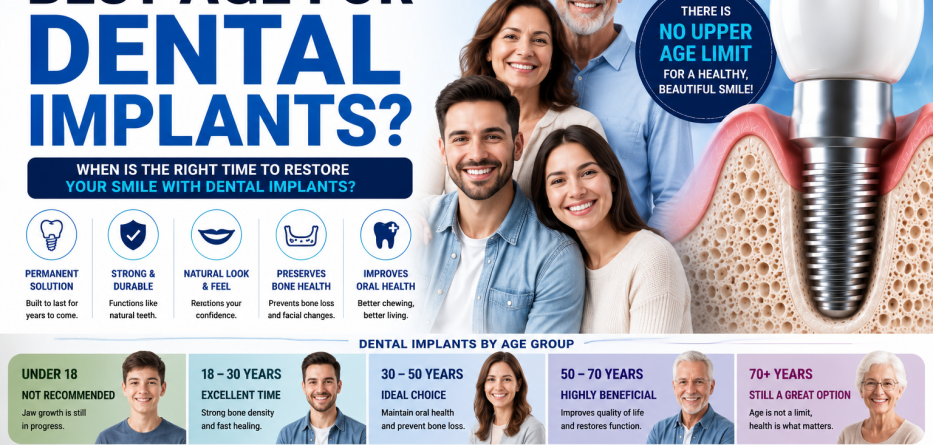
Dental implants have become one of the most effective and long-lasting solutions for replacing missing teeth. They look, feel, and function like natural teeth, making them the preferred choice for millions of patients worldwide. However, one of the most common questions people ask is, “What is the best age for dental implants?”
The good news is that there is no specific upper age limit for dental implants. In fact, successful implant treatment depends more on oral health, bone quality, and overall health than on age alone. Whether you’re in your 20s, 50s, or even your 80s, dental implants may be a suitable option.
In this guide, we’ll explore the ideal age for dental implants, age-related considerations, and how dentists determine whether you’re a good candidate for treatment.
What Are Dental Implants?
Dental implants are artificial tooth roots made from biocompatible titanium that are surgically placed into the jawbone. Once integrated with the bone through a process called osseointegration, they support crowns, bridges, or dentures.
A complete implant consists of:
- Titanium implant post
- Abutment
- Custom dental crown
Unlike removable dentures, implants provide a permanent and stable solution for missing teeth.
Is There a Best Age for Dental Implants?
Quick Answer
The best age for dental implants is typically after jawbone growth has fully completed, which usually occurs
- Around 18 years of age for females
- Around 20–21 years of age for males
Once jaw growth is complete, dental implants can be safely placed and maintained for decades.
There is generally no upper age limit for implant treatment.
Why Age Matters for Dental Implants
Dental implants become permanently integrated with the jawbone.
If implants are placed before the jaw has fully developed, problems may occur, such as
- Implant misalignment
- Bite changes
- Aesthetic concerns
- Future complications
This is why dentists carefully evaluate bone growth before recommending implants to younger patients.
Dental Implants for Teenagers
Teenagers are usually not ideal candidates for dental implants because their jaws may still be developing.
Potential Risks
- Continued jaw growth
- Implant positioning issues
- Cosmetic complications
- Bite alignment changes
Alternative Solutions
Until growth is complete, dentists may recommend:
- Temporary bridges
- Removable partial dentures
- Orthodontic treatment
- Space maintainers
Once growth is complete, implants can often be placed successfully.
Dental Implants in Your 20s and 30s
Many dentists consider this an excellent age range for implant treatment.
Benefits
- Strong bone density
- Faster healing
- Healthy immune response
- Lower risk of systemic health complications
Replacing missing teeth early can also help prevent future bone loss and shifting of adjacent teeth.
Dental Implants in Your 40s and 50s
This age group represents one of the largest populations seeking dental implants.
Common Reasons for Tooth Loss
- Decay
- Gum disease
- Trauma
- Failed dental restorations
Benefits of Implant Treatment
- Restored chewing ability
- Improved confidence
- Preservation of jawbone
- Long-term durability
Patients in this age group often enjoy decades of implant function.
Dental Implants for Seniors (60s, 70s, and Beyond)
Many people assume they are “too old” for dental implants. Fortunately, this is rarely true.
Important Fact
Age alone does not disqualify someone from receiving dental implants.
Many patients in their
- 60s
- 70s
- 80s
- Even 90s
have successfully received implants and experienced excellent results.
Factors More Important Than Age
When evaluating implant candidates, dentists focus on overall health rather than age.
Bone Density
Adequate jawbone support is essential.
Patients with bone loss may still qualify through the following:
- Bone grafting
- Sinus lift procedures
- Advanced implant techniques
Gum Health
Healthy gums help protect implants from infection and long-term complications.
Medical Conditions
Certain conditions may require special consideration, including:
- Diabetes
- Osteoporosis
- Autoimmune disorders
- Cardiovascular disease
Proper management often allows successful implant treatment.
Lifestyle Habits
Smoking can increase the risk of:
- Delayed healing
- Infection
- Implant failure
Patients who avoid tobacco generally experience better outcomes.
How Dentists Determine Implant Eligibility
A comprehensive examination helps determine candidacy.
Evaluation May Include
- Medical history review
- Oral examination
- Digital X-rays
- CBCT scans
- Bone density assessment
- Bite analysis
This assessment provides a personalized treatment plan based on the patient’s needs.
Benefits of Getting Dental Implants Earlier
Delaying tooth replacement can lead to:
- Bone loss
- Shifting teeth
- Bite problems
- Gum changes
Early implant placement may help:
- Preserve jawbone structure
- Improve aesthetics
- Maintain oral function
- Prevent future complications
Can You Be Too Old for Dental Implants?
In most cases, no.
Research consistently shows that healthy older adults achieve implant success rates similar to younger patients.
Success Depends More On
- Overall health
- Bone quality
- Oral hygiene
- Professional care
- Lifestyle habits
Many seniors report significant improvements in quality of life after implant treatment.
Age Comparison Table
| Age Group | Implant Suitability |
|---|---|
| Under 18 | Usually Not Recommended |
| 18–25 | Excellent Candidate |
| 26–40 | Excellent Candidate |
| 41–60 | Excellent Candidate |
| 61–80 | Often Excellent Candidate |
| 80+ | Depends on Health Status |
The table highlights that health factors matter more than chronological age.
Tips for Long-Term Implant Success at Any Age
Regardless of age, follow these recommendations:
- Maintain excellent oral hygiene.
- Attend regular dental checkups.
- Avoid smoking.
- Eat a balanced diet.
- Address gum disease promptly.
- Follow all post-operative instructions.
- Wear a nightguard if you grind your teeth.
These habits support implant longevity and oral health.
Frequently Asked Questions
What is the ideal age for dental implants?
Most dentists recommend waiting until jaw growth is complete, typically around age 18–21.
Can a 70-year-old get dental implants?
Yes. Many patients in their 70s successfully receive dental implants and enjoy long-term benefits.
Is 80 too old for dental implants?
Not necessarily. Health status and bone quality are more important than age alone.
Can teenagers get dental implants?
Usually not until jaw growth is fully completed.
How long do dental implants last?
With proper care, many implants last 20 years or more and often a lifetime.
Conclusion
So, what is the best age for dental implants?
The ideal time is after jaw development has fully completed, usually around age 18 to 21. Beyond that point, there is no strict upper age limit. In fact, many healthy adults in their 60s, 70s, and even 80s enjoy successful implant treatment.
Rather than focusing solely on age, dentists evaluate factors such as bone density, gum health, medical history, and lifestyle habits. If you have missing teeth and are considering dental implants, a professional evaluation can help determine whether you’re an ideal candidate regardless of your age.