Dental implants are one of the most successful and long-lasting solutions for replacing missing teeth. However, the success of your treatment depends heavily on the skill, experience, and expertise of the professional performing the procedure. That’s why choosing the right dental implant specialist is one of the most important decisions you’ll make during your smile restoration journey.
With many dentists offering implant services, it can be challenging to know who is truly qualified to handle your case. Understanding what credentials, experience, technology, and patient care standards to look for can help you make an informed choice and improve your chances of achieving a successful outcome.
In this guide, we’ll explain how to choose a dental implant specialist and the key factors every patient should consider before beginning treatment.
Why Choosing the Right Implant Specialist Matters
Dental implant placement is a highly precise procedure that requires extensive planning and expertise.
A qualified implant specialist can help
- Improve treatment success rates
- Reduce complications
- Ensure proper implant placement
- Achieve natural-looking results
- Protect long-term oral health
Choosing an experienced professional can make a significant difference in both the function and appearance of your final restoration.
What Is a Dental Implant Specialist?
A dental implant specialist is a dentist with advanced training and experience in implant dentistry.
Professionals who commonly perform implant procedures include:
- Oral and Maxillofacial Surgeons
- Periodontists
- Prosthodontists
- General Dentists with Advanced Implant Training
Each professional may play a different role in the implant process depending on the complexity of the case.
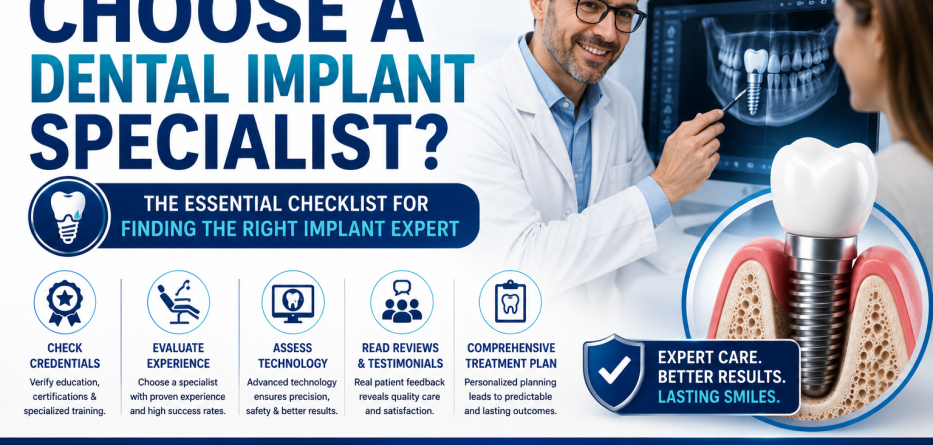
1. Verify Education and Credentials
One of the first steps in selecting a dental implant specialist is reviewing their qualifications.
Look for:
- Dental degree from an accredited institution
- Advanced implant training
- Continuing education courses
- Specialized certifications
- Membership in professional organizations
Important Organizations
- International Congress of Oral Implantologists (ICOI)
- American Academy of Implant Dentistry (AAID)
- Academy of Osseointegration
Ongoing education demonstrates commitment to staying current with the latest implant techniques.
2. Ask About Implant Experience
Experience matters significantly in implant dentistry.
Questions to ask include:
- How many implants have you placed?
- How many implant procedures do you perform annually?
- How long have you been placing implants?
- What is your success rate?
A specialist with extensive experience is often better equipped to handle both routine and complex cases.
3. Review Before-and-After Cases
Before committing to treatment, ask to see examples of previous patient results.
Look for:
- Natural-looking restorations
- Consistent outcomes
- Similar cases to your own
Before-and-after photos can provide valuable insight into the specialist’s skills and aesthetic capabilities.
4. Evaluate Technology and Equipment
Modern implant dentistry relies heavily on advanced technology.
A high-quality implant practice may utilize:
3D Cone Beam CT Scans
Provides detailed imaging of:
- Bone density
- Nerve pathways
- Sinus structures
Digital Treatment Planning
Allows more accurate implant positioning.
Computer-Guided Surgery
Improves precision and reduces surgical risks.
Advanced technology often leads to safer procedures and more predictable outcomes.
5. Consider Their Approach to Treatment Planning
Every patient’s needs are unique.
A qualified implant specialist should perform a comprehensive evaluation that includes:
- Medical history review
- Oral examination
- Digital imaging
- Bone assessment
- Bite analysis
Avoid providers who recommend treatment without conducting a thorough assessment.
6. Ask About Success Rates
Dental implants generally have success rates exceeding 95%.
Ask the specialist:
- What are your implant success rates?
- How do you manage complications?
- How do you monitor long-term implant health?
Transparency regarding outcomes is a positive sign of professionalism.
7. Read Patient Reviews and Testimonials
Online reviews can provide valuable insights into patient experiences.
Pay attention to comments regarding:
- Professionalism
- Communication
- Comfort during treatment
- Results
- Follow-up care
Look for patterns across multiple review platforms rather than focusing on individual opinions.
8. Evaluate Communication and Patient Care
Good communication is essential during implant treatment.
Your specialist should:
- Explain procedures clearly
- Answer questions thoroughly
- Discuss risks and benefits honestly
- Provide realistic expectations
Patients should feel comfortable and informed throughout the process.
9. Understand the Types of Implants Offered
Different patients may require different implant solutions.
Treatment options may include:
- Single tooth implants
- Implant-supported bridges
- Full-mouth implants
- All-on-4® restorations
- Immediate-load implants
A specialist who offers multiple solutions can create a more customized treatment plan.
10. Ask About Bone Grafting Experience
Some patients lack sufficient jawbone for implant placement.
A qualified specialist should have experience with:
- Bone grafting
- Sinus lift procedures
- Ridge augmentation
These procedures may be necessary to create a stable foundation for implants.
11. Compare Costs Carefully
While cost is important, it should not be the only factor.
Implant pricing often reflects the following:
- Specialist expertise
- Technology used
- Quality of materials
- Complexity of treatment
Very low-cost implant offers may involve compromises in quality or experience.
Focus on overall value rather than simply choosing the lowest price.
12. Ask About Follow-Up Care
Long-term implant success requires ongoing monitoring.
Quality practices typically provide:
- Regular follow-up appointments
- Implant maintenance guidance
- Professional cleanings
- Long-term support
Comprehensive aftercare is a sign of patient-centered treatment.
Red Flags to Watch For
Be cautious if a provider:
- Guarantees 100% success
- Pressures you into immediate treatment
- Avoids discussing risks
- Lacks advanced imaging technology
- Cannot provide examples of previous work
Trustworthy specialists are transparent about both benefits and potential complications.
Questions to Ask During Your Consultation
Before choosing a dental implant specialist, ask:
- How many implants have you placed?
- What is your success rate?
- Do you use 3D imaging technology?
- Will I need bone grafting?
- What implant systems do you use?
- What are the total treatment costs?
- How long will treatment take?
- What aftercare is required?
These questions can help you compare providers more effectively.
Benefits of Choosing the Right Implant Specialist
Working with a qualified implant professional offers:
- Higher success rates
- Better aesthetics
- Improved comfort
- Reduced complications
- Greater long-term value
A well-placed implant can provide decades of reliable function and confidence.
Frequently Asked Questions
What type of dentist is best for dental implants?
Oral surgeons, periodontists, prosthodontists, and general dentists with advanced implant training may all perform implant procedures successfully.
How important is implant experience?
Experience is one of the most important factors influencing treatment outcomes and complication management.
Should I choose the cheapest implant provider?
Not necessarily. Quality, experience, technology, and long-term success are often more important than price alone.
What success rate should a dental implant specialist have?
Most experienced providers report success rates above 95%.
Is a consultation necessary before implant treatment?
Yes. A comprehensive evaluation is essential for accurate diagnosis and treatment planning.
Conclusion
Choosing the right dental implant specialist is one of the most important steps in achieving a successful, long-lasting smile restoration. By evaluating credentials, experience, technology, patient reviews, treatment planning, and communication, you can make a confident and informed decision.
Dental implants are a significant investment in your oral health and quality of life. Taking the time to select a qualified and experienced implant specialist can help ensure excellent results, minimize complications, and provide a beautiful smile that lasts for many years.