
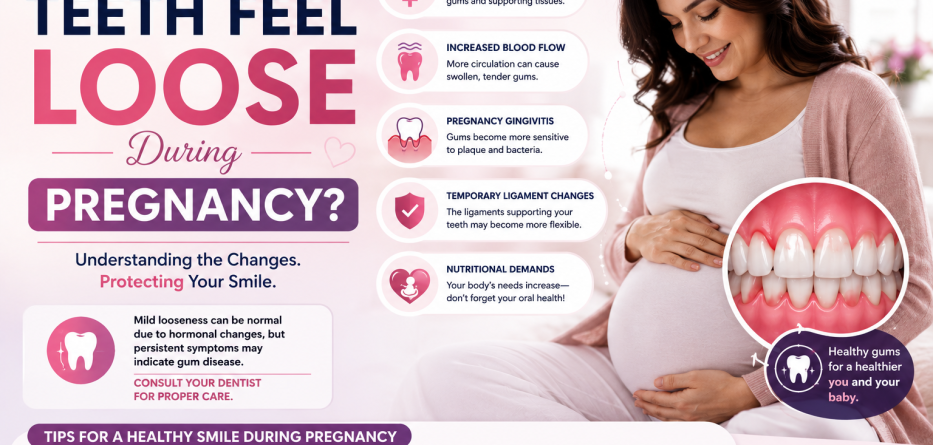
Pregnancy brings many changes to the body, from hormonal fluctuations and increased blood flow to changes in oral health. While most expectant mothers anticipate symptoms such as morning sickness, fatigue, and food cravings, many are surprised when their teeth begin to feel slightly loose.
If you’ve noticed your teeth feeling different during pregnancy, you’re not alone. This common concern often raises questions about whether teeth can actually loosen during pregnancy and if it’s something to worry about.
In this article, we’ll explain why teeth may feel loose during pregnancy, the role hormones play, when to seek dental care, and how to protect your oral health throughout pregnancy.
Can Pregnancy Make Your Teeth Feel Loose?
Quick Answer
Yes, pregnancy can sometimes cause teeth to feel loose. Hormonal changes during pregnancy can affect the tissues and bones that support your teeth, making them feel slightly mobile even when there is no underlying dental disease.
In most cases, this looseness is temporary and improves after childbirth. However, it’s important not to ignore the symptom, as it can also signal gum disease or other oral health issues.
Why Do Teeth Feel Loose During Pregnancy?
Several pregnancy-related changes can affect the structures that support your teeth.
Hormonal Changes
Pregnancy causes significant increases in:
- Estrogen
- Progesterone
These hormones help support your growing baby but can also affect the ligaments and tissues surrounding your teeth.
The periodontal ligament, which helps anchor teeth to the jawbone, may become more flexible during pregnancy.
This can create the sensation that teeth are moving or becoming loose.
Increased Blood Flow to the Gums
Pregnancy increases blood circulation throughout the body, including the gums.
As a result, many women experience the following:
- Swollen gums
- Tender gums
- Increased sensitivity
- Bleeding during brushing
Swollen gum tissues can make teeth feel different and sometimes contribute to a sensation of looseness.
Pregnancy-induced gingivitis
One of the most common oral health conditions during pregnancy is pregnancy gingivitis.
Symptoms include:
- Red gums
- Swollen gums
- Bleeding gums
- Tenderness
- Bad breath
Hormonal changes make the gums more reactive to plaque and bacteria.
If left untreated, gingivitis can progress and potentially affect the support structures around the teeth.
Pregnancy and Periodontal Disease
More advanced gum disease, known as periodontitis, can cause actual tooth mobility.
Periodontal disease damages:
- Gum tissue
- Periodontal ligaments
- Supporting jawbone
Symptoms may include:
- Loose teeth
- Gum recession
- Persistent bad breath
- Bone loss
- Pain while chewing
This condition requires professional treatment.
How Pregnancy Hormones Affect Tooth Support
During pregnancy, hormonal changes can alter collagen production and tissue responses.
These changes may temporarily affect:
- Periodontal ligaments
- Connective tissues
- Bone remodeling processes
As a result, even healthy teeth may feel slightly different than usual.
Fortunately, this hormonal effect often resolves after delivery.
Does Pregnancy Cause Tooth Loss?
A common myth suggests that pregnancy causes women to lose teeth because the baby takes calcium from the mother’s teeth.
The Truth
Pregnancy itself does not directly cause tooth loss.
However, untreated oral health problems during pregnancy can increase the risk of:
- Gum disease
- Bone loss
- Tooth mobility
- Tooth loss
Maintaining proper dental care is the key to prevention.
Other Pregnancy-Related Oral Health Issues
Pregnancy can affect oral health in several ways.
Morning Sickness
Frequent vomiting exposes teeth to stomach acid, increasing the risk of:
- Enamel erosion
- Tooth sensitivity
- Tooth decay
Dry Mouth
Some women experience reduced saliva production during pregnancy.
This can increase the risk of:
- Cavities
- Gum irritation
- Bad breath
Pregnancy Tumors
These are non-cancerous growths that may develop on the gums due to hormonal changes.
Although usually harmless, they should be evaluated by a dentist.
How to Protect Your Teeth During Pregnancy
Maintaining excellent oral hygiene is one of the best ways to prevent oral health complications.
Daily Oral Care Tips
- Brush twice daily using fluoride toothpaste.
- Floss every day.
- Use an alcohol-free mouthwash if recommended.
- Stay hydrated.
- Eat a balanced diet rich in vitamins and minerals.
Good oral hygiene helps reduce plaque and inflammation.
Importance of Dental Visits During Pregnancy
Many women mistakenly avoid dental care while pregnant.
In reality, routine dental care is generally safe and encouraged during pregnancy.
Regular dental visits help:
- Monitor gum health
- Prevent complications
- Remove plaque buildup
- Address concerns early
Inform your dentist about your pregnancy so they can tailor your care accordingly.
When Should You Be Concerned About Loose Teeth?
Mild temporary looseness may occur due to hormonal changes.
However, you should contact your dentist if you notice:
- Significant tooth movement
- Pain while chewing
- Persistent bleeding gums
- Gum recession
- Swelling that doesn’t improve
- Signs of infection
These symptoms may indicate an underlying dental problem requiring treatment.
Can Loose Teeth Tighten Again After Pregnancy?
In many cases, yes.
When hormone levels return to normal after childbirth, the periodontal tissues often regain their normal stability.
If no permanent damage has occurred, teeth that felt slightly loose during pregnancy may feel normal again within a few months.
However, if gum disease or bone loss is present, professional treatment may be necessary.
Oral Health and Pregnancy Outcomes
Research has shown that poor oral health during pregnancy may be associated with:
- Preterm birth
- Low birth weight
- Pregnancy complications
While more research is ongoing, maintaining healthy gums is considered an important part of prenatal care.
Frequently Asked Questions
Is it normal for teeth to feel loose during pregnancy?
Yes. Hormonal changes can temporarily affect the tissues supporting the teeth, creating a sensation of looseness.
Can pregnancy cause permanent tooth loss?
Pregnancy itself does not cause tooth loss, but untreated gum disease during pregnancy can increase the risk.
Should I see a dentist if my teeth feel loose?
Yes. Any noticeable tooth mobility should be evaluated to rule out gum disease or other oral health concerns.
Is dental treatment safe during pregnancy?
Most routine dental treatments are safe during pregnancy, especially during the second trimester.
Will my teeth return to normal after pregnancy?
In many cases, teeth that feel slightly loose due to hormonal changes return to normal after childbirth.
Conclusion
If your teeth feel loose during pregnancy, you’re not alone. Hormonal fluctuations, increased blood flow, and changes in the tissues supporting your teeth can all contribute to this sensation. While mild looseness is often temporary, it should never be ignored.
Maintaining good oral hygiene, attending regular dental checkups, and addressing gum problems early can help protect your smile throughout pregnancy. By taking proactive steps, you can support both your oral health and your overall well-being during this important stage of life.
