
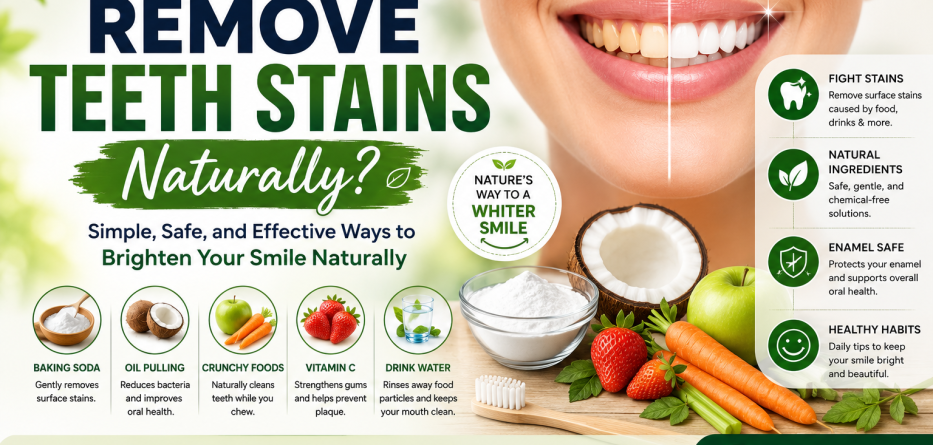
A bright, white smile is often associated with good health and confidence. However, over time, teeth can become stained due to food, drinks, smoking, aging, and poor oral hygiene. While professional teeth whitening treatments can deliver dramatic results, many people prefer natural methods to reduce stains and improve the appearance of their teeth.
But do natural teeth whitening remedies actually work? And more importantly, are they safe?
In this guide, we’ll explore how teeth become stained, natural ways to remove surface stains, remedies to avoid, and expert tips for maintaining a whiter smile naturally.
What Causes Teeth Stains?
Understanding the cause of tooth discoloration is the first step toward effective treatment.
Common Causes of Teeth Stains
- Coffee
- Tea
- Red wine
- Tobacco products
- Dark-colored foods
- Poor oral hygiene
- Aging
- Certain medications
There are generally two types of stains:
Extrinsic Stains
These occur on the outer enamel surface and are often caused by food, beverages, and smoking.
Intrinsic Stains
These develop inside the tooth and may result from aging, trauma, medications, or excessive fluoride exposure.
Natural remedies tend to work best on extrinsic stains.
Can Teeth Stains Be Removed Naturally?
Quick Answer
Yes, some natural methods can help reduce surface stains and improve the appearance of your teeth. However, natural remedies typically produce gradual results and cannot dramatically change the natural color of your teeth.
For deep discoloration, professional whitening treatments may be necessary.
1. Maintain Excellent Oral Hygiene
The simplest and most effective way to prevent and reduce stains is through consistent oral care.
Daily Habits
- Brush twice daily
- Floss every day
- Clean your tongue
- Use fluoride toothpaste
- Visit your dentist regularly
Removing plaque buildup helps keep teeth looking brighter.
2. Brush After Consuming Stain-Causing Foods
Certain foods and drinks can leave pigments on the enamel.
Common offenders include:
- Coffee
- Tea
- Cola
- Red wine
- Berries
- Tomato-based sauces
Brushing approximately 30 minutes after consumption can help minimize staining.
Important
Avoid brushing immediately after acidic foods or beverages, as enamel may be temporarily softened.
3. Drink More Water
Water naturally helps wash away food particles and stain-producing compounds.
Benefits include:
- Reduced staining
- Improved saliva production
- Better oral health
- Lower risk of plaque buildup
Drinking water after meals is one of the easiest natural whitening strategies.
4. Eat Crunchy Fruits and Vegetables
Certain fruits and vegetables act as natural tooth cleaners.
Examples include:
- Apples
- Carrots
- Celery
- Cucumbers
Their fibrous texture can help remove surface debris while stimulating saliva production.
Saliva helps neutralize acids and protect enamel.
5. Use Baking Soda Carefully
Baking soda is a mild abrasive commonly found in whitening toothpaste.
Potential Benefits
- Removes surface stains
- Neutralizes acids
- Helps reduce plaque
How to Use
Mix a small amount of baking soda with water to create a paste and use occasionally.
Caution
Excessive use may wear down enamel over time.
Most dentists recommend limiting use to a few times per week.
6. Oil Pulling
Oil pulling is an ancient practice that involves swishing oil around the mouth.
Common oils include:
- Coconut oil
- Sesame oil
- Sunflower oil
Possible Benefits
- Reduced bacteria
- Fresher breath
- Improved gum health
Although evidence for whitening effects is limited, some users report a brighter smile over time.
7. Increase Calcium-Rich Foods
Strong enamel reflects light better and contributes to a brighter appearance.
Calcium-rich foods include:
- Milk
- Yogurt
- Cheese
- Leafy greens
- Almonds
These foods support enamel strength and overall oral health.
8. Eat Foods Rich in Vitamin C
Vitamin C supports healthy gums and may help reduce plaque accumulation.
Good sources include:
- Oranges
- Strawberries
- Kiwi
- Bell peppers
- Broccoli
Healthy gums contribute to a healthier-looking smile.
Natural Remedies to Avoid
Not all internet whitening trends are safe.
Lemon Juice
While often promoted for whitening, lemon juice is highly acidic and can erode enamel.
Activated Charcoal
Research supporting charcoal whitening is limited.
Potential concerns include the following:
- Enamel abrasion
- Gum irritation
- Long-term tooth damage
Hydrogen Peroxide Misuse
Improper use of concentrated peroxide solutions can irritate gums and damage oral tissues.
Always consult your dentist before using whitening products.
Foods and Habits That Help Prevent Stains
Best Foods for a Brighter Smile
- Apples
- Pears
- Celery
- Cheese
- Yogurt
- Nuts
Habits to Adopt
- Drink through a straw when possible
- Rinse with water after meals
- Avoid tobacco products
- Schedule regular cleanings
Prevention is often easier than stain removal.
Professional Whitening vs Natural Methods
| Feature | Natural Methods | Professional Whitening |
|---|---|---|
| Cost | Low | Higher |
| Speed | Slow | Fast |
| Effectiveness | Mild to Moderate | Significant |
| Surface Stains | Good | Excellent |
| Deep Stains | Limited | Effective |
| Professional Supervision | No | Yes |
Natural methods are best for maintenance and mild discoloration.
When to See a Dentist
Consult a dental professional if:
- Stains do not improve
- Discoloration develops suddenly
- You notice dark spots
- Teeth become sensitive
- Whitening products cause discomfort
Some discoloration may indicate underlying dental issues requiring treatment.
Tips for Maintaining a Whiter Smile
- Brush twice daily.
- Floss every day.
- Drink water after meals.
- Limit stain-causing beverages.
- Avoid smoking.
- Visit your dentist every six months.
- Use whitening toothpaste approved by dental professionals.
Consistency is key to long-term results.
Frequently Asked Questions
Can yellow teeth become white naturally?
Mild surface stains may improve naturally with proper oral hygiene and healthy habits, but deeper discoloration often requires professional treatment.
Does baking soda really whiten teeth?
Baking soda can help remove some surface stains, but results are generally modest.
Is oil pulling effective for whitening?
Evidence is limited, although some people report minor improvements in tooth appearance.
What foods naturally whiten teeth?
Crunchy fruits and vegetables such as apples, carrots, and celery may help reduce surface stains.
What is the safest natural whitening method?
Maintaining excellent oral hygiene, drinking water, eating healthy foods, and visiting your dentist regularly are among the safest approaches.
Conclusion
If you’re wondering how to remove teeth stains naturally, the good news is that several safe and effective strategies can help improve the appearance of your smile. Good oral hygiene, healthy dietary choices, drinking plenty of water, and occasional use of gentle whitening methods like baking soda can reduce surface stains and support overall oral health.
While natural remedies may not produce dramatic whitening results, they can play an important role in maintaining a cleaner, brighter smile. For deeper discoloration or faster results, professional dental whitening treatments remain the most effective option.
