
Teeth whitening is one of the most popular cosmetic dental treatments worldwide. A brighter smile can boost confidence, enhance appearance, and make you look younger. However, one of the most common questions patients ask before treatment is, “How long does teeth whitening last?”
The answer depends on several factors, including the whitening method used, your oral hygiene habits, diet, lifestyle choices, and natural tooth characteristics. While whitening results are not permanent, proper care can help maintain a whiter smile for months or even years.
In this guide, we’ll explain how long different teeth whitening treatments last, what affects their longevity, and how to keep your smile brighter for longer.
How Does Teeth Whitening Work?
Teeth whitening treatments use bleaching agents such as hydrogen peroxide or carbamide peroxide to break down stains on the enamel and dentin layers of the teeth.
These whitening agents remove:
- Surface stains
- Deep discoloration
- Yellowing caused by aging
- Stains from food and beverages
The result is a noticeably brighter and more youthful-looking smile.
How Long Does Teeth Whitening Last?
Quick Answer
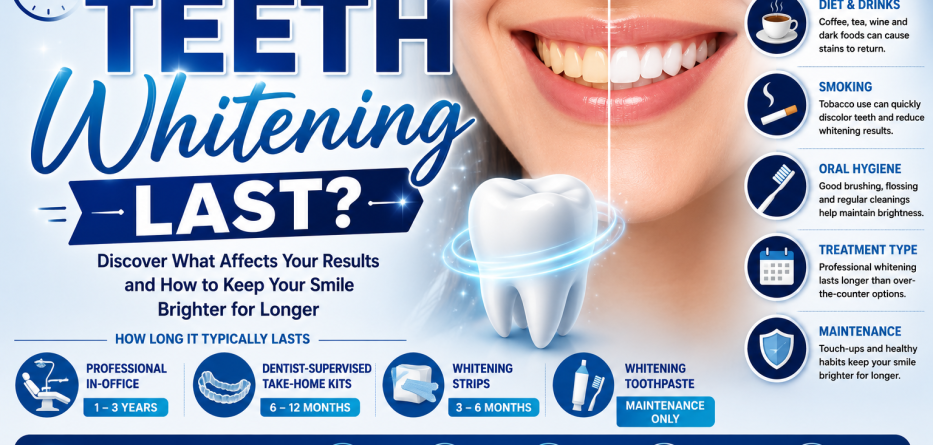
Most teeth whitening results last between 6 months and 3 years, depending on the treatment method and individual lifestyle habits.
Average Whitening Longevity
| Whitening Method | Typical Duration |
|---|---|
| Professional In-Office Whitening | 1–3 Years |
| Dentist-Supervised Take-Home Kits | 6–12 Months |
| Over-the-Counter Whitening Strips | 3–6 Months |
| Whitening Toothpaste | Ongoing Maintenance Only |
Professional treatments generally provide the longest-lasting results.
Factors That Affect How Long Teeth Whitening Lasts
1. Your Diet
Certain foods and beverages are known to stain teeth.
Common staining culprits include:
- Coffee
- Tea
- Red wine
- Cola
- Dark berries
- Soy sauce
- Curry
Frequent consumption can cause teeth to discolor more quickly after whitening.
2. Smoking and Tobacco Use
Smoking is one of the leading causes of tooth discoloration.
Tobacco products contain:
- Nicotine
- Tar
- Pigmented compounds
These substances can quickly stain freshly whitened teeth and reduce the longevity of results.
3. Oral Hygiene Habits
Good oral hygiene helps maintain whitening results.
Recommended habits include:
- Brushing twice daily
- Flossing every day
- Using mouthwash
- Regular professional cleanings
Plaque buildup can contribute to staining and dullness.
4. Natural Tooth Characteristics
Every person’s teeth respond differently to whitening treatment.
Factors include:
- Enamel thickness
- Existing discoloration
- Age-related staining
- Genetics
Some individuals naturally retain whitening results longer than others.
5. Type of Whitening Treatment
The method you choose plays a major role in longevity.
Professional treatments use stronger whitening agents and often penetrate deeper into tooth structures than over-the-counter products.
As a result, professional whitening generally lasts significantly longer.
Professional Teeth Whitening vs At-Home Whitening
Comparison Table
| Feature | Professional Whitening | At-Home Whitening |
|---|---|---|
| Results | More Dramatic | Moderate |
| Treatment Time | 1 Visit | Several Weeks |
| Longevity | 1–3 Years | 3–12 Months |
| Whitening Strength | Higher | Lower |
| Customization | Yes | Limited |
Professional treatments typically provide superior and longer-lasting outcomes.
Signs Your Teeth Whitening Is Fading
You may notice:
- Yellowing returning gradually
- Increased staining
- Dull appearance
- Reduced brightness in photographs
These changes occur naturally over time and do not indicate a problem with the treatment.
How to Make Teeth Whitening Last Longer
Avoid Staining Foods and Drinks
Try to limit:
- Coffee
- Tea
- Red wine
- Dark sodas
Using a straw can help reduce direct contact with teeth.
Quit Smoking
Eliminating tobacco use is one of the most effective ways to preserve whitening results.
Benefits include:
- Reduced staining
- Healthier gums
- Better overall oral health
Maintain Excellent Oral Hygiene
Consistent oral care helps prevent stain buildup.
Daily routine:
- Brush twice daily.
- Floss every day.
- Use fluoride toothpaste.
- Rinse after consuming staining foods.
Schedule Regular Dental Cleanings
Professional cleanings remove plaque and surface stains that brushing alone may miss.
Most dentists recommend cleanings every six months.
Use Whitening Touch-Up Treatments
Many patients benefit from periodic touch-ups.
Options include:
- Custom whitening trays
- Whitening strips
- Dentist-provided maintenance kits
Touch-ups help maintain brightness without repeating a full treatment.
Can Teeth Whitening Be Permanent?
No.
Teeth whitening is not considered a permanent treatment because teeth naturally accumulate stains over time.
Factors such as:
- Aging
- Diet
- Oral hygiene
- Lifestyle habits
will continue to influence tooth color.
However, regular maintenance can keep teeth looking significantly whiter for many years.
Does Whitening Damage Teeth?
When performed correctly and under professional supervision, teeth whitening is generally considered safe.
Some patients may experience:
- Temporary sensitivity
- Mild gum irritation
These side effects usually resolve within a few days.
Professional treatments minimize risks while maximizing results.
Who Is a Good Candidate for Teeth Whitening?
Teeth whitening works best for individuals with:
- Yellow-toned stains
- Healthy teeth and gums
- Good oral hygiene habits
- Realistic expectations
Whitening may be less effective for:
- Gray discoloration
- Internal staining
- Crowns and veneers
- Certain medication-related stains
A dental consultation can determine suitability.
Professional Whitening Aftercare Tips
For the first 48 hours after treatment:
Avoid
- Coffee
- Tea
- Red wine
- Tobacco
- Dark-colored foods
Choose
- Water
- Milk
- White rice
- Chicken
- Pasta
- Light-colored foods
This period is especially important because teeth may be more susceptible to staining immediately after whitening.
Frequently Asked Questions
How long does professional teeth whitening last?
Professional whitening can last between one and three years with proper care.
How often can I whiten my teeth?
Most dentists recommend touch-up treatments as needed, often every 6–12 months.
Does coffee ruin teeth-whitening?
Coffee can contribute to staining, but occasional consumption combined with good oral hygiene is unlikely to significantly affect results.
Can whitening remove all stains?
No. Some intrinsic or deep stains may not respond fully to whitening treatments.
Is professional whitening worth it?
For many patients, yes. Professional whitening typically produces faster, safer, and longer-lasting results than over-the-counter alternatives.
Conclusion
So, how long does teeth whitening last?
For most people, whitening results can last anywhere from six months to three years depending on the treatment method and lifestyle habits. Professional whitening treatments generally provide the longest-lasting and most dramatic results, while proper oral hygiene and stain prevention play a crucial role in maintaining a bright smile.
Although teeth whitening is not permanent, regular maintenance, healthy habits, and professional dental care can help you enjoy a whiter, more confident smile for years to come.
