
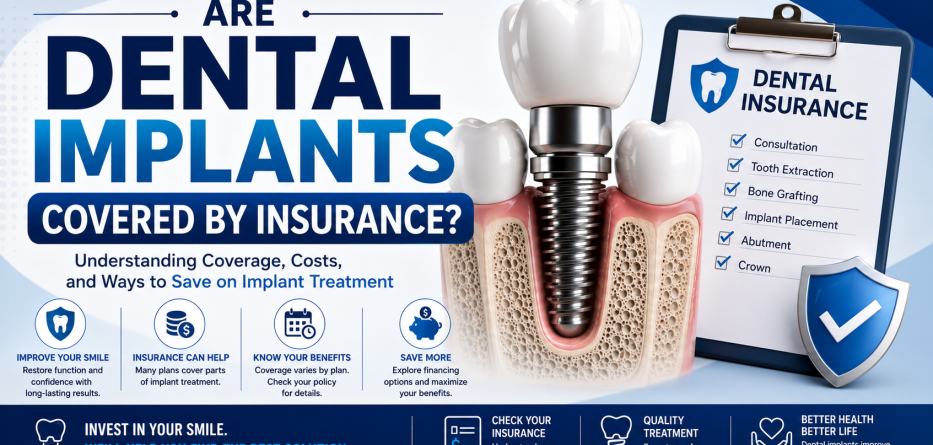
Dental implants are widely considered the gold standard for replacing missing teeth. They offer exceptional durability, natural aesthetics, and long-term oral health benefits. However, one of the most common questions patients ask before beginning treatment is, “Are dental implants covered by insurance?”
The answer isn’t always straightforward. Dental insurance coverage for implants varies significantly between providers, policies, and treatment circumstances. While some plans offer partial coverage, others may exclude implants altogether or only cover certain portions of the procedure.
Understanding how dental insurance works with implant treatment can help patients make informed financial decisions and explore options for reducing out-of-pocket costs.
In this guide, we’ll explain how insurance coverage for dental implants works, what costs may be covered, and how to maximize your benefits.
What Are Dental Implants?
A dental implant is a permanent tooth replacement solution that consists of:
- Titanium implant post
- Abutment
- Custom dental crown
The implant is surgically placed into the jawbone and functions as an artificial tooth root. Once healed, it provides a stable foundation for a replacement tooth that looks and functions like a natural tooth.
Are Dental Implants Covered by Insurance?
Quick Answer
Sometimes.
Many dental insurance plans now provide some level of implant coverage, but benefits vary considerably.
Coverage may include:
- Implant consultation
- Tooth extraction
- Bone grafting (in some cases)
- Implant placement
- Abutment
- Dental crown
However, not all policies cover every phase of treatment.
Why Insurance Coverage Varies
Historically, many insurance companies considered dental implants a cosmetic procedure and did not provide coverage.
Today, attitudes have changed because implants are recognized as a medically beneficial tooth replacement option.
Coverage often depends on:
- Insurance provider
- Plan type
- Waiting periods
- Medical necessity
- Annual benefit limits
Each policy has unique rules regarding implant treatment.
What Parts of Dental Implant Treatment May Be Covered?
Dental implant treatment often involves multiple procedures.
1. Initial Consultation
Some plans cover:
- Oral examinations
- Diagnostic imaging
- Treatment planning
This may include X-rays and other evaluations.
2. Tooth Extraction
If a damaged tooth must be removed before implant placement, insurance frequently covers part of the extraction cost.
Coverage often depends on:
- Reason for extraction
- Policy terms
- Deductibles
3. Bone Grafting
Bone grafting may be required if there is insufficient jawbone to support an implant.
Some insurance plans provide partial coverage when the procedure is considered medically necessary.
4. Implant Placement Surgery
Coverage for the implant post itself varies widely.
Some plans:
- Cover a percentage of the cost
- Offer fixed implant benefits
- Exclude implants entirely
Reviewing your policy carefully is essential.
5. Implant Crown
Even when implant placement isn’t covered, many insurance plans may help cover the crown that attaches to the implant.
This portion is sometimes classified similarly to traditional restorative treatment.
Dental Insurance vs Medical Insurance
Many patients don’t realize that medical insurance may occasionally help cover certain aspects of implant treatment.
Dental Insurance Typically Covers
- Examinations
- Cleanings
- Restorative dentistry
- Implant-related procedures
Medical Insurance May Cover
- Facial trauma
- Accidents
- Tumor-related tooth loss
- Certain reconstructive procedures
Coverage depends on the underlying reason for tooth loss.
Types of Dental Insurance Plans
PPO Plans
Preferred Provider Organization (PPO) plans often offer:
- Greater provider flexibility
- Partial implant coverage
- Annual maximum benefits
Many implant patients choose PPO plans because of their broader treatment options.
DHMO Plans
Dental Health Maintenance Organization (DHMO) plans typically have:
- Lower premiums
- Limited provider networks
- More restricted implant coverage
Coverage varies by plan.
Premium Implant-Friendly Plans
Some modern dental insurance plans specifically include implant benefits.
These plans may offer:
- Implant allowances
- Higher annual maximums
- Better restorative coverage
Patients considering implants may benefit from reviewing these options during enrollment periods.
Common Insurance Limitations
Even when implant coverage exists, limitations often apply.
Annual Maximums
Most dental plans include annual benefit caps.
Example:
| Annual Maximum | Typical Coverage |
|---|---|
| $1,000 | Limited Implant Assistance |
| $1,500 | Partial Coverage |
| $2,000+ | Greater Financial Support |
Implant treatment frequently exceeds these limits.
Waiting Periods
Some plans require patients to wait before receiving major restorative benefits.
Waiting periods may range from:
- 6 months
- 12 months
- 24 months
Review your policy before scheduling treatment.
Frequency Restrictions
Insurance companies may limit the following:
- Number of covered implants
- Replacement intervals
- Eligible treatment areas
These restrictions vary by provider.
How Much Do Dental Implants Cost Without Insurance?
Costs vary depending on:
- Geographic location
- Dentist experience
- Implant brand
- Additional procedures
Typical Cost Range
| Procedure | Estimated Cost |
|---|---|
| Single Implant | $3,000–$6,000 |
| Implant Crown | $1,000–$3,000 |
| Bone Grafting | $300–$3,000 |
| Full-Mouth Implants | $20,000–$60,000+ |
Insurance can help reduce some of these expenses.
Ways to Reduce Dental Implant Costs
Dental Financing
Many dental practices offer payment plans.
Options may include:
- Monthly installments
- Third-party financing
- Low-interest payment programs
Health Savings Accounts (HSA)
HSAs often allow tax-advantaged funds to be used for implant treatment.
Flexible Spending Accounts (FSA)
FSA funds may also be applied toward eligible dental procedures.
Dental Discount Plans
These programs provide discounted treatment fees in exchange for annual membership.
Questions to Ask Your Insurance Provider
Before treatment, ask:
- Does my plan cover dental implants?
- What percentage is covered?
- Are there waiting periods?
- Is pre-authorization required?
- What is my annual maximum?
- Are bone grafting procedures covered?
- Is the crown covered separately?
Obtaining answers in writing can help avoid surprises.
Is Dental Implant Coverage Improving?
Yes.
As dental implants become increasingly common, more insurance providers are expanding implant benefits.
Recent trends include:
- Higher annual maximums
- Dedicated implant coverage
- Expanded restorative benefits
- Improved patient access
Coverage continues to improve across many plans.
Frequently Asked Questions
Does insurance usually cover dental implants?
Some plans provide partial coverage, while others exclude implants entirely.
Are implant crowns covered more often than implants?
Yes. Many policies cover crowns even when implant placement itself is excluded.
Can medical insurance cover dental implants?
In certain situations involving trauma, injury, or medical necessity, medical insurance may contribute.
Do Medicare plans cover dental implants?
Traditional Medicare generally does not cover routine dental implants, though some Medicare Advantage plans may offer dental benefits.
Is dental implant insurance worth it?
For patients planning implant treatment, insurance with implant benefits can significantly reduce costs.
Conclusion
So, are dental implants covered by insurance?
The answer depends on your specific policy, provider, and treatment needs. While some plans offer partial coverage for implant-related procedures, others may only cover portions of treatment such as crowns or extractions.
The good news is that dental implant coverage continues to expand as insurers recognize the long-term health benefits of implants. By understanding your policy, asking the right questions, and exploring financing options, you can make dental implant treatment more affordable and accessible.
Before beginning treatment, work closely with your dentist and insurance provider to maximize your benefits and minimize out-of-pocket expenses.
