Visiting a dentist for the first time can feel intimidating, especially if you’re unsure what to expect. Whether you’re seeking a routine checkup, cosmetic treatment, dental implants, orthodontics, or addressing a specific concern, the dental consultation is the first and most important step in your oral healthcare journey.
A dental consultation allows your dentist to evaluate your oral health, identify potential issues, discuss treatment options, and create a personalized care plan. Understanding what happens during a dental consultation can help reduce anxiety and ensure you’re fully prepared for your appointment.
In this guide, we’ll walk you through every stage of a dental consultation, explain why it’s important, and answer common questions patients have before their visit.
What Is a Dental Consultation?
A dental consultation is an initial appointment where a dentist evaluates your oral health, discusses your concerns, and recommends appropriate treatments.
The purpose of the consultation is to:
- Assess your teeth and gums
- Review your medical history
- Identify dental problems
- Discuss treatment goals
- Create a personalized treatment plan
This appointment provides valuable information before any dental procedures begin.
Why Is a Dental Consultation Important?
A consultation helps dentists detect problems early and develop the most effective treatment strategy.
Benefits of a Dental Consultation
- Early diagnosis of dental issues
- Personalized treatment recommendations
- Better understanding of oral health
- Cost and treatment planning
- Opportunity to ask questions
- Reduced treatment risks
Regular consultations play a key role in maintaining long-term oral health.
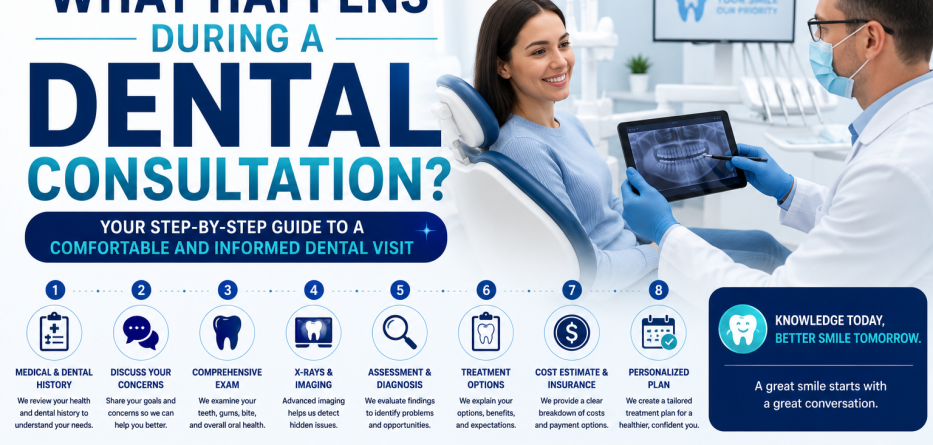
Step 1: Reviewing Your Medical and Dental History
The consultation typically begins with a review of your health history.
Your dentist may ask about:
Medical Information
- Current medications
- Allergies
- Chronic health conditions
- Previous surgeries
- Pregnancy status
Dental History
- Previous dental treatments
- Past dental problems
- Tooth sensitivity
- Gum issues
- Dental anxiety
Providing accurate information helps your dentist recommend safe and effective treatment options.
Step 2: Discussing Your Concerns and Goals
This is your opportunity to explain why you’re visiting the dentist.
Common concerns include:
- Tooth pain
- Missing teeth
- Cosmetic improvements
- Gum problems
- Bad breath
- Crowded teeth
- Dental implant consultations
Questions Your Dentist May Ask
- Are you experiencing discomfort?
- How long have symptoms been present?
- What are your treatment goals?
- Are there any specific concerns you’d like addressed?
Open communication helps ensure the best possible outcome.
Step 3: Comprehensive Oral Examination
The dentist will perform a detailed examination of your mouth.
Areas Evaluated
Teeth
The dentist checks for:
- Cavities
- Cracks
- Wear patterns
- Existing restorations
Gums
The gums are examined for:
- Inflammation
- Bleeding
- Recession
- Signs of periodontal disease
Bite and Jaw
Your bite alignment and jaw function may also be assessed.
Oral Cancer Screening
Many consultations include a screening for the following:
- Abnormal tissue changes
- Oral lesions
- Suspicious growths
Early detection can be lifesaving.
Step 4: Dental X-Rays and Imaging
X-rays allow dentists to see areas not visible during a visual examination.
Common Imaging Methods
- Digital X-rays
- Panoramic X-rays
- Bitewing X-rays
- Cone Beam CT (CBCT) scans
These images help identify:
- Cavities between teeth
- Bone loss
- Impacted teeth
- Infections
- Root problems
Advanced imaging is especially important for procedures like dental implants and orthodontics.
Step 5: Assessment of Oral Health
After examining your mouth and reviewing imaging, your dentist evaluates your overall oral health.
This assessment may include:
Tooth Health
- Presence of decay
- Fractures
- Existing restorations
Gum Health
- Gingivitis
- Periodontal disease
- Gum recession
Bone Health
- Bone density
- Bone loss
- Implant suitability
The dentist uses this information to determine the most appropriate treatment options.
Step 6: Discussing Treatment Options
Once the evaluation is complete, your dentist will explain any findings and discuss potential treatments.
Depending on your needs, recommendations may include the following:
- Dental fillings
- Crowns
- Root canal therapy
- Teeth whitening
- Veneers
- Dental implants
- Orthodontics
- Gum disease treatment
What You’ll Learn
- Treatment benefits
- Risks and limitations
- Alternative options
- Expected outcomes
This discussion helps you make informed decisions about your oral health.
Step 7: Creating a Personalized Treatment Plan
Every patient has unique needs.
Your dentist will create a treatment plan tailored to your
- Oral health condition
- Budget
- Goals
- Lifestyle
- Timeline
Treatment Plan Components
- Recommended procedures
- Treatment sequence
- Estimated duration
- Recovery expectations
- Follow-up appointments
The goal is to achieve the best possible long-term outcome.
Step 8: Cost Estimates and Insurance Review
Many consultations include a discussion about financial considerations.
Topics may include:
- Treatment costs
- Insurance coverage
- Payment plans
- Financing options
Understanding costs upfront helps patients plan confidently.
Questions You Should Ask During a Dental Consultation
A consultation is an excellent opportunity to learn more about your oral health.
Helpful Questions
- What treatment do you recommend?
- What are the alternatives?
- How long will treatment take?
- What is the recovery process like?
- What are the risks and benefits?
- How much will treatment cost?
- How can I improve my oral health at home?
Never hesitate to ask questions about your care.
What Happens During a Dental Implant Consultation?
Dental implant consultations often involve additional evaluations.
Your dentist may assess the following:
- Bone density
- Missing tooth areas
- Gum health
- Implant candidacy
Advanced imaging such as CBCT scans may be used to create a precise treatment plan.
Patients also receive information about:
- Implant procedures
- Healing timelines
- Costs
- Long-term maintenance
How Long Does a Dental Consultation Take?
The length of a consultation depends on the complexity of your case.
Typical Consultation Times
| Type of Consultation | Average Duration |
|---|---|
| Routine Checkup | 30–60 Minutes |
| Cosmetic Consultation | 45–60 Minutes |
| Dental Implant Consultation | 60–90 Minutes |
| Orthodontic Consultation | 45–90 Minutes |
More complex treatment planning may require additional appointments.
Tips to Prepare for Your Dental Consultation
To get the most from your appointment:
Before Your Visit
- Bring medical records if necessary
- Prepare a list of medications
- Write down questions
- Bring insurance information
- Arrive early for paperwork
Preparation helps ensure a smooth and productive consultation.
Frequently Asked Questions
Is a dental consultation painful?
No. Most consultations involve examinations and discussions rather than treatment.
Do I need X-rays during a consultation?
Not always, but X-rays are often recommended to identify hidden dental problems.
Can I get treatment the same day?
In some cases, yes. Minor procedures may be performed immediately if appropriate.
How much does a dental consultation cost?
Costs vary depending on location, provider, and whether imaging is required.
What should I bring to my consultation?
Bring identification, insurance information, medication lists, and any relevant medical records.
Conclusion
A dental consultation is the foundation of effective oral healthcare. It provides an opportunity for your dentist to evaluate your oral health, identify concerns, discuss treatment options, and create a personalized care plan tailored to your needs.
Whether you’re seeking preventive care, cosmetic improvements, orthodontic treatment, or dental implants, understanding what happens during a dental consultation can help you feel more confident and prepared. By attending regular consultations and communicating openly with your dentist, you can take an important step toward maintaining a healthy, beautiful smile for years to come.