
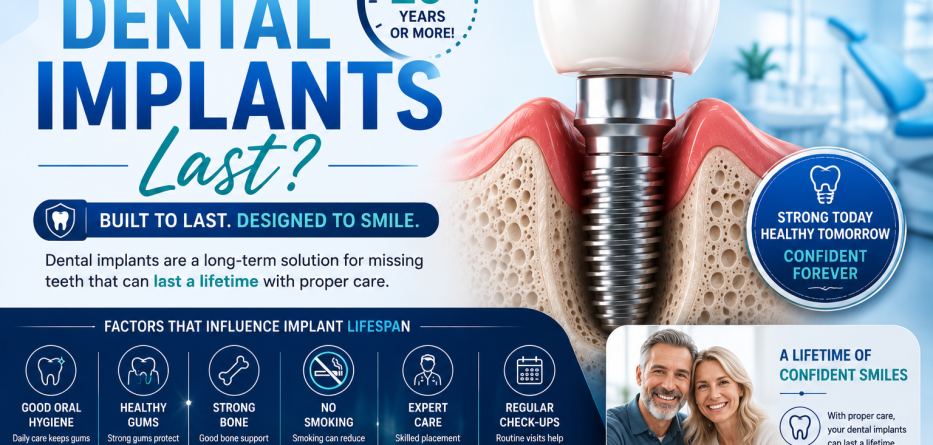
Dental implants have become the gold standard for replacing missing teeth because of their durability, functionality, and natural appearance. One of the most common questions patients ask before treatment is, “How long do dental implants last?”
The good news is that dental implants are designed to be a long-term solution. In many cases, they can last for decades and even a lifetime with proper care. However, several factors influence their longevity, including oral hygiene, lifestyle habits, overall health, and the quality of the implant procedure.
In this guide, we’ll explore how long dental implants typically last, what affects their lifespan, and how you can maximize the longevity of your investment.
Quick Answer: How Long Do Dental Implants Last?
Most dental implants can last 20 years or more, and many remain functional for a lifetime.
The dental implant consists of three parts:
- Implant post (placed in the jawbone)
- Abutment (connector piece)
- Crown (artificial tooth)
Average Lifespan
| Component | Expected Lifespan |
|---|---|
| Implant Post | 20+ Years to Lifetime |
| Abutment | 15–20 Years |
| Dental Crown | 10–15 Years |
While the implant post may never need replacement, the crown can wear down over time and may eventually require replacement.
Why Do Dental Implants Last So Long?
Unlike dentures or bridges, dental implants are anchored directly into the jawbone through a process called osseointegration.
During osseointegration:
- The jawbone fuses with the titanium implant
- A strong, stable foundation is created
- The implant functions like a natural tooth root
This unique bond provides exceptional strength and durability.
Key Benefits of Osseointegration
- Long-term stability
- Reduced implant movement
- Improved chewing power
- Bone preservation
- Enhanced longevity
Dental Implants vs Other Tooth Replacement Options
One reason many patients choose implants is their superior lifespan compared to other restoration methods.
| Restoration Type | Average Lifespan |
| Dental Implants | 20+ Years |
| Dental Bridges | 5–15 Years |
| Partial Dentures | 5–10 Years |
| Complete Dentures | 5–10 Years |
Although implants often require a higher initial investment, their longevity can make them more cost-effective over time.
Factors That Affect the Lifespan of Dental Implants
1. Oral Hygiene
Good oral hygiene is essential for long-term implant success.
Poor oral care can lead to:
- Gum inflammation
- Peri-implantitis
- Bone loss
- Implant failure
Recommended Habits
- Brush twice daily
- Floss regularly
- Use antimicrobial mouthwash if advised
- Attend professional cleanings
2. Gum Health
Healthy gums protect the tissues surrounding the implant.
Gum disease can weaken the support structures around the implant and shorten its lifespan.
Warning signs include:
- Bleeding gums
- Swelling
- Receding gums
- Persistent bad breath
Early treatment helps prevent complications.
3. Bone Quality and Density
Dental implants require adequate jawbone support.
Patients with strong bone density generally experience the following:
- Better stability
- Faster healing
- Higher long-term success rates
Bone grafting procedures may be recommended when bone volume is insufficient.
4. Smoking and Tobacco Use
Smoking is one of the leading causes of implant complications.
Tobacco use can:
- Reduce blood flow
- Delay healing
- Increase infection risk
- Contribute to implant failure
Patients who quit smoking often enjoy significantly better implant outcomes.
5. Teeth Grinding (Bruxism)
Chronic teeth grinding places excessive pressure on dental implants.
Potential problems include the following:
- Crown fractures
- Screw loosening
- Implant overload
- Bone stress
A custom nightguard may help protect the restoration.
6. Overall Health
Certain medical conditions may affect healing and implant longevity.
Examples include:
- Uncontrolled diabetes
- Autoimmune disorders
- Osteoporosis
- Immune deficiencies
Managing these conditions effectively improves treatment outcomes.
7. Implant Placement and Dentist Expertise
The experience of the implant dentist plays a major role in long-term success.
Proper planning helps ensure:
- Accurate implant positioning
- Optimal bite alignment
- Healthy bone integration
- Reduced complications
Choosing an experienced implant provider can significantly increase implant longevity.
What Is the Success Rate of Dental Implants?
Dental implants are among the most successful procedures in modern dentistry.
Success Rate Statistics
- Overall success rates often exceed 95%
- Many implants remain functional for 25 years or longer
- Implant survival rates continue to improve with modern technology
Success depends on proper placement, healing, and maintenance.
Can Dental Implants Last a Lifetime?
Yes, many dental implants can last a lifetime.
Patients who experience the longest-lasting results typically:
- Maintain excellent oral hygiene
- Visit the dentist regularly
- Avoid smoking
- Manage medical conditions effectively
- Follow post-treatment recommendations
The implant itself often outlasts the restoration attached to it.
Signs Your Dental Implant May Need Attention
Although implant complications are uncommon, it’s important to recognize warning signs.
Contact your dentist if you experience:
- Implant mobility
- Pain while chewing
- Swelling around the implant
- Gum recession
- Persistent bad breath
- Bleeding around the implant
Early treatment can often prevent more serious problems.
How to Make Your Dental Implants Last Longer
Follow these simple strategies:
Daily Care
- Brush twice daily
- Floss around implants
- Maintain a healthy diet
Professional Care
- Schedule dental checkups every six months
- Attend regular professional cleanings
- Monitor implant health with X-rays when recommended
Lifestyle Choices
- Avoid smoking
- Limit excessive alcohol consumption
- Wear a mouthguard during sports
- Use a nightguard if you grind your teeth
These habits can significantly extend the lifespan of your dental implants.
Frequently Asked Questions
Do dental implants last forever?
While no restoration can be guaranteed forever, many implant posts last a lifetime with proper care.
What part of the implant usually wears out first?
The dental crown typically experiences the most wear and may need replacement after 10–15 years.
Can dental implants fail after 10 years?
Yes, although rare. Failure may result from gum disease, smoking, poor oral hygiene, or excessive bite forces.
Are dental implants worth the investment?
Many patients consider implants worth the investment because of their longevity, comfort, and natural appearance.
How often should implants be checked?
Most dentists recommend implant evaluations every six months during routine dental visits.
Conclusion
So, how long do dental implants last?
In most cases, dental implants can last 20 years or more, and many patients enjoy a lifetime of benefits from their treatment. Their exceptional durability is largely due to osseointegration, which allows the implant to become firmly anchored within the jawbone.
By maintaining good oral hygiene, attending regular dental visits, avoiding tobacco use, and following professional recommendations, you can maximize the lifespan of your dental implants and enjoy a healthy, confident smile for decades to come.
