
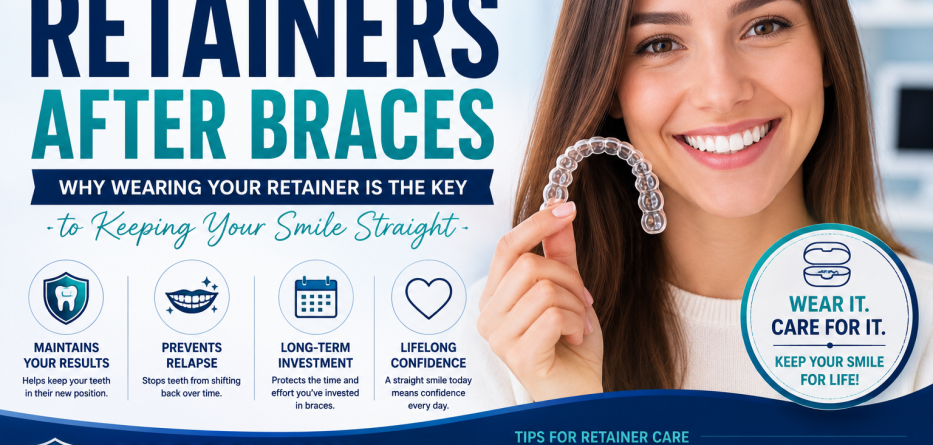
Completing orthodontic treatment is an exciting milestone. After months or even years of wearing braces, you finally have the straight smile you’ve always wanted. However, many patients are surprised to learn that orthodontic treatment doesn’t truly end when the braces come off. The next crucial step is wearing a retainer.
Retainers play a vital role in maintaining the results achieved through braces. Without proper retention, teeth can gradually shift back toward their original positions, undoing much of the progress made during treatment.
In this guide, you’ll learn why retainers are important after braces, the different types available, how long you need to wear them, and how to care for them properly.
What Is a Retainer?
A retainer is a custom-made orthodontic appliance designed to keep teeth in their new positions after braces are removed.
During orthodontic treatment, braces move teeth through the jawbone. Once braces come off, the surrounding bone and tissues need time to stabilize. Retainers help prevent teeth from shifting while this process occurs.
Main Purpose of a Retainer
- Maintain alignment
- Prevent teeth from moving back
- Protect orthodontic results
- Support long-term smile stability
Think of a retainer as an insurance policy for your newly straightened smile.
Why Are Retainers Necessary After Braces?
Many patients assume their teeth will remain permanently straight once braces are removed. Unfortunately, teeth naturally have a tendency to shift throughout life.
Reasons Teeth Move After Braces
- Natural aging process
- Muscle pressure from lips and tongue
- Changes in jaw structure
- Teeth grinding and clenching
- Incomplete bone stabilization
Without retention, orthodontic relapse can occur.
What Is Orthodontic Relapse?
Orthodontic relapse refers to teeth gradually moving back toward their original positions after treatment.
Retainers are specifically designed to prevent this problem.
What Happens If You Don’t Wear Your Retainer?
Failing to wear your retainer as instructed can lead to noticeable tooth movement.
Potential consequences include the following:
- Crooked teeth returning
- Gaps reopening
- Bite problems developing
- Need for additional orthodontic treatment
- Reduced treatment investment value
Even minor shifting can affect the appearance of your smile.
Types of Retainers After Braces
Several types of retainers are available.
1. Hawley Retainers
Hawley retainers consist of:
- Acrylic base
- Metal wire framework
Advantages
- Durable
- Adjustable
- Long lifespan
- Easy to clean
Disadvantages
- More visible
- May affect speech initially
2. Clear Plastic Retainers
Also known as Essix retainers.
These transparent retainers resemble clear aligners.
Advantages
- Virtually invisible
- Comfortable
- Easy to wear
Disadvantages
- Can crack over time
- Less durable than Hawley retainers
Many patients prefer clear retainers for cosmetic reasons.
3. Fixed (Permanent) Retainers
A thin wire is bonded to the back of the front teeth.
Advantages
- Always working
- No risk of forgetting to wear it
- Excellent long-term retention
Disadvantages
- More difficult to clean
- Requires monitoring
- Possible wire damage
Fixed retainers are commonly used on lower front teeth.
How Long Do You Need to Wear a Retainer?
One of the most common questions patients ask is
“How long do I need to wear my retainer?”
The answer varies depending on individual circumstances.
Typical Retainer Schedule
First 3–6 Months
- Full-time wear
- Usually 20–22 hours per day
After Initial Stabilization
- Nighttime wear only
Long-Term
Many orthodontists recommend wearing retainers at night indefinitely.
Why Long-Term Retention Matters
Teeth continue to shift naturally throughout life.
Consistent retainer use helps maintain alignment for decades.
How Often Should Retainers Be Replaced?
The lifespan of a retainer depends on the type and level of care.
| Retainer Type | Average Lifespan |
|---|---|
| Hawley Retainer | 5–10 Years |
| Clear Retainer | 1–5 Years |
| Fixed Retainer | 5–20 Years |
Regular dental and orthodontic checkups help identify wear or damage.
How to Care for Your Retainer
Proper care extends the life of your retainer and supports oral health.
Cleaning Tips
- Rinse daily
- Brush gently with a soft toothbrush
- Use retainer cleaning tablets when recommended
- Store properly when not in use
Avoid
- Hot water
- Harsh chemicals
- Wrapping in napkins
- Leaving it exposed to pets
Heat can warp plastic retainers and affect their fit.
Common Retainer Problems
Retainer Feels Tight
A tight retainer may indicate slight tooth movement.
Contact your orthodontist if discomfort persists.
Cracked or Broken Retainer
Damaged retainers may not effectively maintain alignment.
Prompt replacement is important.
Lost Retainer
The longer you wait to replace a lost retainer, the greater the risk of tooth movement.
Benefits of Wearing Retainers After Braces
Preserves Your Smile
Retainers help maintain the results achieved through orthodontic treatment.
Protects Your Investment
Braces require significant time and financial commitment.
Retainers help ensure those results last.
Prevents Future Treatment
Consistent retainer use reduces the likelihood of needing braces again.
Supports Bite Stability
Retainers help maintain proper tooth alignment and bite function.
Retainers vs Braces: Understanding Their Roles
| Feature | Braces | Retainers |
|---|---|---|
| Move Teeth | Yes | No |
| Maintain Results | No | Yes |
| Active Treatment | Yes | No |
| Long-Term Use | No | Often Yes |
Braces create the new smile. Retainers help keep it.
Frequently Asked Questions
Do I really need a retainer after braces?
Yes. Retainers are essential for preventing teeth from shifting after orthodontic treatment.
How many hours should I wear my retainer?
Most patients wear retainers full-time initially, followed by nighttime wear.
Can teeth shift years after braces?
Yes. Teeth can continue moving throughout life without proper retention.
What happens if I stop wearing my retainer?
Your teeth may gradually move out of alignment, potentially requiring additional treatment.
Are permanent retainers better?
Permanent retainers offer continuous retention but require careful cleaning and monitoring.
How do I know if my retainer needs replacement?
Signs include cracks, poor fit, discoloration, or damage.
Conclusion
Retainers are a critical part of successful orthodontic treatment. While braces straighten your teeth, retainers help preserve those results for years to come. Without proper retention, teeth can gradually shift, leading to orthodontic relapse and potentially requiring additional treatment.
By wearing your retainer as instructed, practicing good oral hygiene, and attending regular dental checkups, you can enjoy a straight, healthy, and confident smile long after your braces are removed.
