
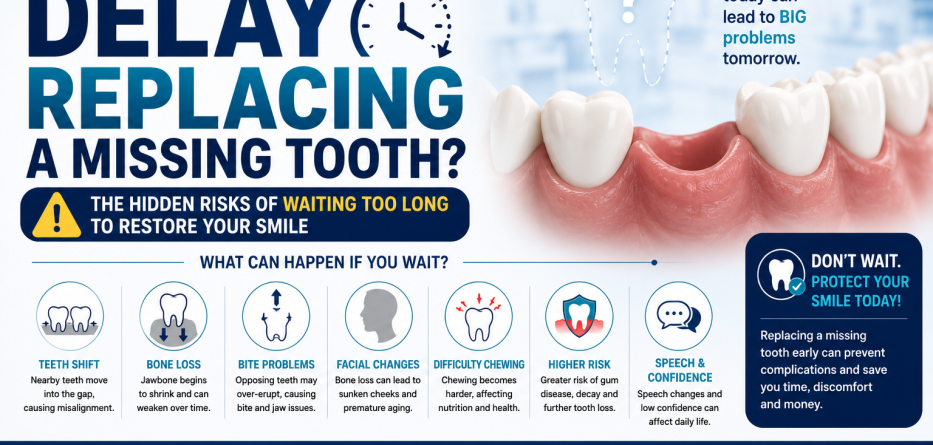
Losing a tooth can be a stressful experience, whether it’s due to injury, decay, gum disease, or extraction. While some people immediately explore tooth replacement options, others may postpone treatment because they believe a single missing tooth isn’t a major concern.
However, delaying the replacement of a missing tooth can lead to several oral health problems that extend far beyond the visible gap in your smile. Missing teeth can affect your ability to chew, alter your bite, impact your appearance, and even contribute to long-term bone loss.
In this article, we’ll explore what happens when you delay replacing a missing tooth, the risks involved, and why timely treatment is essential for maintaining a healthy smile.
Why Replacing a Missing Tooth Matters
Every tooth plays an important role in your oral health.
Your teeth work together to
- Support proper chewing
- Maintain bite alignment
- Preserve jawbone structure
- Support facial appearance
- Prevent neighboring teeth from shifting
When a tooth is lost, this balance is disrupted.
Immediate Effects of a Missing Tooth
Shortly after losing a tooth, you may experience:
- Difficulty chewing certain foods
- Sensitivity in the surrounding area
- Minor speech changes
- Reduced confidence when smiling
While these issues may seem manageable at first, more significant complications often develop over time.
1. Neighboring Teeth Begin to Shift
One of the earliest consequences of a missing tooth is tooth movement.
Teeth naturally rely on neighboring teeth for support. When a gap is left untreated, adjacent teeth may begin to drift into the empty space.
Problems Caused by Tooth Shifting
- Crooked teeth
- Bite misalignment
- Increased plaque buildup
- Difficulty cleaning teeth
- Greater risk of decay
Even a single missing tooth can gradually affect the alignment of your entire smile.
2. Opposing Teeth Can Over-Erupt
The tooth directly opposite the missing tooth may also be affected.
Without contact from the missing tooth, the opposing tooth can begin to move out of its normal position.
This process is known as supraeruption or over-eruption.
Potential Consequences
- Bite problems
- Increased tooth wear
- Jaw discomfort
- Difficulty restoring the missing tooth later
3. Jawbone Loss Begins
One of the most serious effects of delaying tooth replacement is bone loss.
Natural tooth roots stimulate the jawbone whenever you chew. After a tooth is lost, this stimulation disappears.
As a result, the jawbone begins to shrink through a process called bone resorption.
Effects of Bone Loss
- Reduced bone density
- Weakened jaw structure
- Changes in facial appearance
- Difficulty placing dental implants later
Bone loss can begin within the first few months after tooth loss.
4. Changes in Facial Appearance
Your teeth and jawbone help support the shape of your face.
When bone loss occurs, patients may notice:
- Sunken cheeks
- Premature facial aging
- Sagging skin around the mouth
- Loss of facial volume
Over time, untreated tooth loss can significantly impact overall appearance.
5. Difficulty Chewing Food
Missing teeth can reduce chewing efficiency.
This may cause patients to:
- Avoid certain foods
- Chew on one side of the mouth
- Experience digestive issues due to poor food breakdown
Foods commonly affected include:
- Meat
- Nuts
- Raw vegetables
- Fruits
Reduced chewing ability can negatively impact nutrition and overall health.
6. Increased Risk of Gum Disease
Gaps left by missing teeth can become difficult to clean properly.
This creates areas where:
- Food particles accumulate
- Plaque develops
- Bacteria multiply
Over time, this can increase the risk of the following:
- Gingivitis
- Periodontitis
- Additional tooth loss
Maintaining oral hygiene becomes more challenging when teeth shift into abnormal positions.
7. Bite Problems and TMJ Disorders
As teeth shift and the bite changes, stress may be placed on the jaw joints.
This can contribute to:
- Jaw pain
- Headaches
- Clicking sounds
- Teeth grinding
- Temporomandibular joint (TMJ) disorders
A balanced bite is essential for long-term oral health and comfort.
8. Speech Difficulties
Certain teeth play an important role in speech.
Depending on the location of the missing tooth, patients may notice the following:
- Difficulty pronouncing certain sounds
- Slurred speech
- Whistling sounds while talking
Front tooth loss is particularly likely to affect speech clarity.
9. Reduced Self-Confidence
Beyond physical health concerns, missing teeth can affect emotional well-being.
Many people experience:
- Embarrassment when smiling
- Social anxiety
- Reduced confidence
- Reluctance to speak or laugh
Replacing missing teeth often improves both oral function and self-esteem.
How Long Is Too Long to Wait?
There is no exact deadline, but dental professionals generally recommend replacing a missing tooth as soon as practical.
The longer treatment is delayed, the greater the risk of the following:
- Bone loss
- Tooth shifting
- Bite problems
- More complex treatment needs
Early intervention often results in simpler and more cost-effective solutions.
Best Options for Replacing a Missing Tooth
Dental Implants
Benefits:
- Prevent bone loss
- Natural appearance
- Long-lasting results
- Excellent chewing function
Dental Bridges
Benefits:
- Fixed restoration
- Faster treatment
- Effective for replacing one or more teeth
Partial Dentures
Benefits:
- Affordable solution
- Non-surgical option
- Multiple tooth replacement
Your dentist can recommend the best option based on your oral health and goals.
Can Bone Loss Be Reversed?
In some cases, lost bone can be rebuilt using procedures such as the following:
- Bone grafting
- Ridge augmentation
- Regenerative treatments
However, these procedures may increase treatment time and cost.
Replacing a missing tooth early often helps avoid the need for additional procedures.
Frequently Asked Questions
Is it okay to leave a missing tooth untreated?
While it may seem harmless initially, untreated tooth loss can lead to shifting teeth, bone loss, and bite problems.
How quickly does bone loss occur after tooth loss?
Bone loss can begin within the first few months and continues gradually over time.
Will other teeth move if I lose one tooth?
Yes. Neighboring teeth often drift toward the empty space, affecting alignment and bite function.
What is the best replacement for a missing tooth?
Dental implants are often considered the gold standard because they replace both the tooth and its root.
Can I get a dental implant years after losing a tooth?
Yes, although bone grafting may be required if significant bone loss has occurred.
Conclusion
Delaying the replacement of a missing tooth can have far-reaching consequences for your oral health, appearance, and overall quality of life. What starts as a simple gap can eventually lead to tooth shifting, bone loss, bite problems, gum disease, and increased treatment complexity.
The good news is that modern dentistry offers several effective tooth replacement options, including dental implants, bridges, and partial dentures. Taking action sooner rather than later can help preserve your oral health, maintain your smile, and prevent more serious complications in the future.
