

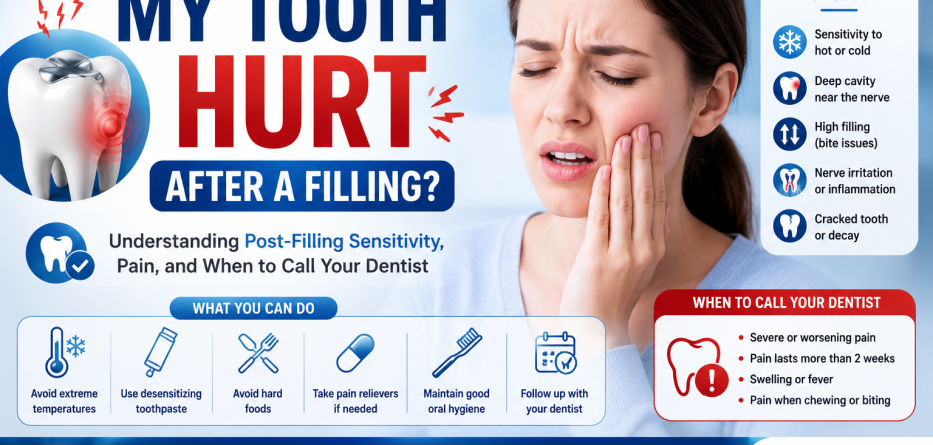
Getting a dental filling is one of the most common procedures used to treat cavities and restore damaged teeth. While fillings are generally straightforward and successful, some patients experience discomfort or sensitivity afterward. If you’ve recently had a filling and are wondering, “Why does my tooth hurt after a filling?” you’re not alone.
Mild sensitivity after a filling is usually normal and temporary. However, persistent pain or severe discomfort may indicate an underlying issue that requires attention. Understanding the possible causes of post-filling pain can help you determine when it’s part of the healing process and when it’s time to contact your dentist.
In this guide, we’ll explore the common reasons for tooth pain after a filling, how long it typically lasts, and what you can do to find relief.
Is It Normal for a Tooth to Hurt After a Filling?
Quick Answer
Yes. Mild discomfort, sensitivity, or tenderness after a filling is common and usually resolves within a few days to a few weeks.
After treatment, the tooth may react to
- Temperature changes
- Pressure while chewing
- Sweet foods and drinks
- Air exposure
Most cases improve naturally as the tooth adjusts to the new filling.
Common Reasons Why Your Tooth Hurts After a Filling
1. Normal Post-Treatment Sensitivity
During a filling procedure, the dentist removes decayed tooth structure and places restorative material inside the tooth.
This process can temporarily irritate the tooth’s nerve.
Symptoms
- Sensitivity to hot or cold foods
- Mild discomfort when chewing
- Occasional sharp sensations
How Long Does It Last?
Typically a few days to several weeks.
2. Deep Cavity Near the Nerve
If the cavity were large or close to the tooth’s pulp (nerve tissue), the nerve may remain inflamed after treatment.
Signs
- Lingering sensitivity
- Increased discomfort with temperature changes
- Occasional throbbing pain
In some cases, the nerve may require additional time to heal.
3. High Filling (Bite Misalignment)
One of the most common causes of post-filling pain is a filling that sits slightly too high.
When you bite down, excessive pressure is placed on the restored tooth.
Symptoms
- Pain when chewing
- A tooth feels “taller” than others
- Discomfort when biting down
Solution
A simple adjustment by your dentist can usually resolve the problem quickly.
4. Tooth Nerve Irritation
Dental procedures can temporarily irritate the nerve inside the tooth.
This irritation may cause:
- Sharp pain
- Intermittent discomfort
- Sensitivity to temperature
The nerve often settles down naturally over time.
5. Referred Pain
Sometimes the tooth next to the treated tooth becomes sensitive even though it wasn’t treated.
This phenomenon is called referred pain.
Characteristics
- Difficult to identify the exact source
- Temporary
- Usually resolves without treatment
6. Sensitivity to Filling Materials
Although uncommon, some patients may be sensitive to certain filling materials.
Potential reactions include:
- Persistent discomfort
- Local irritation
- Mild inflammation
Your dentist can evaluate whether the filling material is contributing to symptoms.
7. Cracked Tooth
In some cases, the original tooth may have microscopic cracks that become more noticeable after the filling procedure.
Symptoms
- Sharp pain while chewing
- Pain when releasing bite pressure
- Temperature sensitivity
Additional treatment may be needed if a crack is present.
8. Pulpitis (Inflamed Tooth Nerve)
The pulp is the soft tissue inside the tooth containing nerves and blood vessels.
Deep decay or extensive treatment may cause pulp inflammation.
Reversible Pulpitis
Symptoms:
- Temporary sensitivity
- Mild discomfort
Usually heals naturally.
Irreversible Pulpitis
Symptoms:
- Severe pain
- Lingering sensitivity
- Spontaneous throbbing
May require root canal treatment.
How Long Should Pain Last After a Filling?
| Type of Discomfort | Typical Duration |
|---|---|
| Mild Sensitivity | A Few Days |
| Cold Sensitivity | Up to Several Weeks |
| Chewing Discomfort | 1–2 Weeks |
| Bite Problems | Until Adjustment |
| Severe Pain | Requires Evaluation |
If symptoms worsen instead of improving, contact your dentist.
Signs You Should Call Your Dentist
Seek professional evaluation if you experience:
- Severe pain
- Persistent throbbing
- Pain lasting more than two weeks
- Swelling
- Fever
- Difficulty chewing
- Sharp pain when biting
These symptoms may indicate a problem requiring treatment.
How to Relieve Tooth Pain After a Filling
Avoid Extreme Temperatures
Choose foods and drinks that are:
- Warm
- Room temperature
- Non-irritating
Avoid:
- Ice-cold beverages
- Very hot foods
Use Desensitizing Toothpaste
Products designed for sensitive teeth can help reduce nerve sensitivity over time.
Avoid Hard Foods
For several days after treatment, avoid:
- Ice
- Nuts
- Hard candies
- Crunchy snacks
This minimizes pressure on the restored tooth.
Take Pain Relievers if recommended.
Over-the-counter medications may help manage temporary discomfort.
Always follow your dentist’s recommendations.
Practice Good Oral Hygiene
Continue:
- Brushing twice daily
- Flossing carefully
- Attending regular dental checkups
Healthy gums and teeth support healing.
Can a Filling Fail?
Although uncommon, fillings can occasionally develop problems.
Possible Issues
- Filling fracture
- Filling leakage
- Recurrent decay
- Improper fit
- Material wear
Regular dental examinations help identify these issues early.
How Dentists Prevent Post-Filling Pain
Modern dentistry uses several techniques to minimize discomfort.
These include:
- Advanced filling materials
- Careful bite adjustments
- Precision placement techniques
- Conservative cavity preparation
Dentists also evaluate the depth of decay to determine the most appropriate treatment approach.
Frequently Asked Questions
How long does sensitivity last after a filling?
Most sensitivity resolves within a few days to a few weeks.
Is it normal to have pain when biting after a filling?
Yes, especially if the filling is slightly high. A simple adjustment often solves the problem.
Can a filling cause nerve pain?
Temporary nerve irritation is common, particularly after treating deep cavities.
When should I worry about pain after a filling?
If pain is severe, worsening, persistent, or accompanied by swelling, contact your dentist promptly.
Can I eat immediately after a filling?
Many fillings allow immediate eating, but your dentist may recommend waiting depending on the material used.
Tips for Faster Recovery After a Filling
- Avoid hard and sticky foods.
- Use sensitive toothpaste.
- Maintain excellent oral hygiene.
- Follow post-treatment instructions.
- Attend follow-up appointments if recommended.
- Contact your dentist if symptoms persist.
These simple steps can support healing and reduce discomfort.
Conclusion
If you’re wondering, “Why does my tooth hurt after a filling?”, the good news is that mild sensitivity and discomfort are often a normal part of the healing process. The tooth may need time to adjust after treatment, especially if the cavity was deep or close to the nerve.
However, persistent pain, severe discomfort, or problems with your bite should never be ignored. A quick evaluation by your dentist can identify the cause and ensure your filling functions properly. With proper care and follow-up, most post-filling discomfort resolves quickly, allowing you to enjoy a healthy, pain-free smile.

