
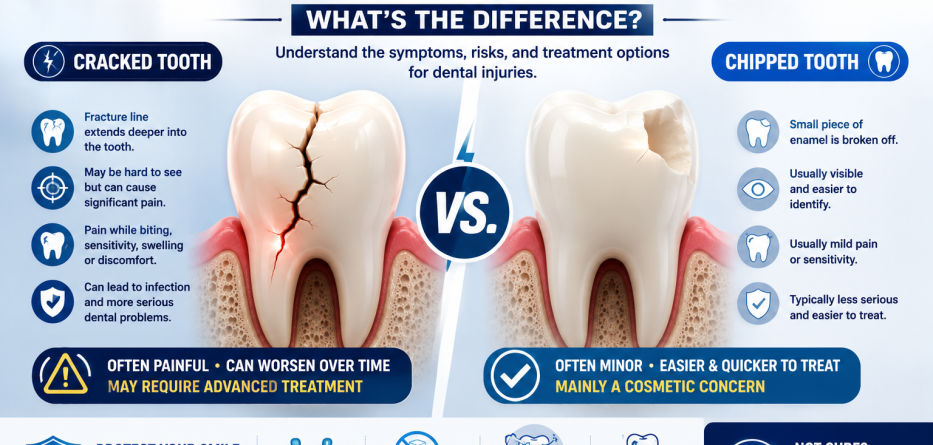
Dental injuries can happen when you least expect them. Biting down on hard foods, sports accidents, falls, or teeth grinding can all damage your teeth. Two of the most common dental injuries are cracked teeth and chipped teeth. While these terms are often used interchangeably, they are actually different conditions that require different treatment approaches.
Understanding the difference between a cracked tooth and a chipped tooth can help you recognize the severity of the problem and seek appropriate dental care. Some cases may only require cosmetic treatment, while others can threaten the health of the tooth and require urgent attention.
In this guide, we’ll explain the differences between cracked and chipped teeth, their causes, symptoms, treatment options, and how to prevent future dental damage.
What Is a Chipped Tooth?
A chipped tooth occurs when a small piece of the tooth’s outer enamel breaks off.
Chips typically affect the visible portion of the tooth and may range from tiny cosmetic imperfections to larger fractures involving deeper layers.
Common Causes of Chipped Teeth
- Biting hard foods
- Ice chewing
- Sports injuries
- Falls and accidents
- Using teeth as tools
- Teeth grinding
In many cases, chipped teeth are not painful because the damage is limited to the enamel.
What Is a Cracked Tooth?
A cracked tooth involves a fracture that extends deeper into the tooth structure.
Unlike a chip, a crack may not always be visible and can affect the enamel, dentin, or even the tooth root.
Common Causes of Cracked Teeth
- Teeth grinding (bruxism)
- Trauma to the face or mouth
- Large fillings weakening the tooth
- Sudden temperature changes
- Aging teeth
- Biting hard substances
Cracks often pose a greater risk because they can allow bacteria to enter the inner tooth structures.
Cracked Tooth vs. Chipped Tooth: Key Differences
| Feature | Chipped Tooth | Cracked Tooth |
|---|---|---|
| Type of Damage | A piece of enamel breaks off | Fracture line within tooth |
| Visibility | Usually visible | May be difficult to see |
| Pain Level | Often minimal | Frequently painful |
| Risk of Infection | Lower | Higher |
| Structural Damage | Usually minor | Can be significant |
| Urgency | Moderate | Often urgent |
| Treatment Complexity | Usually simple | May require advanced treatment |
Understanding these differences helps determine the appropriate course of action.
Symptoms of a Chipped Tooth
Many chipped teeth produce few symptoms.
Common Signs
- Visible missing piece of enamel
- Rough or sharp edge
- Mild sensitivity
- Cosmetic concerns
- Minor discomfort when chewing
Small chips may go unnoticed for long periods.
Symptoms of a Cracked Tooth
Cracked teeth often cause more noticeable symptoms.
Common Signs
- Pain when biting or chewing
- Intermittent discomfort
- Sensitivity to hot and cold
- Sensitivity to sweet foods
- Swelling around the tooth
- Difficulty locating the source of pain
Pain may come and go, making diagnosis challenging.
Types of Tooth Cracks
Not all cracks are the same.
Craze Lines
Tiny surface cracks affecting only the enamel.
Characteristics:
- Common in adults
- Usually harmless
- No treatment required
Fractured Cusp
A crack affecting a portion of the chewing surface.
Characteristics:
- Often occurs around fillings
- Usually does not affect the tooth pulp
Cracked Tooth
A fracture extending from the chewing surface toward the root.
Characteristics:
- May worsen over time
- Requires prompt treatment
Split Tooth
A severe crack dividing the tooth into separate segments.
Characteristics:
- Often requires extraction
Vertical Root Fracture
A crack beginning in the root and extending upward.
Characteristics:
- Difficult to detect
- Frequently requires extraction
What Happens If You Ignore a Cracked Tooth?
Ignoring a cracked tooth can lead to serious complications.
Potential consequences include the following:
- Worsening fracture
- Tooth infection
- Dental abscess
- Severe pain
- Tooth loss
- Need for extraction
Early treatment often improves the chances of saving the tooth.
What Happens If You Ignore a Chipped Tooth?
Although less serious, chipped teeth can still cause problems.
Potential risks include the following:
- Increased sensitivity
- Further breakage
- Cosmetic concerns
- Tooth decay in exposed areas
- Soft tissue irritation
Even small chips should be evaluated by a dentist.
Treatment Options for Chipped Teeth
Treatment depends on the size and location of the chip.
Dental Bonding
Ideal for minor chips.
Benefits:
- Quick procedure
- Affordable
- Natural appearance
Dental Veneers
Suitable for visible front teeth.
Benefits:
- Excellent aesthetics
- Long-lasting results
Dental Crowns
Used for larger chips affecting tooth strength.
Benefits:
- Full tooth protection
- Improved durability
Treatment Options for Cracked Teeth
Cracked teeth often require more extensive treatment.
Dental Crown
A crown can protect and strengthen the damaged tooth.
Root Canal Therapy
Required if the crack reaches the pulp.
Benefits:
- Eliminates infection
- Preserves the tooth
Tooth Extraction
May be necessary for severe or split teeth.
Replacement options include:
- Dental implants
- Bridges
- Partial dentures
When Is a Cracked Tooth a Dental Emergency?
Seek immediate dental care if you experience:
- Severe pain
- Swelling
- Fever
- Bleeding
- Difficulty chewing
- Sudden tooth mobility
Prompt treatment can prevent further complications.
How Dentists Diagnose Cracked and Chipped Teeth
Your dentist may use:
- Visual examination
- Dental X-rays
- Bite tests
- Magnification tools
- Advanced imaging technology
Early diagnosis significantly improves treatment outcomes.
How to Prevent Cracked and Chipped Teeth
Prevention is often easier and less expensive than treatment.
Protective Measures
- Wear a sports mouthguard
- Avoid chewing ice
- Don’t use teeth as tools
- Address teeth grinding
- Maintain regular dental visits
- Treat cavities early
Strong, healthy teeth are less likely to fracture.
Frequently Asked Questions
Is a chipped tooth serious?
Small chips are often cosmetic, but larger chips may require treatment to prevent further damage.
Can a cracked tooth heal on its own?
No. Unlike bones, teeth cannot heal themselves. Professional treatment is usually necessary.
Which is worse: a chipped tooth or a cracked tooth?
A cracked tooth is generally more serious because it affects the tooth’s structural integrity and may lead to infection.
How can I tell if my tooth is cracked?
Common signs include pain while chewing, temperature sensitivity, and intermittent discomfort.
Can a chipped tooth become a cracked tooth?
Yes. If left untreated, a chipped tooth may weaken and develop deeper fractures over time.
Conclusion
While chipped teeth and cracked teeth may appear similar, they are very different dental conditions. A chipped tooth typically involves minor enamel damage, while a cracked tooth can compromise the entire structure of the tooth and lead to serious complications if left untreated.
Understanding the differences between a cracked tooth and a chipped tooth allows you to seek appropriate treatment early and avoid long-term oral health problems. If you notice any damage to your teeth, schedule a dental evaluation promptly to protect your smile and preserve your natural teeth.
