Dental crowns are designed to protect damaged, weakened, or restored teeth while improving appearance and function. Although crowns are durable and can last many years, they are not permanent. Occasionally, a dental crown may become loose or fall off unexpectedly.
If your crown falls off, it’s important not to panic. In most cases, the situation can be managed successfully if you act quickly and follow the right steps. Knowing what to do can help protect the underlying tooth, reduce discomfort, and increase the chances of your dentist being able to reattach the crown.
In this guide, we’ll explain why crowns fall off, what immediate steps to take, what to avoid, and when to seek emergency dental care.
What Is a Dental Crown?
A dental crown is a custom-made cap placed over a damaged or weakened tooth.
Crowns are commonly used to:
- Restore broken teeth
- Protect teeth after root canal treatment
- Cover dental implants
- Strengthen weakened teeth
- Improve cosmetic appearance
Materials commonly used include:
- Porcelain
- Zirconia
- Ceramic
- Metal alloys
- Porcelain-fused-to-metal
With proper care, crowns can last between 10 and 15 years or longer.
Why Do Dental Crowns Fall Off?
Several factors can cause a crown to loosen or detach.
Common Causes
Tooth Decay
Decay beneath the crown can weaken the supporting tooth structure.
Worn Dental Cement
Over time, the cement holding the crown may deteriorate.
Trauma or Injury
Accidents, falls, or sports injuries can dislodge a crown.
Teeth Grinding (Bruxism)
Excessive grinding places significant stress on restorations.
Sticky or Hard Foods
Foods such as caramel, chewing gum, or hard candies may pull a crown loose.
Poor Crown Fit
An improperly fitted crown may loosen prematurely.
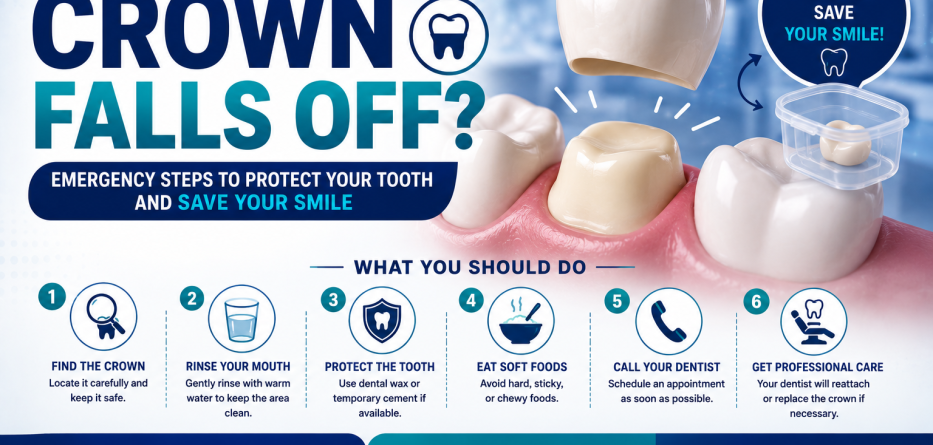
What Should You Do If Your Crown Falls Off?
Step 1: Stay Calm
A lost crown is usually not a life-threatening emergency.
The most important thing is to protect the exposed tooth until you can see your dentist.
Step 2: Retrieve the Crown
Carefully locate and save the crown.
Avoid:
- Throwing it away
- Attempting repairs with household glue
- Damaging the restoration
Place the crown in a clean container for safekeeping.
Step 3: Examine the Crown and Tooth
Check whether:
- The crown appears intact
- Any pieces are broken
- The underlying tooth is damaged
You may notice:
- Sensitivity to hot or cold
- Sharp edges
- Mild discomfort
Avoid touching sensitive areas excessively.
Step 4: Rinse Your Mouth
Gently rinse your mouth with warm water.
This helps:
- Remove debris
- Reduce irritation
- Keep the area clean
Avoid extremely hot or cold water if sensitivity is present.
Step 5: Protect the Exposed Tooth
The underlying tooth may be vulnerable after the crown falls off.
Temporary options include:
- Dental wax
- Temporary dental cement available at pharmacies
Do not use:
- Super glue
- Household adhesives
- Permanent cement products
These materials can damage the tooth and complicate professional treatment.
Step 6: Contact Your Dentist Immediately
Schedule an appointment as soon as possible.
The sooner the crown is evaluated, the greater the likelihood it can be successfully reattached.
Bring the crown with you to the appointment.
Can You Put a Crown Back On Yourself?
Temporary replacement may be possible in certain situations.
However:
- It should only be considered a short-term solution.
- It does not replace professional treatment.
- Improper placement may damage the tooth or crown.
Most dentists recommend seeking professional care rather than attempting a permanent repair at home.
What If the Tooth Under the Crown Hurts?
Pain after crown loss may occur because the tooth becomes exposed.
Possible causes include the following:
- Exposed dentin
- Tooth decay
- Infection
- Cracked tooth
Temporary Relief Options
- Use over-the-counter pain medication if appropriate.
- Avoid hot and cold foods.
- Chew on the opposite side of your mouth.
- Keep the area clean.
Persistent pain requires prompt dental evaluation.
What Foods Should You Avoid?
Until your crown is repaired, avoid foods that could damage the exposed tooth.
Avoid:
- Hard candies
- Nuts
- Ice
- Sticky candies
- Caramel
- Gum
Choose Soft Foods
Examples include:
- Yogurt
- Soup
- Mashed potatoes
- Scrambled eggs
- Smoothies
These foods reduce stress on the affected tooth.
When Is a Lost Crown a Dental Emergency?
A lost crown may require urgent attention if accompanied by the following:
- Severe pain
- Significant swelling
- Bleeding
- Signs of infection
- Difficulty chewing
- Broken underlying tooth
Seek emergency dental care if any of these symptoms occur.
How Dentists Repair a Lost Crown
Treatment depends on the condition of both the crown and the tooth.
Crown Recementation
If the crown is intact and fits properly, the dentist may simply recement it.
Crown Replacement
A new crown may be needed if:
- The crown is cracked
- The fit is poor
- The restoration is severely worn
Additional Treatment
If decay or structural damage is present, treatment may involve:
- Filling placement
- Root canal therapy
- Crown replacement
Early intervention often leads to simpler and less expensive treatment.
How to Prevent a Crown from Falling Off
Maintain Excellent Oral Hygiene
- Brush twice daily
- Floss regularly
- Attend routine dental cleanings
Avoid Harmful Habits
Avoid:
- Chewing ice
- Opening packages with teeth
- Biting hard objects
Wear a nightguard.
Patients who grind their teeth may benefit from a custom nightguard.
Attend Regular Dental Exams
Routine checkups allow dentists to identify loose crowns before they become a problem
Frequently Asked Questions
Is a lost crown an emergency?
Not always, but prompt dental attention is recommended to protect the exposed tooth.
Can I eat if my crown falls off?
Yes, but stick to soft foods and avoid chewing on the affected side.
Can a crown be glued back on?
Only temporary dental cement should be used if advised by your dentist. Household glue should never be used.
How long can I wait to replace a crown?
You should contact your dentist as soon as possible. Delaying treatment can increase the risk of decay, sensitivity, and tooth damage.
Will my dentist need to make a new crown?
Not necessarily. If the crown is intact and fits properly, it may be recemented.
Conclusion
If your dental crown falls off, acting quickly can help prevent complications and protect your tooth. Save the crown, keep the area clean, avoid damaging foods, and contact your dentist as soon as possible.
Although a lost crown can be alarming, most cases can be successfully treated when addressed promptly. By understanding what to do if a crown falls off and seeking timely professional care, you can minimize discomfort and maintain a healthy, functional smile.