
Dental implants are one of the most effective and long-lasting solutions for replacing missing teeth. While the implant procedure itself is relatively straightforward, the healing process plays a crucial role in determining the long-term success of the treatment.
Many patients wonder what happens after implant placement and how long it takes for the implant to fully heal. Understanding the different dental implant healing stages can help reduce anxiety, set realistic expectations, and ensure a smoother recovery.
In this guide, we’ll explain each stage of dental implant healing, the timeline involved, common symptoms, and tips for promoting successful recovery.
Why Is the Healing Process Important?
The healing period allows the dental implant to fuse with the jawbone through a process known as osseointegration. This biological bond creates a strong foundation that enables the implant to function like a natural tooth root.
Successful healing helps:
- Stabilize the implant
- Prevent implant failure
- Preserve jawbone health
- Support long-term functionality
- Improve treatment success rates
Without proper healing, the implant may not integrate successfully with the surrounding bone.
Overview of Dental Implant Healing Stages
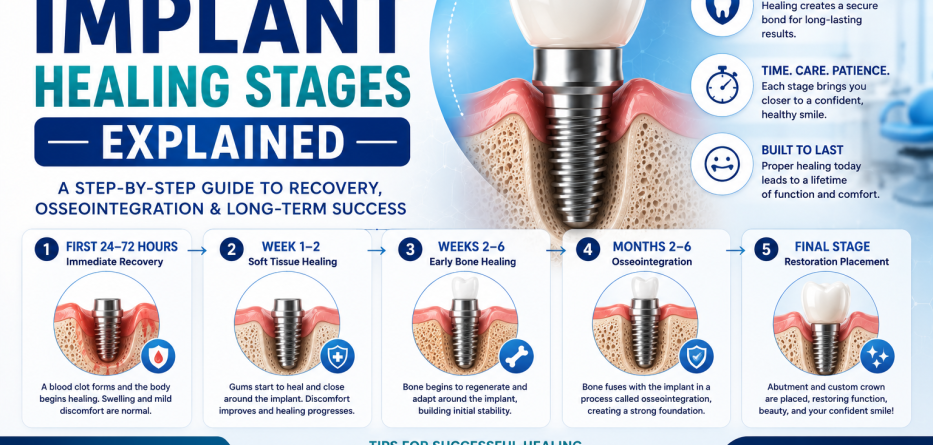
The complete healing process typically takes between 3 and 6 months, although some cases may require additional time.
Typical Healing Timeline
| Healing Stage | Timeframe |
|---|---|
| Immediate Recovery | 1–3 Days |
| Soft Tissue Healing | 1–2 Weeks |
| Early Bone Healing | 2–6 Weeks |
| Osseointegration | 3–6 Months |
| Final Restoration Placement | After Integration |
Healing times vary depending on individual health factors and treatment complexity.
Stage 1: The First 24–72 Hours After Surgery
The first few days are considered the immediate recovery phase.
Following implant placement, your body begins the healing process by forming a blood clot around the surgical site.
Common Symptoms
You may experience:
- Mild swelling
- Minor bleeding
- Tenderness
- Slight bruising
- Jaw soreness
These symptoms are normal and typically improve within a few days.
Recovery Tips
- Rest as much as possible
- Apply ice packs
- Avoid strenuous activity
- Eat soft foods
- Take medications as prescribed
Proper care during this stage helps minimize discomfort and complications.
Stage 2: Soft Tissue Healing (Week 1–2)
During the first two weeks, the gum tissue surrounding the implant begins to heal.
The surgical site gradually closes, reducing the risk of infection and protecting the implant.
What Happens During This Stage?
- Gum tissues repair themselves
- Inflammation decreases
- Swelling subsides
- Initial discomfort improves
Most patients return to normal daily activities within a few days.
Foods to Eat
Recommended foods include:
- Yogurt
- Mashed potatoes
- Smoothies
- Soup
- Scrambled eggs
- Soft pasta
Avoid hard, crunchy, or sticky foods that could irritate the surgical area.
Stage 3: Early Bone Healing (Weeks 2–6)
As the gums continue healing, important changes begin beneath the surface.
The surrounding bone starts adapting to the implant.
Biological Changes
During this period:
- Bone cells begin growing around the implant
- Blood supply improves
- New tissue forms
- Initial implant stability develops
Patients usually experience little to no discomfort at this stage.
Although you may feel fully healed, significant healing activity continues internally.
Stage 4: Osseointegration (Months 2–6)
This is the most important stage of the healing process.
Osseointegration occurs when the jawbone gradually bonds with the titanium implant surface.
Why Osseointegration Matters
Successful osseointegration provides the following:
- Exceptional implant stability
- Strong chewing function
- Long-term implant success
- Natural tooth-like performance
This process transforms the implant into a permanent part of your jaw structure.
Factors Affecting Osseointegration
Several factors influence healing speed:
- Bone density
- Age
- Smoking habits
- Overall health
- Oral hygiene
- Implant location
Most patients complete osseointegration within 3 to 6 months.
Stage 5: Abutment Placement and Final Restoration
Once your dentist confirms successful osseointegration, the final phase begins.
Abutment Placement
The abutment acts as a connector between the implant and the restoration.
Minor gum healing may occur after abutment placement.
Crown Placement
A custom-made dental crown is attached to complete the restoration.
At this stage, the implant:
- Looks natural
- Functions like a natural tooth
- Restores chewing ability
- Enhances smile aesthetics
Many patients report forgetting they even have an implant.
What Can Affect Healing Time?
Every patient heals differently.
Several factors can influence the overall healing timeline.
Positive Factors
- Good oral hygiene
- Healthy gums
- Adequate bone density
- Balanced nutrition
- Following aftercare instructions
Factors That May Delay Healing
- Smoking
- Diabetes
- Poor oral hygiene
- Gum disease
- Certain medications
- Autoimmune conditions
Your dentist will evaluate these factors before treatment.
Warning Signs During Healing
While complications are uncommon, patients should contact their dentist if they experience:
- Severe pain
- Excessive bleeding
- Persistent swelling
- Fever
- Implant mobility
- Pus around the implant site
Early intervention can prevent more serious issues.
Tips for Faster and Healthier Healing
To support recovery:
1. Follow Your Dentist’s Instructions
Post-operative guidelines are specifically designed to protect the implant during healing.
2. Maintain Excellent Oral Hygiene
Keep the mouth clean while avoiding aggressive brushing near the surgical area.
3. Avoid Smoking
Smoking significantly increases the risk of implant failure.
4. Eat Nutritious Foods
Focus on:
- Protein-rich foods
- Calcium-rich foods
- Vitamin D sources
- Fresh fruits and vegetables
5. Attend Follow-Up Appointments
Regular monitoring helps ensure the implant is healing properly.
Frequently Asked Questions
How long does dental implant healing take?
Most patients complete the healing process within 3 to 6 months.
Is swelling normal after implant surgery?
Yes. Mild swelling during the first few days is completely normal.
When can I eat normally again?
Most patients gradually return to normal eating habits within a few weeks, depending on healing progress.
How do I know if osseointegration is successful?
Your dentist will evaluate implant stability and bone integration through examinations and imaging.
Can an implant fail during healing?
Yes, although it is uncommon. Proper care and follow-up significantly reduce the risk.
Is the healing process painful?
Most patients experience mild discomfort that is manageable with prescribed medication and proper care.
Conclusion
Understanding the dental implant healing stages can help patients feel more confident and prepared throughout the treatment process. From the initial recovery phase to complete osseointegration, every stage plays an important role in ensuring long-term implant success.
By following your dentist’s instructions, maintaining excellent oral hygiene, and attending regular follow-up visits, you can support proper healing and enjoy the long-term benefits of a healthy, functional, and natural-looking smile.
Although healing requires patience, the results are often well worth the wait, providing a durable tooth replacement solution that can last for decades.
