

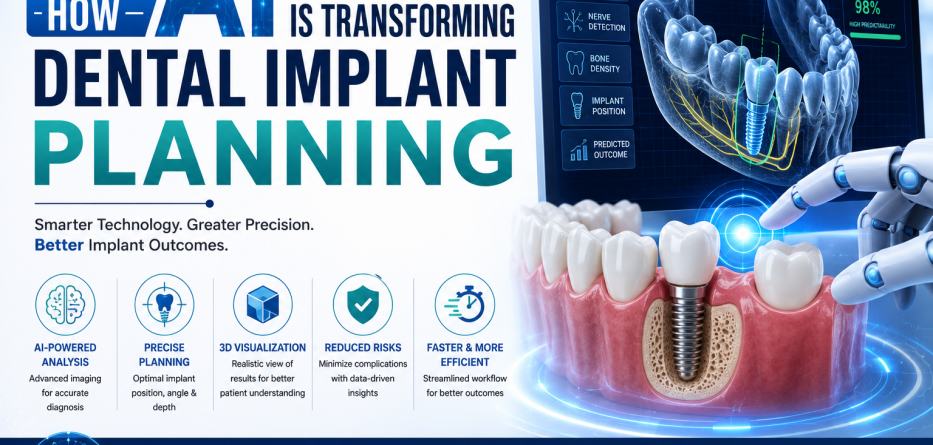
Artificial Intelligence (AI) is rapidly changing the way healthcare professionals diagnose, plan, and deliver treatments. In dentistry, one of the most exciting advancements is the integration of AI into dental implant planning. By combining advanced imaging, machine learning, and predictive analytics, AI is helping dentists achieve greater precision, efficiency, and patient outcomes than ever before.
Dental implant placement has traditionally relied on the expertise of clinicians interpreting X-rays, CT scans, and patient anatomy. While these methods remain effective, AI-powered technologies are adding a new level of accuracy and predictability to the process.
In this article, we’ll explore how AI is transforming dental implant planning, the benefits it offers patients and dentists, and what the future holds for AI-driven implant dentistry.
What Is AI in Dental Implant Planning?
“Artificial intelligence” refers to computer systems that can analyze data, recognize patterns, and make recommendations based on learned information.
In dental implant planning, AI software analyzes:
- CBCT (Cone Beam Computed Tomography) scans
- Digital impressions
- Intraoral scans
- Bone density measurements
- Patient medical history
- Anatomical structures
The technology helps clinicians identify the ideal implant position while minimizing risks and improving treatment outcomes.
Quick Definition
AI in dental implant planning uses advanced algorithms and imaging technology to assist dentists in accurately placing implants, improving precision, safety, and treatment predictability.
Why Accurate Implant Planning Matters
Successful dental implant treatment depends heavily on precise planning.
Incorrect implant positioning can lead to:
- Implant failure
- Bone loss
- Nerve damage
- Sinus complications
- Poor aesthetics
- Bite problems
AI helps reduce these risks by providing highly detailed treatment recommendations based on patient-specific anatomy.
How AI Analyzes Dental Images
Modern implant planning begins with digital imaging.
AI-powered software can analyze CBCT scans and identify the following:
- Bone volume
- Bone density
- Nerve pathways
- Sinus cavities
- Tooth roots
- Jawbone anatomy
Benefits of Automated Image Analysis
- Faster diagnosis
- Greater consistency
- Reduced human error
- Enhanced treatment planning
This allows dentists to make more informed decisions before surgery begins.
AI-Assisted Implant Placement Planning
One of the most significant advantages of AI is its ability to recommend optimal implant placement.
The software evaluates:
- Implant size
- Implant angle
- Implant depth
- Bone availability
- Prosthetic requirements
Key Benefits
- Improved implant stability
- Better aesthetics
- Enhanced chewing function
- Reduced surgical complications
AI-generated treatment plans serve as valuable decision-support tools for clinicians.
Predicting Treatment Outcomes with AI
AI systems can analyze thousands of previous implant cases to identify patterns associated with success and failure.
This predictive capability helps dentists:
- Estimate implant success rates
- Assess risk factors
- Recommend additional procedures
- Improve treatment predictability
Patients benefit from more personalized treatment plans and realistic expectations.
Enhancing Surgical Precision with Guided Implant Surgery
AI works hand-in-hand with digital surgical guides.
Once implant placement is planned digitally, custom surgical guides can be fabricated to direct implant placement with exceptional accuracy.
Advantages of Guided Surgery
- Precise implant positioning
- Shorter surgical procedures
- Reduced trauma
- Faster recovery
- Increased safety
The combination of AI planning and guided surgery is helping set new standards in implant dentistry.
AI and Bone Density Assessment
Bone quality is one of the most important factors influencing implant success.
AI software can evaluate the following:
- Bone density
- Bone thickness
- Bone quality variations
- Areas requiring bone grafting
This allows clinicians to determine whether patients are ideal implant candidates or require preparatory procedures.
Improved Patient Communication and Visualization
AI-powered planning software creates highly detailed 3D visualizations of the treatment process.
Patients can see:
- Implant placement locations
- Expected outcomes
- Restored smile designs
- Surgical plans
Benefits for Patients
- Better understanding of treatment
- Increased confidence
- Improved decision-making
- Greater trust in the process
Visual communication often helps reduce anxiety before surgery.
Reducing Human Error in Implant Planning
Even highly skilled clinicians can face challenges when evaluating complex anatomy.
AI provides an additional layer of analysis by:
- Highlighting anatomical risks
- Identifying potential complications
- Cross-checking measurements
- Offering treatment recommendations
This support improves consistency and reduces the likelihood of planning errors.
AI and Digital Smile Design
Modern implant treatment focuses not only on function but also on aesthetics.
AI-assisted smile design helps dentists create restorations that complement:
- Facial structure
- Lip position
- Tooth proportions
- Smile symmetry
The result is a more natural and attractive final outcome.
Benefits of AI in Dental Implant Planning
For Patients
- More accurate treatment plans
- Enhanced safety
- Better aesthetics
- Reduced surgical risks
- Faster procedures
- Improved long-term outcomes
For Dentists
- Increased planning efficiency
- Better diagnostics
- Improved case predictability
- Enhanced workflow integration
- Greater treatment confidence
Challenges and Limitations of AI in Dentistry
While AI offers tremendous advantages, it does have limitations.
Current Challenges
- High technology costs
- Learning curve for clinicians
- Dependence on high-quality imaging
- Regulatory considerations
- Need for human oversight
AI is a tool designed to assist clinicians—not replace their expertise.
The Future of AI in Implant Dentistry
The future of implant dentistry is increasingly digital and data-driven.
Emerging technologies may include:
- Real-time surgical navigation
- Robotic implant placement
- Advanced predictive analytics
- Fully integrated digital workflows
- Personalized treatment simulations
As AI continues to evolve, patients can expect even safer, faster, and more precise implant treatments.
AI vs Traditional Implant Planning
| Feature | Traditional Planning | AI-Assisted Planning |
|---|---|---|
| Image Analysis | Manual | Automated |
| Risk Detection | Clinician Dependent | AI Supported |
| Precision | High | Very High |
| Treatment Predictability | Good | Enhanced |
| Surgical Guide Integration | Optional | Seamless |
| Planning Speed | Moderate | Faster |
This comparison highlights why AI is becoming an essential tool in modern implant dentistry.
Frequently Asked Questions
Is AI replacing dentists in implant planning?
No. AI assists dentists by providing advanced analysis and recommendations, but clinical expertise remains essential.
Is AI-assisted implant planning more accurate?
AI can improve accuracy by analyzing large amounts of data and identifying anatomical details that may otherwise be overlooked.
Does AI make dental implants safer?
AI helps reduce planning errors and improve surgical precision, contributing to safer treatment outcomes.
Can AI predict implant failure?
AI can identify risk factors associated with implant complications and help improve treatment planning.
Is AI used in all dental clinics?
Not yet. Adoption is increasing, but technology availability varies among practices.
Conclusion
Artificial intelligence is transforming dental implant planning by bringing unprecedented levels of precision, efficiency, and predictability to modern dentistry. From advanced image analysis and risk assessment to guided surgery and personalized treatment planning, AI is helping clinicians deliver better outcomes for their patients.
As technology continues to advance, AI will play an even greater role in implant dentistry, making treatments safer, more accurate, and increasingly patient-centered. For individuals considering dental implants, AI-powered planning represents a significant step forward in achieving long-lasting, successful smile restorations.

