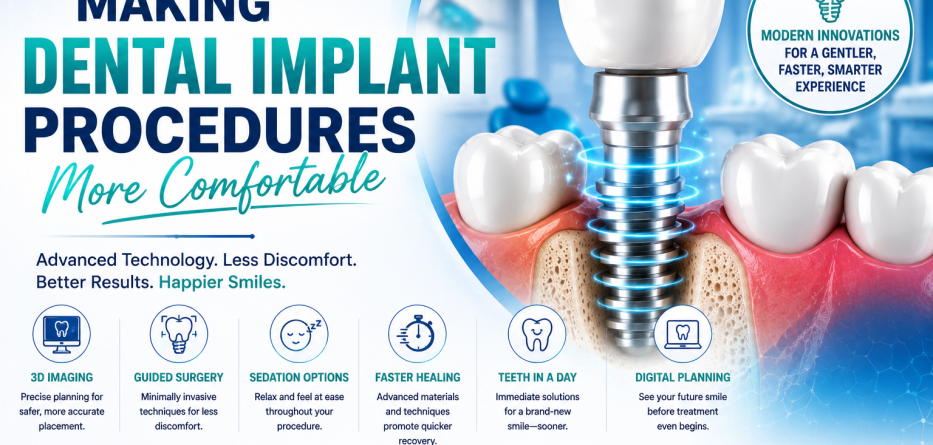
Dental implants have transformed the way dentists replace missing teeth, offering a durable, natural-looking, and long-lasting solution. However, many patients still worry about discomfort, lengthy procedures, and recovery time when considering implant treatment.
The good news is that modern dentistry has introduced numerous innovations that have made dental implant procedures more comfortable, efficient, and predictable than ever before. From advanced imaging technology and guided implant surgery to minimally invasive techniques and improved anesthesia options, today’s implant treatments are designed with patient comfort in mind.
In this article, we’ll explore the latest innovations making dental implant procedures more comfortable and explain how these advancements are improving the overall patient experience.
Why Patient Comfort Matters in Dental Implant Treatment
For many individuals, fear of dental procedures is one of the biggest barriers to seeking treatment.
Common concerns include:
- Pain during surgery
- Long recovery periods
- Swelling and discomfort
- Multiple appointments
- Surgical complications
Modern implant dentistry focuses on reducing these concerns through advanced technology and patient-centered treatment approaches.
1. 3D Cone Beam CT Imaging
One of the most significant innovations in implant dentistry is 3D Cone Beam Computed Tomography (CBCT).
Unlike traditional X-rays, CBCT provides highly detailed three-dimensional images of:
- Jawbone structure
- Nerves
- Sinuses
- Surrounding teeth
- Bone density
Benefits for Patient Comfort
- More precise treatment planning
- Reduced surgical risks
- Shorter procedure times
- Greater predictability
- Less trauma to surrounding tissues
Accurate planning leads to smoother surgeries and improved patient confidence.
2. Computer-Guided Implant Surgery
Computer-guided implant surgery uses digital planning software to create a customized surgical guide.
This guide helps dentists place implants with exceptional accuracy.
Advantages
- Smaller incisions
- Less bleeding
- Reduced swelling
- Faster recovery
- Improved implant placement
Patients often experience significantly less discomfort compared to traditional implant techniques.
3. Minimally Invasive Implant Techniques
Modern implant procedures increasingly use flapless or minimally invasive approaches.
Traditional implant surgery often required larger gum incisions. New techniques reduce the need for extensive tissue manipulation.
Benefits
- Less tissue trauma
- Minimal bleeding
- Faster healing
- Reduced post-operative pain
- Lower risk of complications
Many patients can return to normal activities within a short period.
4. Advanced Local Anesthesia
Today’s local anesthetics are more effective and longer-lasting than previous generations.
Modern anesthesia provides the following:
- Better pain control
- Faster onset
- Longer duration
- Increased comfort during treatment
Most patients report feeling pressure rather than pain during implant placement.
5. Sedation Dentistry Options
For patients with dental anxiety, sedation dentistry has become a game-changing innovation.
Available Options
Nitrous Oxide (Laughing Gas)
- Mild relaxation
- Quick recovery
- Suitable for mild anxiety
Oral Sedation
- Reduces nervousness
- Easy administration
- Increased comfort
IV Sedation
- Deep relaxation
- Minimal memory of the procedure
- Ideal for complex treatments
Sedation allows anxious patients to undergo implant treatment with greater ease.
6. Immediate Load Implants (“Teeth in a Day”)
Traditional implant treatment often required several months of healing before placing the final restoration.
Modern immediate-load protocols allow some patients to receive temporary teeth on the same day as implant placement.
Benefits
- Faster smile restoration
- Fewer appointments
- Improved confidence
- Reduced treatment time
Not all patients qualify, but eligible candidates can enjoy significant convenience.
7. Digital Smile Design Technology
Digital Smile Design (DSD) allows dentists to digitally plan the final outcome before treatment begins.
Using advanced software, patients can preview the following:
- Tooth shape
- Tooth size
- Smile appearance
- Final treatment results
Comfort Benefits
- Improved communication
- Better treatment understanding
- Reduced uncertainty
- Higher patient satisfaction
Knowing what to expect often reduces anxiety before treatment.
8. Improved Implant Materials
Modern implant manufacturers continue to develop advanced materials and surface technologies.
Innovations Include
- Medical-grade titanium
- Zirconia implants
- Enhanced implant surfaces
- Faster osseointegration technologies
Benefits include:
- Better healing
- Increased stability
- Higher success rates
- Improved long-term comfort
9. Laser-Assisted Dentistry
Dental lasers are increasingly used during implant procedures and soft tissue treatments.
Advantages
- Reduced bleeding
- Greater precision
- Less swelling
- Faster healing
- Improved patient comfort
Laser technology can make certain procedures less invasive than traditional methods.
10. PRF and Growth Factor Technology
Platelet-Rich Fibrin (PRF) uses the patient’s own blood to accelerate healing.
PRF contains natural growth factors that support tissue regeneration.
Benefits
- Faster healing
- Reduced inflammation
- Enhanced bone regeneration
- Improved comfort during recovery
Many implant specialists now incorporate PRF into advanced treatment plans.
11. AI-Powered Treatment Planning
Artificial intelligence is becoming an important tool in implant dentistry.
AI systems help dentists:
- Analyze scans
- Identify anatomical structures
- Optimize implant placement
- Improve treatment accuracy
Patient Benefits
- Better planning
- Reduced complications
- Increased predictability
- Enhanced comfort
As AI technology evolves, treatment outcomes continue to improve.
How Modern Innovations Reduce Recovery Time
Today’s dental implant procedures are significantly less invasive than they were years ago.
Modern technologies help reduce:
- Surgical trauma
- Swelling
- Bleeding
- Healing complications
- Post-operative discomfort
Many patients are surprised by how manageable the recovery process can be.
Comparison: Traditional vs Modern Dental Implant Procedures
| Feature | Traditional Implant Treatment | Modern Implant Treatment |
|---|---|---|
| Imaging | 2D X-Rays | 3D CBCT Scans |
| Planning | Manual | Digital & AI-Assisted |
| Surgery | Conventional | Guided & Minimally Invasive |
| Recovery | Longer | Faster |
| Precision | High | Extremely High |
| Patient Comfort | Good | Excellent |
Tips for a Comfortable Dental Implant Experience
To maximize comfort during treatment:
- Choose an experienced implant dentist.
- Discuss sedation options.
- Follow all preoperative instructions.
- Maintain good oral hygiene.
- Attend follow-up appointments.
- Follow recovery guidelines carefully.
Proper planning and aftercare contribute significantly to a positive experience.
Frequently Asked Questions
Are dental implants painful today?
Most patients report minimal discomfort due to advanced anesthesia, sedation options, and minimally invasive techniques.
What is computer-guided implant surgery?
It is a digitally planned procedure that helps dentists place implants with exceptional precision and minimal tissue trauma.
Can I get teeth on the same day as implant placement?
Some patients qualify for immediate-load implants, allowing temporary teeth to be placed on the same day.
Does laser dentistry reduce pain?
Laser-assisted procedures often result in less bleeding, swelling, and discomfort compared to traditional techniques.
What technology has improved implant success the most?
3D imaging, guided surgery, improved implant surfaces, and digital treatment planning have significantly enhanced implant outcomes.
Conclusion
Innovations in dental implant dentistry have dramatically improved patient comfort, treatment precision, and overall outcomes. Advanced imaging, guided surgery, minimally invasive techniques, sedation dentistry, laser technology, and AI-powered planning are transforming the implant experience.
These advancements allow patients to enjoy safer procedures, faster recovery times, and greater confidence throughout treatment. As technology continues to evolve, dental implant procedures are becoming more comfortable and accessible than ever before, making it easier for patients to restore their smiles with confidence.