
Dental implants have revolutionized modern dentistry, providing a durable and natural-looking solution for missing teeth. While many patients know that implants replace lost teeth, fewer understand the individual components that make up a dental implant and how they work together to restore function and appearance.
Understanding the anatomy of a dental implant can help patients feel more confident about the procedure and appreciate why implants are considered the gold standard for tooth replacement. Each component plays a critical role in creating a strong, stable, and long-lasting restoration.
What You’ll Learn
In this guide, you’ll discover:
- The main parts of a dental implant
- How each component functions
- The role of the implant post, abutment, and crown
- Materials used in dental implants
- How implants integrate with the jawbone
- Why implant anatomy contributes to long-term success
What Is a Dental Implant?
A dental implant is an artificial tooth root that is surgically placed into the jawbone to support a replacement tooth or dental restoration. Unlike dentures or bridges, implants replace both the root and visible portion of a missing tooth, providing superior stability and function.
Quick Definition
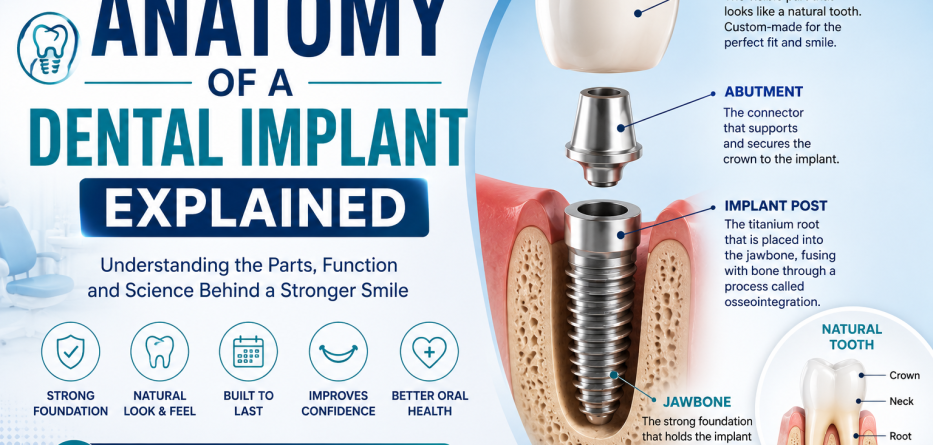
A dental implant consists of three primary components: the implant post, abutment, and dental crown. Together, these parts mimic the structure and function of a natural tooth.
The Three Main Parts of a Dental Implant
1. Implant Post (The Artificial Tooth Root)
The implant post is the foundation of the entire dental implant system.
What Is It?
The implant post is a small screw-like fixture typically made from titanium or zirconia that is surgically inserted into the jawbone.
Function
- Replaces the natural tooth root
- Supports the dental restoration
- Stimulates the jawbone
- Prevents bone loss
Why Titanium Is Commonly Used
Titanium is highly biocompatible and can fuse directly with the bone through a process called osseointegration.
Key Benefits
- Exceptional strength
- Long-term durability
- High success rates
- Resistance to corrosion
2. Abutment (The Connector Piece)
The abutment serves as the link between the implant post and the visible replacement tooth.
What Is an Abutment?
An abutment is a small connector attached to the implant after healing is complete.
Function
- Connects the implant post to the crown
- Provides support for the restoration
- Ensures proper fit and alignment
Types of Abutments
Stock Abutments
Pre-manufactured components used in straightforward cases.
Custom Abutments
Designed specifically for the patient’s anatomy to achieve optimal aesthetics and function.
3. Dental Crown (The Visible Tooth)
The crown is the part of the implant that patients see when they smile.
What Is a Dental Crown?
A custom-made restoration that resembles a natural tooth in shape, color, and size.
Materials Used
- Porcelain
- Ceramic
- Zirconia
- Porcelain-fused-to-metal
Benefits
- Natural appearance
- Strong bite force
- Stain resistance
- Long-lasting aesthetics
Additional Components That Support Implant Success
Healing Cap
A temporary component placed during the healing phase to help shape the gum tissue around the implant.
Purpose
- Promotes healthy gum contours
- Protects the implant site
- Improves final aesthetic outcomes
Implant Screw
The implant screw secures the crown or restoration to the abutment.
Benefits
- Stable attachment
- Easy maintenance
- Simplified restoration replacement if needed
How Dental Implants Mimic Natural Teeth
| Natural Tooth Structure | Dental Implant Component |
|---|---|
| Tooth Root | Implant Post |
| Tooth Neck | Abutment |
| Tooth Crown | Dental Crown |
This design allows implants to closely replicate the appearance, function, and stability of natural teeth.
Understanding Osseointegration
One of the most important aspects of implant anatomy is osseointegration.
What Is Osseointegration?
Osseointegration is the biological process where the jawbone grows around and fuses with the implant post.
Why It Matters
- Creates a permanent foundation
- Prevents movement
- Supports chewing forces
- Increases implant longevity
Healing Timeline
- Implant placement
- Initial healing
- Bone integration
- Abutment placement
- Crown attachment
Most patients complete osseointegration within three to six months.
Materials Used in Modern Dental Implants
Titanium Implants
Advantages:
- Proven track record
- High success rates
- Excellent biocompatibility
Zirconia Implants
Advantages:
- Metal-free option
- Excellent aesthetics
- Reduced plaque accumulation
Both materials are widely accepted and provide predictable long-term outcomes.
Why Implant Anatomy Matters
Understanding implant anatomy helps patients appreciate why implants offer superior results compared to other tooth replacement options.
Benefits include:
- Greater stability
- Natural appearance
- Bone preservation
- Improved chewing ability
- Long-term durability
Every component works together to create a restoration that functions like a natural tooth.
Conclusion
Understanding the anatomy of a dental implant explained why this treatment has become one of the most successful solutions for replacing missing teeth. From the implant post that anchors into the jawbone to the abutment and custom crown that restore appearance and function, every component plays a critical role in achieving long-lasting results.
By mimicking the structure of a natural tooth, dental implants provide exceptional stability, aesthetics, and oral health benefits, making them the preferred choice for millions of patients worldwide.
