
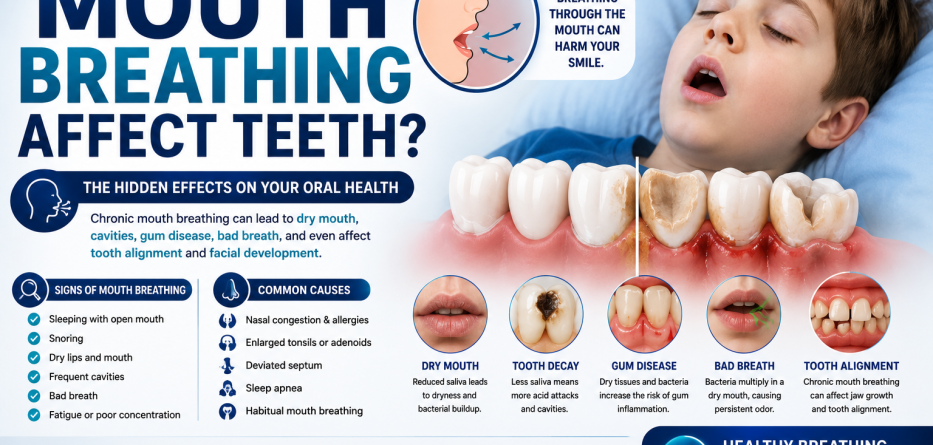
Breathing is something we do thousands of times each day without thinking about it. Ideally, breathing should occur through the nose, which filters, warms, and humidifies the air before it reaches the lungs. However, many people habitually breathe through their mouths, especially while sleeping. While this may seem harmless, chronic mouth breathing can have significant consequences for oral health.
From dry mouth and bad breath to tooth decay and gum disease, mouth breathing can negatively affect both children and adults. In some cases, it may even contribute to changes in facial development and dental alignment.
In this article, we’ll explore how mouth breathing affects teeth, the causes of mouth breathing, warning signs to watch for, and what you can do to protect your oral health.
What Is Mouth Breathing?
Mouth breathing occurs when a person primarily breathes through the mouth instead of the nose.
It may happen:
- During sleep
- During exercise
- Due to nasal blockage
- As a long-term habit
While occasional mouth breathing is usually not a concern, chronic mouth breathing can lead to various dental and health problems.
Quick Definition
Mouth breathing is a breathing pattern in which air enters and exits primarily through the mouth rather than the nose, often leading to oral health complications when it becomes chronic.
Why Is Nose Breathing Important?
The nose performs several important functions that the mouth cannot.
Benefits of Nose Breathing
- Filters dust and allergens
- Warms incoming air
- Adds moisture to the air
- Supports proper oxygen exchange
- Helps maintain oral moisture levels
When breathing shifts to the mouth, many of these protective benefits are lost.
How Does Mouth Breathing Affect Teeth?
1. Causes Dry Mouth
One of the most common consequences of mouth breathing is dry mouth, also known as xerostomia.
When the mouth remains open for extended periods:
- Saliva evaporates more quickly
- Oral tissues become dry
- Natural cleansing is reduced
Since saliva plays a critical role in protecting teeth, reduced saliva can increase the risk of oral health problems.
2. Increases the Risk of Tooth Decay
Saliva helps neutralize acids produced by bacteria.
When saliva levels decrease:
- Harmful bacteria multiply
- Acid attacks increase
- Enamel weakens
- Cavities become more likely
People who breathe through their mouths often experience higher rates of tooth decay, particularly on the front teeth.
3. Contributes to Gum Disease
Dry oral tissues create an environment where bacteria can thrive.
This may lead to:
- Gingivitis
- Gum inflammation
- Bleeding gums
- Periodontal disease
Untreated gum disease can eventually result in tooth loss.
4. Causes Bad Breath
Bad breath, or halitosis, is a common complaint among mouth breathers.
Without adequate saliva:
- Food particles remain in the mouth longer
- Bacteria multiply rapidly
- Odor-producing compounds increase
Persistent bad breath may be an early sign of chronic mouth breathing.
5. Can Affect Tooth Alignment
Long-term mouth breathing can influence facial growth and dental development, especially in children.
Potential effects include the following:
- Crowded teeth
- Narrow dental arches
- Open bite
- Overjet
- Misaligned teeth
Early intervention can help minimize these developmental changes.
How Mouth Breathing Affects Children
Children are particularly vulnerable to the effects of chronic mouth breathing.
Possible Consequences
- Altered facial growth
- Improper jaw development
- Crooked teeth
- Speech difficulties
- Sleep disturbances
Some experts refer to these changes as “long face syndrome” because prolonged mouth breathing can affect facial structure over time.
Signs of Mouth Breathing in Children
- Sleeping with an open mouth
- Snoring
- Dry lips
- Frequent dental cavities
- Daytime fatigue
- Difficulty concentrating
Parents should seek evaluation if these symptoms persist.
Common Causes of Mouth Breathing
Several conditions can contribute to mouth breathing.
Nasal Congestion
Often caused by:
- Allergies
- Colds
- Sinus infections
Enlarged Tonsils or Adenoids
These can obstruct airflow and force mouth breathing, especially in children.
Deviated Nasal Septum
Structural abnormalities may make nasal breathing difficult.
Sleep Apnea
Some individuals breathe through their mouths due to obstructed airways during sleep.
Habitual Mouth Breathing
Even after an obstruction is resolved, some people continue the habit.
Signs That Mouth Breathing May Be Affecting Your Teeth
Watch for symptoms such as:
- Dry mouth upon waking
- Frequent cavities
- Bad breath
- Gum irritation
- Chapped lips
- Tooth sensitivity
- Crowded teeth
- Snoring
If multiple symptoms are present, consult a dentist or healthcare provider.
How Dentists Diagnose Mouth Breathing
Dental professionals may identify mouth breathing through the following:
Clinical Examination
They look for:
- Dry oral tissues
- Gum inflammation
- Dental decay patterns
- Bite abnormalities
Medical History
Questions may include:
- Sleep habits
- Snoring
- Allergies
- Nasal breathing difficulties
Collaboration with Specialists
Dentists may work with:
- ENT specialists
- Orthodontists
- Sleep medicine providers
A multidisciplinary approach often provides the best results.
How to Prevent Dental Problems Caused by Mouth Breathing
Stay Hydrated
Drinking water helps maintain oral moisture and reduce dry mouth symptoms.
Practice Good Oral Hygiene
- Brush twice daily
- Floss regularly
- Use fluoride toothpaste
Address Nasal Obstruction
Treating allergies or nasal congestion can improve airflow.
Use a humidifier.
A humidifier may reduce overnight dryness.
Regular Dental Checkups
Routine visits help identify problems early before significant damage occurs.
Treatment Options for Mouth Breathing
Treatment depends on the underlying cause.
Allergy Management
Reducing nasal congestion often improves breathing patterns.
Orthodontic Treatment
Braces or expanders may help improve airway development in some cases.
ENT Evaluation
Enlarged adenoids, tonsils, or structural issues may require treatment.
Myofunctional Therapy
Exercises can help retrain proper tongue posture and breathing habits.
Sleep Apnea Treatment
Addressing sleep-disordered breathing can improve both overall and oral health.
Can Mouth Breathing Be Reversed?
In many cases, yes.
When the underlying cause is identified and treated, patients often experience:
- Improved saliva production
- Better gum health
- Reduced cavity risk
- Fresher breath
- Improved sleep quality
Early intervention usually leads to better outcomes.
Frequently Asked Questions
Can mouth breathing cause cavities?
Yes. Reduced saliva increases bacterial growth and acid production, making cavities more likely.
Why do I wake up with a dry mouth?
Mouth breathing during sleep is a common cause of morning dry mouth.
Can mouth breathing affect adults?
Yes. Although developmental effects are more significant in children, adults can still experience dry mouth, gum disease, and tooth decay.
Is mouth breathing linked to bad breath?
Yes. Reduced saliva allows odor-causing bacteria to accumulate.
Should I see a dentist if I mouth breathe?
Yes. Dentists can identify oral health issues and recommend appropriate treatment or referrals.
Conclusion
So, how does mouth breathing affect teeth?
Chronic mouth breathing can significantly impact oral health by causing dry mouth, increasing cavity risk, contributing to gum disease, promoting bad breath, and affecting dental alignment. While it may seem like a minor habit, long-term mouth breathing can lead to serious dental complications if left untreated.
Fortunately, early diagnosis and appropriate treatment can help protect your teeth, improve breathing patterns, and support better overall health. If you suspect you or your child may be a chronic mouth breather, consult a dental professional for a comprehensive evaluation.
