
Have you ever noticed that your teeth seem perfectly fine during the day, but once you lie down to sleep, the pain suddenly becomes more noticeable? If so, you’re not alone. Many people experience tooth pain that worsens or appears only at night, making it difficult to fall asleep and stay comfortable.
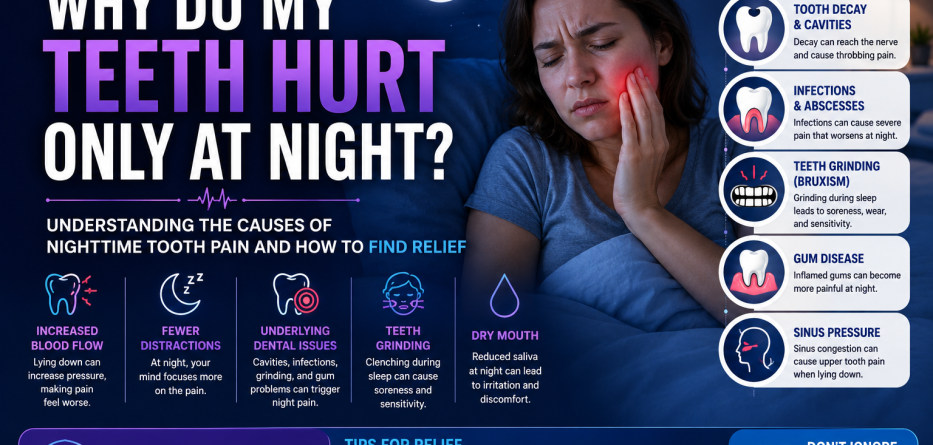
Nighttime tooth pain can be caused by several factors, including tooth decay, infections, teeth grinding, gum disease, sinus pressure, or even changes in blood flow when lying down. Understanding the underlying cause is essential because persistent tooth pain is often a sign that something needs professional attention.
In this guide, we’ll explore the most common reasons teeth hurt at night, how to find relief, and when it’s time to see a dentist.
Why Do Teeth Hurt More at Night?
One of the primary reasons tooth pain feels worse at night is your body position.
When you lie down, blood flow to your head increases slightly. This added pressure can intensify pain and inflammation in sensitive areas, including your teeth and gums.
Other nighttime factors include:
- Fewer distractions from pain
- Increased awareness of discomfort
- Teeth grinding during sleep
- Dry mouth
- Existing dental conditions becoming more noticeable
Common Causes of Tooth Pain at Night
1. Tooth Decay and Cavities
Cavities are among the most common causes of nighttime tooth pain.
When decay reaches deeper layers of the tooth, it can irritate the nerve and cause:
- Sharp pain
- Sensitivity to temperature
- Throbbing discomfort
- Pain when lying down
Symptoms
- Pain when eating sweets
- Sensitivity to hot or cold drinks
- Visible holes or dark spots on teeth
Early treatment can prevent the cavity from worsening.
2. Dental Abscess or Infection
A dental abscess is a serious infection that develops near the tooth root or gums.
Symptoms
- Severe throbbing pain
- Facial swelling
- Fever
- Bad taste in the mouth
- Pain that worsens at night
Because infections can spread, an abscess requires prompt dental treatment.
3. Teeth Grinding (Bruxism)
Many people grind or clench their teeth while sleeping without realizing it.
Over time, this can lead to:
- Tooth sensitivity
- Jaw pain
- Headaches
- Worn enamel
- Nighttime tooth discomfort
Signs of Bruxism
- Morning jaw soreness
- Headaches upon waking
- Flattened teeth
- Clicking jaw joints
A custom nightguard can help protect your teeth.
4. Gum Disease
Inflamed or infected gums can become more painful during nighttime hours.
Symptoms
- Red gums
- Swollen gums
- Bleeding while brushing
- Tooth sensitivity
- Persistent bad breath
Untreated gum disease can eventually lead to tooth loss.
5. Cracked or Damaged Teeth
Small cracks are sometimes difficult to see but can cause significant pain.
Nighttime discomfort may occur because
- Pressure changes affect the tooth
- Teeth grinding worsens the crack
- Nerves become irritated
Common Symptoms
- Sharp pain when chewing
- Temperature sensitivity
- Intermittent discomfort
6. Impacted Wisdom Teeth
Wisdom teeth that don’t erupt properly can cause:
- Jaw pain
- Gum swelling
- Tooth pressure
- Nighttime discomfort
Pain often becomes more noticeable when lying down.
7. Sinus Infections
The roots of upper teeth sit close to the sinus cavities.
When sinuses become inflamed due to infection or allergies, pressure can create tooth pain.
Signs It May Be Sinus-Related
- Congestion
- Facial pressure
- Headache
- Multiple upper teeth hurting simultaneously
Treating the sinus issue often relieves the dental discomfort.
8. Dry Mouth While Sleeping
Saliva helps protect teeth from bacteria and acid.
Reduced saliva production at night can:
- Increase sensitivity
- Worsen existing dental issues
- Cause irritation
Common causes include:
- Mouth breathing
- Certain medications
- Sleep disorders
- Dehydration
9. Recent Dental Work
Following procedures such as:
- Fillings
- Crowns
- Root canals
- Extractions
Some temporary discomfort may occur.
Nighttime pain may feel stronger due to reduced distractions and increased blood flow.
Persistent or worsening pain should be evaluated by your dentist.
How to Relieve Tooth Pain at Night
While professional treatment may be necessary, several strategies can provide temporary relief.
Home Remedies
Elevate Your Head
Sleeping with an extra pillow may reduce blood flow pressure and decrease pain.
Rinse with Warm Saltwater
Saltwater helps reduce inflammation and cleanse the affected area.
Apply a Cold Compress
Cold therapy can numb pain and reduce swelling.
Use Over-the-Counter Pain Relief
Follow dosage instructions carefully and consult your healthcare provider if needed.
Stay Hydrated
Adequate hydration helps combat dry mouth and supports oral health.
What Not to Do
Avoid:
- Applying aspirin directly to gums
- Ignoring persistent pain
- Using sharp objects to poke around the tooth
- Delaying treatment for swelling or infection
These actions can worsen the problem.
When Should You See a Dentist?
Schedule a dental appointment if:
- Pain lasts more than one or two days
- Pain repeatedly occurs at night
- You notice swelling
- Teeth become highly sensitive
- You have difficulty chewing
Early diagnosis often prevents more extensive treatment later.
Signs of a Dental Emergency
Seek immediate care if you experience:
- Severe swelling
- Fever
- Difficulty swallowing
- Difficulty breathing
- Uncontrolled bleeding
- Severe infection symptoms
These may indicate a serious condition requiring urgent treatment.
How to Prevent Nighttime Tooth Pain
Maintain Good Oral Hygiene
- Brush twice daily
- Floss daily
- Use fluoride toothpaste
Visit Your Dentist Regularly
Routine checkups help identify problems before they become painful.
Wear a nightguard.
If you grind your teeth, a custom nightguard can reduce stress on teeth and jaw joints.
Stay Hydrated
Proper hydration supports saliva production and oral health.
Address Dental Problems Early
Treating cavities, gum disease, and cracked teeth promptly helps prevent nighttime discomfort.
Frequently Asked Questions
Why do my teeth only hurt when I lie down?
Lying down increases blood flow to the head, which can intensify inflammation and make existing dental problems more noticeable.
Can stress cause tooth pain at night?
Yes. Stress often contributes to teeth grinding and jaw clenching during sleep.
Is nighttime tooth pain always a cavity?
No. Tooth pain at night can result from infections, gum disease, grinding, cracked teeth, sinus problems, or other dental conditions.
How can I sleep with a toothache?
Elevate your head, use a cold compress, rinse with saltwater, and take appropriate pain medication until you can see a dentist.
When is tooth pain considered an emergency?
Severe swelling, fever, difficulty breathing, or signs of infection require immediate professional care.
Conclusion
If you’ve ever wondered, “Why do my teeth hurt only at night?” the answer often lies in underlying dental issues that become more noticeable when you’re resting. Conditions such as cavities, infections, teeth grinding, gum disease, cracked teeth, and sinus pressure can all contribute to nighttime tooth pain.
While temporary relief measures may help you sleep more comfortably, persistent pain should never be ignored. A dental examination can identify the root cause and provide the treatment needed to protect your oral health and restore restful sleep.
