
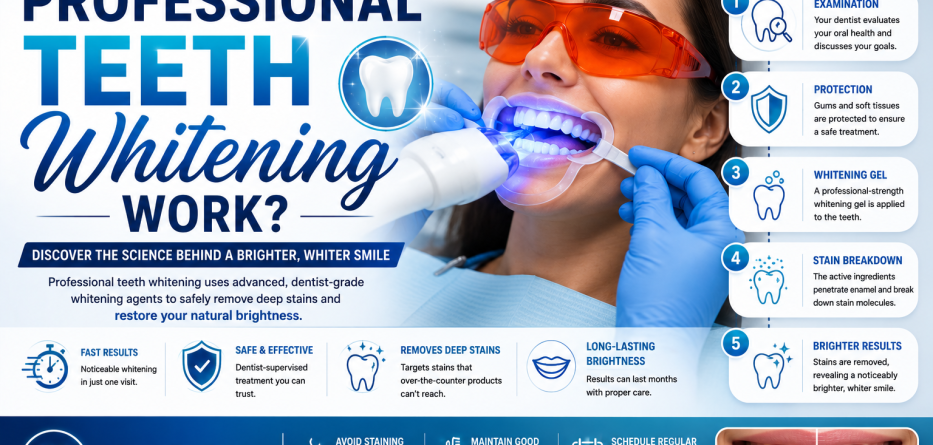
A bright, white smile is often associated with confidence, good health, and a youthful appearance. However, over time, teeth can become stained or discolored due to aging, coffee, tea, wine, smoking, and certain medications. While many over-the-counter whitening products promise dramatic results, professional teeth whitening remains one of the safest, fastest, and most effective ways to enhance your smile.
But how does professional teeth whitening actually work?
Understanding the science behind the treatment can help you make an informed decision and know what to expect before your whitening appointment. In this guide, we’ll explain how professional teeth whitening works, the different whitening methods available, benefits, safety considerations, and how long the results can last.
What Is Professional Teeth Whitening?
Professional teeth whitening is a cosmetic dental procedure that uses high-concentration whitening agents to remove stains and discoloration from teeth.
Unlike store-bought whitening strips or toothpaste, professional treatments are performed or supervised by a dental professional, allowing for stronger whitening solutions and more predictable results.
Common Whitening Agents
- Hydrogen peroxide
- Carbamide peroxide
These ingredients penetrate the enamel and break down stain molecules inside the tooth structure.
Why Do Teeth Become Discolored?
Before understanding whitening, it’s important to know why teeth lose their brightness.
Extrinsic Stains (Surface Stains)
These affect the outer enamel layer and are commonly caused by:
- Coffee
- Tea
- Red wine
- Tobacco
- Dark-colored foods
Intrinsic Stains (Internal Stains)
These occur inside the tooth and may result from:
- Aging
- Certain medications
- Dental trauma
- Excess fluoride exposure
Professional whitening can effectively address many types of discoloration.
How Does Professional Teeth Whitening Work?
Step 1: Dental Examination
Before treatment begins, the dentist evaluates:
- Oral health
- Existing restorations
- Gum condition
- Type of staining
This helps determine whether whitening is appropriate and what results can be expected.
Step 2: Protection of Gums and Soft Tissues
To prevent irritation, the dentist protects the gums, lips, and surrounding tissues using:
- Protective barriers
- Retractors
- Special gels
Only the teeth being treated remain exposed.
Step 3: Application of Whitening Gel
A professional-strength whitening gel containing hydrogen peroxide or carbamide peroxide is applied to the teeth.
The whitening agent penetrates the enamel and reaches the dentin layer beneath.
Step 4: Breakdown of Stains
The whitening gel releases oxygen molecules that break apart stain compounds.
This oxidation process helps:
- Remove discoloration
- Lighten tooth shade
- Restore a brighter appearance
Unlike whitening toothpaste, professional whitening targets stains below the enamel surface.
Step 5: Optional Light or Laser Activation
Some whitening systems use:
- LED lights
- Laser technology
- Specialized activation lamps
These technologies may accelerate the whitening process and enhance treatment efficiency.
Step 6: Evaluation of Results
After treatment, the dentist compares the new tooth shade to the original color.
Many patients experience noticeable improvements after a single appointment.
Types of Professional Teeth Whitening
In-Office Teeth Whitening
Performed at a dental clinic under professional supervision.
Benefits
- Immediate results
- Stronger whitening agents
- Safe application
- Often completed in one visit
Many patients achieve teeth that are several shades whiter within 60 to 90 minutes.
Take-Home Professional Whitening Kits
Custom trays are created by the dentist and paired with professional-grade whitening gel.
Benefits
- Convenient
- Gradual whitening
- Professional supervision
- Customized treatment
Results typically develop over one to three weeks.
How Effective Is Professional Teeth Whitening?
Professional whitening is significantly more effective than most over-the-counter products.
Average Results
| Whitening Method | Typical Improvement |
|---|---|
| Professional In-Office Whitening | 5–8 Shades |
| Professional Take-Home Kits | 3–6 Shades |
| Whitening Strips | 1–3 Shades |
| Whitening Toothpaste | Minimal Whitening |
Individual results vary based on the type and severity of discoloration.
How Long Do Whitening Results Last?
Professional whitening results can last anywhere from six months to three years.
Longevity depends on factors such as the following:
- Oral hygiene habits
- Smoking
- Coffee consumption
- Tea consumption
- Red wine intake
- Regular dental cleanings
Touch-up treatments may help maintain brightness.
Is Professional Teeth Whitening Safe?
Yes. Professional teeth whitening is generally considered safe when performed under dental supervision.
Safety Benefits
- Controlled whitening agents
- Gum protection
- Customized treatment plans
- Professional monitoring
Dentists ensure that the treatment is appropriate for each patient’s needs.
Are There Any Side Effects?
Most side effects are temporary and mild.
Common Side Effects
Tooth Sensitivity
Some patients experience temporary sensitivity to:
- Cold foods
- Hot beverages
- Air exposure
This typically resolves within a few days.
Gum Irritation
Minor gum irritation may occur if whitening gel contacts soft tissue.
Professional protection minimizes this risk.
Who Is a Good Candidate for Teeth Whitening?
Professional whitening works best for individuals with:
- Healthy teeth
- Healthy gums
- Yellow-toned stains
- Good oral hygiene
Patients should undergo a dental examination before treatment.
Who May Not Be a Good Candidate?
Whitening may not be ideal for:
- Pregnant women
- Patients with untreated cavities
- Individuals with active gum disease
- Patients with severe enamel erosion
Certain intrinsic stains may also respond less effectively.
Teeth Whitening vs Whitening Toothpaste
| Feature | Professional Whitening | Whitening Toothpaste |
|---|---|---|
| Removes Deep Stains | Yes | No |
| Dentist Supervised | Yes | No |
| Speed of Results | Fast | Slow |
| Shade Improvement | Significant | Minimal |
| Custom Treatment | Yes | No |
Professional whitening offers dramatically greater results.
Tips to Maintain a Whiter Smile
After treatment:
- Brush twice daily.
- Floss regularly.
- Avoid smoking.
- Limit staining foods and beverages.
- Drink through a straw when possible.
- Schedule regular dental cleanings.
- Use dentist-recommended whitening products.
Good habits help extend whitening results.
Frequently Asked Questions
How long does professional teeth whitening take?
Most in-office treatments take approximately 60 to 90 minutes.
Is professional whitening painful?
Most patients experience little to no discomfort, although temporary sensitivity can occur.
How many shades whiter can teeth become?
Many patients see improvements of five to eight shades after treatment.
Does whitening damage enamel?
When performed properly under professional supervision, whitening does not damage healthy enamel.
Can crowns and fillings be whitened?
No. Whitening treatments affect natural tooth structure but do not change the color of restorations.
Conclusion
Professional teeth whitening is one of the fastest and most effective ways to enhance the appearance of your smile. By using professional-strength whitening agents, dentists can safely remove deep stains and significantly brighten teeth in a relatively short period.
Whether you choose in-office whitening or a customized take-home kit, professional treatment offers superior results compared to most over-the-counter alternatives. With proper care and maintenance, a brighter, more confident smile can be enjoyed for years to come.
