
Dental crowns are one of the most common and effective restorative dental treatments available today. Whether used to protect a weakened tooth, restore a damaged tooth, or cover a dental implant, crowns are designed to improve both function and appearance. One of the most common questions patients ask is, “How long should a dental crown last?”
The good news is that modern dental crowns are highly durable and can last for many years with proper care. However, their lifespan depends on several factors, including the material used, oral hygiene habits, diet, and overall dental health.
In this guide, we’ll explore the average lifespan of dental crowns, what affects their longevity, signs that a crown may need replacement, and tips to help your crown last as long as possible.
What Is a Dental Crown?
A dental crown is a custom-made cap placed over a damaged, weakened, or treated tooth to restore its shape, strength, size, and appearance.
Crowns are commonly used for:
- Protecting cracked teeth
- Covering large fillings
- Restoring worn teeth
- Protecting root canal-treated teeth
- Supporting dental bridges
- Covering dental implants
Once cemented in place, a crown functions much like a natural tooth.
How Long Does a Dental Crown Typically Last?
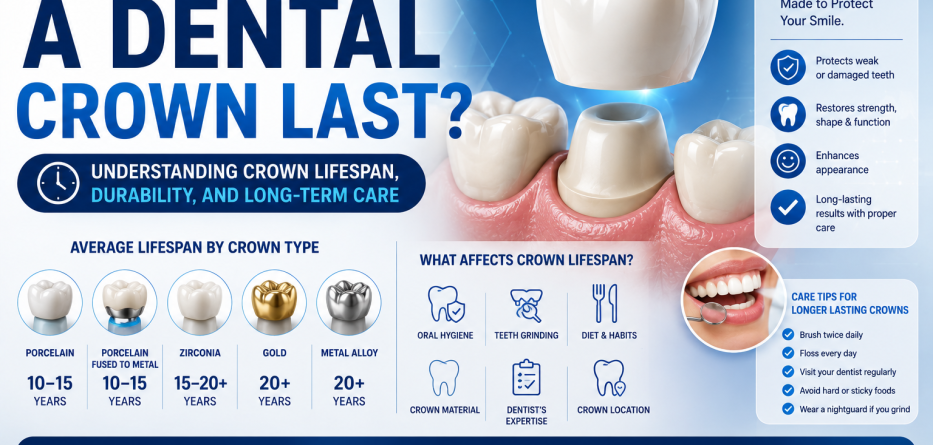
The average lifespan of a dental crown ranges from 10 to 15 years, although many crowns can last 20 years or longer with excellent care.
Average Lifespan by Crown Type
| Crown Material | Average Lifespan |
|---|---|
| Porcelain Crowns | 10–15 Years |
| Porcelain-Fused-to-Metal (PFM) | 10–15 Years |
| Zirconia Crowns | 15–20+ Years |
| Gold Crowns | 20+ Years |
| Metal Alloy Crowns | 20+ Years |
Some patients successfully maintain their crowns for decades.
Factors That Affect the Lifespan of a Dental Crown
Several factors determine how long a crown will remain functional.
1. Crown Material
The material used plays a major role in durability.
Zirconia Crowns
Benefits:
- Extremely strong
- Resistant to fractures
- Long-lasting
Porcelain Crowns
Benefits:
- Highly aesthetic
- Natural appearance
However, porcelain may be more prone to chipping under heavy pressure.
Gold Crowns
Benefits:
- Exceptional durability
- Minimal wear
- Long lifespan
2. Oral Hygiene Habits
Although crowns cannot develop cavities, the tooth underneath remains vulnerable.
Poor oral hygiene may lead to:
- Decay around crown margins
- Gum disease
- Crown failure
Good Oral Hygiene Includes
- Brushing twice daily
- Flossing every day
- Using fluoride toothpaste
- Routine dental cleanings
3. Teeth Grinding (Bruxism)
Chronic teeth grinding places excessive force on crowns.
Potential consequences include the following:
- Cracks
- Chips
- Crown loosening
- Premature wear
Patients who grind their teeth may benefit from a custom nightguard.
4. Diet and Eating Habits
Certain foods can shorten crown lifespan.
Avoid frequently chewing:
- Ice
- Hard candy
- Popcorn kernels
- Pens and pencils
These habits increase the risk of fractures.
5. Crown Placement Quality
A well-designed and properly fitted crown is more likely to last longer.
Experienced dentists ensure:
- Precise fit
- Proper bite alignment
- Secure bonding
- Healthy gum margins
Poorly fitted crowns may fail prematurely.
6. Location of the Crown
Crowns placed on back teeth experience greater chewing forces than crowns on front teeth.
Molars generally endure the following:
- Higher biting pressure
- More wear and tear
- Greater stress over time
As a result, posterior crowns may require more monitoring.
Signs Your Dental Crown May Need Replacement
Even durable crowns eventually wear out.
Common warning signs include:
Persistent Sensitivity
Sensitivity to hot or cold may indicate the following:
- Crown leakage
- Decay beneath the crown
- Cement deterioration
Visible Damage
Look for:
- Chips
- Cracks
- Fractures
- Rough edges
Loose Crown
A loose crown may allow bacteria to enter and damage the underlying tooth.
Gum Recession
Receding gums can expose crown margins and increase the risk of decay.
Pain While Chewing
Pain may indicate:
- Bite problems
- Crown damage
- Underlying tooth issues
Prompt evaluation can prevent more serious complications.
Can a Dental Crown Last a Lifetime?
While possible, it’s uncommon.
Most crowns eventually require replacement due to:
- Normal wear
- Gum changes
- Material fatigue
- Tooth decay beneath the crown
However, excellent oral care significantly increases longevity.
Many patients enjoy their crowns for 20 years or more.
How to Make Your Dental Crown Last Longer
Maintain Excellent Oral Hygiene
Brush and floss daily to protect the underlying tooth and surrounding gums.
Visit Your Dentist Regularly
Routine exams allow early detection of potential problems.
Wear a nightguard.
If you grind your teeth, a nightguard can dramatically reduce wear.
Avoid Using Teeth as Tools
Never use your teeth to:
- Open packages
- Bite fingernails
- Crack nuts
Eat a Tooth-Friendly Diet
Limit extremely hard foods and excessive sugar consumption.
Crown Lifespan Compared to Other Restorations
| Restoration Type | Average Lifespan |
|---|---|
| Dental Crown | 10–20+ Years |
| Filling | 5–15 Years |
| Dental Bridge | 5–15 Years |
| Veneer | 10–15 Years |
| Dental Implant Crown | 10–20+ Years |
Dental crowns remain one of the most durable restorative treatments available.
Frequently Asked Questions
How often do dental crowns need replacing?
Most crowns last between 10 and 15 years, although many can last longer with proper care.
Can a crown last 30 years?
Yes. Some crowns, particularly gold and zirconia crowns, have lasted 20–30 years or more.
What is the most durable dental crown material?
Gold and zirconia are generally considered among the strongest and longest-lasting crown materials.
Can decay occur under a crown?
Yes. The underlying tooth can still develop decay, especially if oral hygiene is poor.
Is it normal for a crown to feel different?
New crowns may feel slightly different initially, but they should quickly feel comfortable and natural.
Conclusion
So, how long should a dental crown last?
Most dental crowns last between 10 and 15 years, while some can remain functional for 20 years or longer with proper care. Factors such as crown material, oral hygiene, bite habits, and professional dental care all play important roles in determining longevity.
By maintaining good oral hygiene, attending regular dental checkups, and protecting your crown from excessive wear, you can maximize its lifespan and enjoy a healthy, confident smile for many years to come.
