
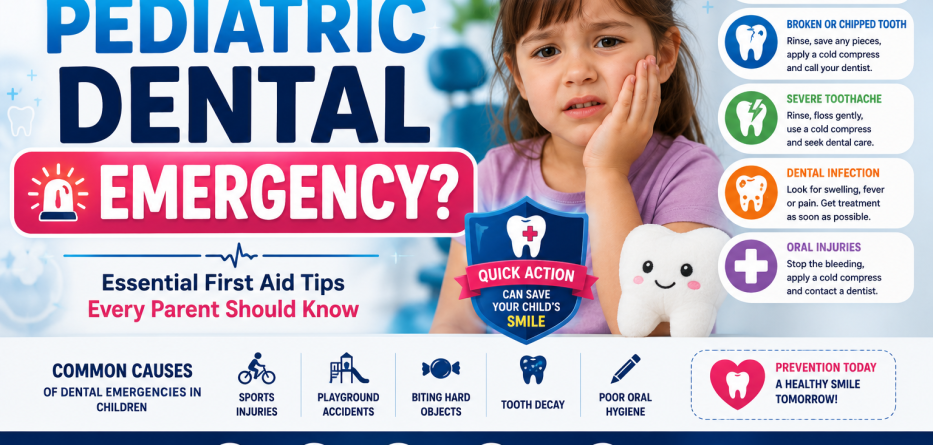
Children are naturally active, curious, and adventurous, which means bumps, falls, and accidents are often part of growing up. While many childhood injuries are minor, some can affect a child’s teeth, gums, or mouth and require immediate dental attention. Knowing what qualifies as a pediatric dental emergency can help parents act quickly and protect their child’s oral health.
A pediatric dental emergency involves any dental injury, infection, or condition that causes severe pain, excessive bleeding, swelling, or risks permanent damage to a child’s teeth and surrounding tissues. Prompt treatment can often save a tooth, reduce discomfort, and prevent long-term complications.
In this guide, we’ll explain the most common pediatric dental emergencies, how to respond, and when to seek urgent dental care.
What Is a Pediatric Dental Emergency?
A pediatric dental emergency is a dental problem involving a child that requires immediate attention from a dentist or healthcare professional.
Common Pediatric Dental Emergencies Include the Following:
- Knocked-out permanent teeth
- Broken or fractured teeth
- Severe toothaches
- Dental abscesses
- Oral injuries causing bleeding
- Swollen gums or face
- Objects stuck between teeth
- Injuries to the lips, tongue, or cheeks
Quick action can make a significant difference in preserving oral health.
Signs Your Child Needs Emergency Dental Care
Contact a dentist immediately if your child experiences:
- Severe dental pain
- Uncontrolled bleeding
- Swelling of the face, gums, or jaw
- A knocked-out permanent tooth
- Broken or displaced teeth
- Signs of infection
- Difficulty eating, speaking, or swallowing
These symptoms often indicate a situation that requires prompt evaluation.
Pediatric Emergency #1: Knocked-Out Permanent Tooth
One of the most serious dental emergencies occurs when a permanent tooth is completely knocked out.
What Parents Should Do
- Find the tooth immediately.
- Hold it by the crown, not the root.
- Rinse gently with clean water if dirty.
- Try placing it back into the socket if possible.
- If not, store it in milk.
- Visit a dentist immediately.
Important
The best chance of saving the tooth is within 30 to 60 minutes.
What If It’s a Baby Tooth?
Do not attempt to reinsert a knocked-out baby tooth. Contact your pediatric dentist for guidance.
Pediatric Emergency #2: Chipped or Broken Tooth
Children frequently chip or fracture teeth during sports, playground activities, or falls.
What to Do
- Rinse the mouth with warm water.
- Save any broken tooth fragments.
- Apply a cold compress.
- Contact a pediatric dentist promptly.
Even minor fractures may expose sensitive tooth structures.
Pediatric Emergency #3: Severe Toothache
Persistent tooth pain is often a sign of:
- Tooth decay
- Infection
- Gum irritation
- Food trapped between teeth
What to Do
- Rinse with warm water.
- Gently floss around the affected tooth.
- Apply a cold compress if swelling is present.
- Schedule an urgent dental visit.
Avoid placing aspirin directly on the gums.
Pediatric Emergency #4: Dental Abscess
A dental abscess is a serious infection that can affect both primary and permanent teeth.
Symptoms
- Severe pain
- Swollen gums
- Facial swelling
- Fever
- Bad taste in the mouth
What Parents Should Do
- Contact a dentist immediately.
- Encourage saltwater rinses if appropriate.
- Follow professional treatment recommendations.
Untreated infections can spread and become dangerous.
Pediatric Emergency #5: Bleeding Mouth Injuries
Children commonly injure their lips, cheeks, tongue, and gums.
First Aid Steps
- Apply gentle pressure using clean gauze.
- Use a cold compress to reduce swelling.
- Monitor the bleeding.
Seek professional care if bleeding continues for more than 15 minutes.
Pediatric Emergency #6: Loose or Displaced Tooth
A tooth may become loose or shifted following trauma.
What to Do
- Avoid touching or wiggling the tooth.
- Have your child avoid chewing on that side.
- Contact a pediatric dentist immediately.
Prompt treatment may help stabilize the tooth.
Pediatric Emergency #7: Swollen Face or Jaw
Facial swelling often indicates infection or trauma.
Warning Signs
- Fever
- Difficulty swallowing
- Trouble breathing
- Increasing pain
Seek immediate medical and dental care if these symptoms occur.
Pediatric Emergency #8: Object Stuck Between Teeth
Children frequently get food particles or small objects trapped between teeth.
What to Do
- Use dental floss carefully.
- Rinse with water.
- Avoid sharp objects such as pins or toothpicks.
If the object cannot be removed, contact a dentist.
Common Causes of Pediatric Dental Emergencies
Children may experience emergencies due to:
Sports Injuries
Contact sports often lead to dental trauma.
Playground Accidents
Falls are among the leading causes of chipped and broken teeth.
Tooth Decay
Untreated cavities can lead to severe pain and infection.
Biting Hard Objects
Ice, hard candy, and toys can damage teeth.
Poor Oral Hygiene
Inadequate brushing and flossing increase the risk of dental infections.
How to Prevent Pediatric Dental Emergencies
Many dental emergencies can be prevented through proper precautions.
Prevention Tips
- Schedule regular dental checkups.
- Encourage good oral hygiene habits.
- Use mouthguards during sports.
- Childproof play areas.
- Avoid hard foods and objects.
- Treat cavities early.
Prevention is always easier than emergency treatment.
When Should You Go to the Emergency Room?
Visit the emergency room immediately if your child experiences:
- Difficulty breathing
- Difficulty swallowing
- Severe facial swelling
- Uncontrolled bleeding
- Suspected jaw fracture
- Serious head or facial trauma
These situations require urgent medical attention.
Frequently Asked Questions
What is considered a pediatric dental emergency?
Any dental problem involving severe pain, swelling, trauma, infection, or bleeding that requires immediate treatment.
Is a chipped baby tooth an emergency?
Minor chips may not be urgent, but a dentist should evaluate the injury as soon as possible.
Can a knocked-out baby tooth be saved?
No. Baby teeth are generally not reinserted because doing so may damage the developing permanent tooth.
How can I reduce my child’s tooth pain before seeing a dentist?
Rinse with warm water, use a cold compress, and follow your dentist’s recommendations regarding pain relief.
Are swollen gums in children an emergency?
Swollen gums accompanied by pain, fever, or facial swelling may indicate infection and require prompt dental care.
Conclusion
A pediatric dental emergency can happen at any time, but knowing how to respond can help protect your child’s smile and overall health. Whether it’s a knocked-out tooth, severe toothache, dental abscess, or oral injury, quick action and professional treatment can prevent complications and improve outcomes.
Parents who understand the signs of a pediatric dental emergency are better prepared to make informed decisions when unexpected situations arise. By acting quickly and maintaining regular dental care, you can help keep your child’s smile healthy and strong for years to come.
