
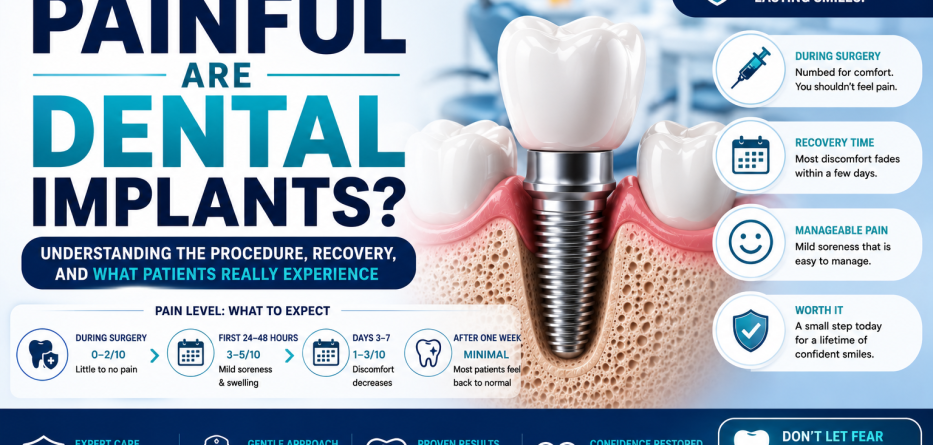
One of the most common concerns patients have before getting dental implants is simple: “How painful are dental implants?” The idea of having a titanium implant surgically placed into the jawbone can sound intimidating, leading many people to assume the procedure is extremely painful.
However, the reality is often very different from what most patients expect. Thanks to modern dental techniques, local anesthesia, sedation options, and advanced technology, dental implant surgery is generally far less uncomfortable than many people imagine.
In fact, many patients report that getting a dental implant is easier than having a tooth extracted.
In this guide, we’ll explain what you can expect before, during, and after dental implant surgery, how much discomfort is normal, and tips for a smooth recovery.
Quick Answer: How Painful Are Dental Implants?
For most patients, dental implant surgery causes minimal pain during the procedure because local anesthesia completely numbs the treatment area.
Most discomfort occurs after the anesthesia wears off and is usually described as the following:
- Mild soreness
- Slight swelling
- Minor bruising
- Temporary tenderness
Many patients compare the recovery discomfort to having a tooth extraction.
Pain Level Overview
| Stage | Typical Pain Level |
|---|---|
| During Surgery | 0–2/10 |
| First 24–48 Hours | 3–5/10 |
| Days 3–7 | 1–3/10 |
| After One Week | Minimal |
Pain experiences vary depending on the complexity of the procedure and individual healing response.
Why Dental Implant Surgery Is Less Painful Than Many Expect
Modern implant dentistry uses advanced techniques designed to minimize discomfort.
Factors That Reduce Pain
- Local anesthesia
- Sedation options
- Precise digital planning
- Minimally invasive techniques
- Faster surgical procedures
- Improved healing protocols
These advancements have significantly improved patient comfort.
Does the Implant Placement Procedure Hurt?
During Surgery
No, the implant placement itself should not hurt.
Before treatment begins, your dentist administers local anesthesia to completely numb the area.
Patients may feel:
- Pressure
- Vibrations
- Movement sensations
However, sharp pain should not occur.
If discomfort is experienced during the procedure, additional anesthesia can be administered immediately.
Sedation Options for Nervous Patients
Patients with dental anxiety often benefit from sedation dentistry.
Common Options
Nitrous Oxide (Laughing Gas)
- Helps patients relax
- Wears off quickly
- Mild sedation
Oral Sedation
- Taken before treatment
- Reduces anxiety
- Creates a calm experience
IV Sedation
- Deeper relaxation
- Often little memory of the procedure
- Suitable for complex cases
These options make implant treatment comfortable for even highly anxious patients.
What Does Recovery Feel Like?
After the anesthesia wears off, some discomfort is expected.
Common symptoms include:
- Mild pain
- Swelling
- Tenderness
- Minor bruising
- Slight bleeding
Most patients return to normal daily activities within 24 to 48 hours.
The First 24 Hours After Implant Surgery
The first day is usually when discomfort is most noticeable.
What You May Experience
- Mild throbbing
- Swelling around the implant site
- Sensitivity while chewing
- Minor bleeding
How to Manage It
- Take prescribed medications
- Use ice packs
- Rest adequately
- Eat soft foods
- Avoid strenuous exercise
These measures significantly improve comfort.
How Long Does Implant Pain Last?
Most discomfort improves rapidly during the first few days.
Typical Healing Timeline
Day 1–2
- Mild soreness
- Swelling peaks
Day 3–5
- Swelling begins to decrease
- Pain significantly improves
Week 1
- Most patients feel largely normal
Several Months
- Osseointegration continues without noticeable discomfort
The majority of patients require only short-term pain management.
Factors That Affect Implant Pain
Not all implant procedures feel exactly the same.
Several factors influence recovery.
Number of Implants
Multiple implants may result in:
- More swelling
- Longer recovery
- Greater tenderness
Bone Grafting
Patients requiring bone grafting may experience slightly more discomfort during healing.
Individual Pain Tolerance
Everyone experiences pain differently.
Overall Health
Healthy individuals often heal more quickly and comfortably.
Smoking
Smoking can delay healing and increase complications.
How to Reduce Pain After Dental Implant Surgery
Following post-operative instructions carefully can significantly reduce discomfort.
Recommended Recovery Tips
- Apply ice packs during the first 24 hours.
- Take medications as directed.
- Eat soft foods.
- Stay hydrated.
- Avoid smoking.
- Avoid alcohol.
- Maintain good oral hygiene.
- Attend follow-up appointments.
Proper aftercare promotes faster healing and less discomfort.
Foods to Eat During Recovery
Soft foods help minimize irritation during healing.
Good Choices
- Yogurt
- Smoothies
- Mashed potatoes
- Scrambled eggs
- Soup
- Oatmeal
- Soft pasta
Foods to Avoid
- Nuts
- Chips
- Hard candies
- Crunchy vegetables
- Sticky foods
Choosing appropriate foods helps protect the surgical site.
When Is Implant Pain a Concern?
Some discomfort is normal.
However, persistent or worsening pain may indicate a complication.
Contact Your Dentist If You Experience
- Severe pain after several days
- Excessive swelling
- Fever
- Pus or drainage
- Persistent bleeding
- Implant mobility
Early treatment helps prevent more serious issues.
Common Myths About Implant Pain
Myth #1: Dental Implant Surgery Is Extremely Painful
Fact: Most patients report only mild to moderate discomfort.
Myth #2: Recovery Takes Months of Pain
Fact: Most soreness improves within a few days.
Myth #3: Tooth Extraction Is Easier Than Implants
Fact: Many patients find implant surgery more comfortable than extractions.
Myth #4: Older Adults Cannot Tolerate Implant Surgery
Fact: Healthy adults of all ages often recover very well.
Benefits That Outweigh Temporary Discomfort
Although minor discomfort may occur during healing, patients often feel the benefits far outweigh the short recovery period.
Long-Term Benefits
- Permanent tooth replacement
- Natural appearance
- Improved chewing ability
- Better speech
- Bone preservation
- Increased confidence
These advantages make dental implants one of the most rewarding dental treatments available.
Frequently Asked Questions
Is dental implant surgery painful?
Most patients experience little to no pain during surgery due to local anesthesia.
How long does implant pain last?
Most discomfort improves significantly within 3–7 days.
Is getting a dental implant worse than a tooth extraction?
Many patients report that implants are easier than extractions.
Can I return to work after implant surgery?
Many patients return to work the next day, depending on the complexity of the procedure.
What is the most painful part of the process?
For most people, mild soreness during the first 24–48 hours is the most noticeable discomfort.
Conclusion
So, how painful are dental implants?
For most patients, dental implant surgery is far less painful than expected. Thanks to modern anesthesia, sedation options, and advanced surgical techniques, the procedure itself is typically painless. While some soreness, swelling, and tenderness are normal during recovery, these symptoms are usually mild and manageable with medication and proper aftercare.
The temporary discomfort of implant surgery is often a small price to pay for the long-term benefits of a healthy, stable, and confident smile. If you’re considering dental implants, discussing your concerns with an experienced implant dentist can help you feel informed, comfortable, and prepared for a successful treatment experience.
