
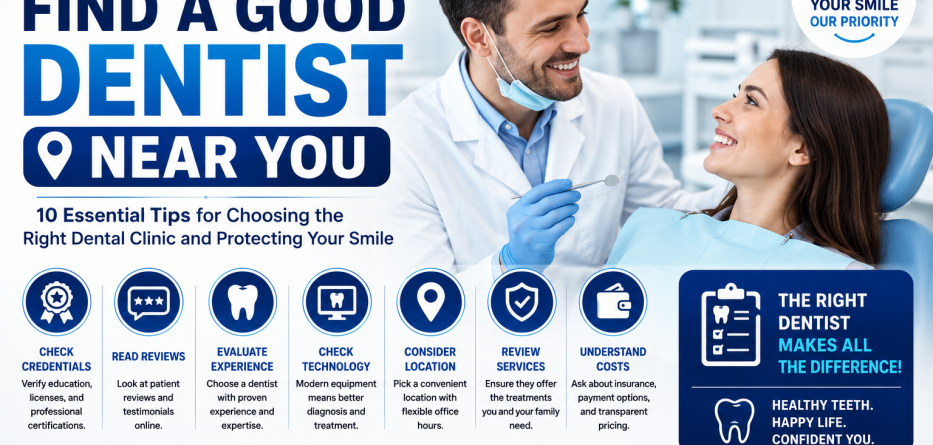
Choosing the right dentist is one of the most important decisions you can make for your oral health. Whether you need routine cleanings, cosmetic treatments, dental implants, orthodontics, or emergency care, finding a trustworthy and experienced dentist can significantly impact your overall dental experience.
With so many dental clinics available, many patients ask the following: How do I find a good dentist near me? The answer involves more than simply selecting the closest office. You should consider qualifications, experience, patient reviews, services offered, technology, and overall patient satisfaction.
This guide will walk you through the essential factors to consider when searching for a dentist and help you make an informed decision for your long-term oral health.
Why Choosing the Right Dentist Matters
Your dentist plays a vital role in maintaining your oral health and preventing future dental problems.
A good dentist can help:
- Detect issues early
- Prevent costly treatments
- Improve oral hygiene
- Enhance your smile
- Provide personalized care
- Reduce dental anxiety
Building a long-term relationship with a trusted dental professional can lead to better overall health outcomes.
Step 1: Determine Your Dental Needs
Before starting your search, identify what type of dental care you require.
Common Dental Services
General Dentistry
- Dental exams
- Teeth cleanings
- Fillings
- Preventive care
Cosmetic Dentistry
- Teeth whitening
- Veneers
- Smile makeovers
Restorative Dentistry
- Crowns
- Bridges
- Dental implants
Orthodontics
- Braces
- Clear aligners
Emergency Dentistry
- Toothaches
- Broken teeth
- Dental trauma
Understanding your needs helps narrow your search.
Step 2: Check Qualifications and Credentials
One of the first things to evaluate is the dentist’s professional qualifications.
Look for:
- Dental degree from an accredited institution
- State dental license
- Continuing education certifications
- Memberships in professional organizations
Well-qualified dentists stay current with the latest treatment methods and technologies.
Step 3: Read Online Reviews and Testimonials
Patient reviews provide valuable insights into the quality of care.
Pay attention to comments regarding:
- Professionalism
- Communication
- Treatment quality
- Office cleanliness
- Staff friendliness
- Appointment scheduling
Where to Check Reviews
- Google Reviews
- Yelp
- Healthgrades
- Local directories
Look for consistent positive feedback rather than focusing on a single review.
Step 4: Consider Experience
Experience often plays a major role in treatment outcomes.
Ask questions such as:
- How long has the dentist been practicing?
- How many similar procedures have they performed?
- Do they specialize in specific treatments?
For advanced procedures such as dental implants or oral surgery, experience is especially important.
Step 5: Evaluate Technology and Equipment
Modern dental technology can improve the following:
- Diagnostic accuracy
- Treatment comfort
- Patient safety
- Procedure efficiency
Advanced Technologies to Look For
- Digital X-rays
- Intraoral cameras
- CBCT scanning
- Digital impressions
- Laser dentistry
- Same-day crown technology
Clinics that invest in modern technology often provide a better patient experience.
Step 6: Visit the Dental Office
A consultation visit can reveal a lot about a dental practice.
During your visit, assess:
Office Environment
- Cleanliness
- Organization
- Comfort
Staff Interaction
- Friendliness
- Professionalism
- Willingness to answer questions
Communication
A good dentist should explain the following:
- Diagnoses
- Treatment options
- Costs
- Risks and benefits
Clear communication helps build trust.
Step 7: Check Available Services
Choosing a clinic that offers comprehensive care can save time and improve convenience.
Services may include:
- Preventive dentistry
- Cosmetic treatments
- Dental implants
- Orthodontics
- Emergency care
- Oral surgery
A full-service dental practice can often handle multiple treatment needs under one roof.
Step 8: Consider Location and Accessibility
Convenience matters, especially for ongoing treatments.
Evaluate:
- Distance from home or work
- Parking availability
- Public transportation access
- Office hours
- Weekend appointments
A conveniently located dental office makes it easier to maintain regular visits.
Step 9: Ask About Emergency Dental Care
Dental emergencies can happen unexpectedly.
Ask whether the practice offers:
- Same-day appointments
- Emergency contact options
- After-hours services
Knowing help is available when needed provides peace of mind.
Step 10: Understand Costs and Payment Options
Dental treatment costs can vary significantly.
Ask about:
- Treatment pricing
- Insurance acceptance
- Financing options
- Payment plans
Transparent pricing helps avoid unexpected expenses.
Questions to Ask a New Dentist
Before choosing a dentist, consider asking:
- How long have you been practicing?
- What services do you offer?
- Do you accept my insurance?
- How do you handle dental emergencies?
- What technology do you use?
- What are your treatment philosophy and approach?
- Do you offer sedation dentistry?
The answers can help determine whether the practice is the right fit.
Signs of a Good Dentist
A quality dentist typically demonstrates:
Professional Expertise
- Proper credentials
- Ongoing education
- Clinical experience
Strong Communication
- Listens carefully
- Explains treatment options
- Answers questions thoroughly
Patient-Centered Care
- Respectful treatment
- Personalized recommendations
- Comfortable environment
Positive Reputation
- Strong reviews
- Patient referrals
- Community trust
Warning Signs to Watch For
Be cautious if you notice the following:
- Poor communication
- Unclear pricing
- Dirty facilities
- Excessive pressure for treatment
- Consistently negative reviews
- Lack of transparency
Trust your instincts when evaluating a dental practice.
Benefits of Finding the Right Dentist
Choosing the right dentist can lead to:
- Better oral health
- Earlier detection of problems
- More comfortable treatment experiences
- Greater confidence in dental care
- Long-term cost savings
The right dentist becomes a valuable partner in your health journey.
Frequently Asked Questions
How do I know if a dentist is good?
Check credentials, reviews, experience, technology, and communication style.
Should I choose the closest dentist?
Location is important, but quality of care should remain the top priority.
How often should I visit a dentist?
Most patients should visit every six months for routine exams and cleanings.
Are online reviews reliable?
They can be helpful when viewed collectively and combined with other research.
What should I do if I’m afraid of the dentist?
Look for a dentist experienced in treating anxious patients and offering sedation options.
Conclusion
Finding a good dentist near you involves more than searching online and selecting the nearest clinic. By evaluating qualifications, experience, patient reviews, technology, services, and communication style, you can make an informed decision that supports your long-term oral health.
The right dentist will not only provide excellent treatment but also help you feel comfortable, informed, and confident about your dental care. Taking the time to choose wisely today can lead to healthier smiles and better experiences for years to come.
