

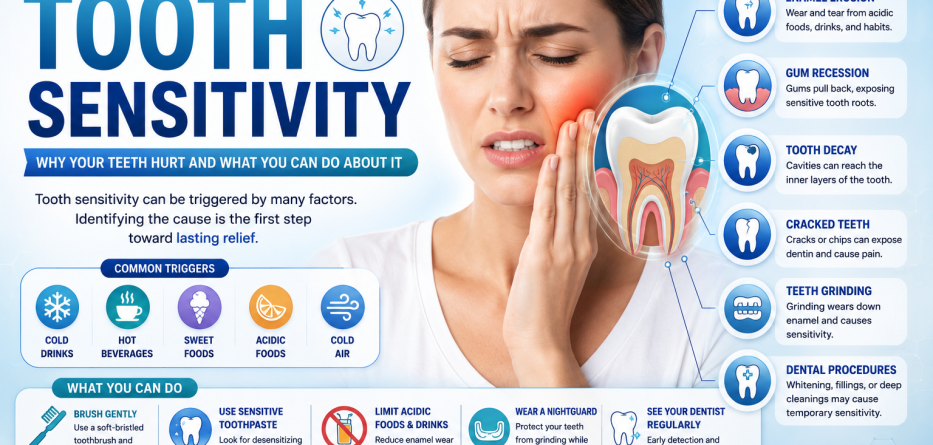
Do you experience a sharp, sudden pain when drinking cold water, enjoying hot coffee, or eating ice cream? If so, you may be suffering from tooth sensitivity, a common dental problem that affects millions of people worldwide.
Tooth sensitivity can range from mild discomfort to severe pain that interferes with everyday activities. While occasional sensitivity may not be a cause for concern, persistent symptoms often indicate an underlying dental issue that requires attention.
Understanding the causes of tooth sensitivity is the first step toward finding relief and protecting your oral health. In this guide, we’ll explore the most common reasons teeth become sensitive, available treatment options, and preventive measures to keep your smile healthy and comfortable.
What Is Tooth Sensitivity?
Tooth sensitivity, also known as dentin hypersensitivity, occurs when the protective layers of the tooth become damaged or worn away, exposing the dentin underneath.
Dentin contains tiny channels called tubules that connect directly to the tooth’s nerve center.
When exposed to:
- Hot foods and drinks
- Cold beverages
- Sweet foods
- Acidic foods
- Cold air
These tubules allow sensations to reach the nerves, causing pain or discomfort.
Quick Definition
Tooth sensitivity is a sharp, temporary pain that occurs when exposed dentin reacts to temperature changes, sweet foods, acidic substances, or pressure.
Common Symptoms of Tooth Sensitivity
Symptoms may include:
- Sharp pain when eating cold foods
- Discomfort from hot drinks
- Sensitivity to sweet foods
- Pain while brushing or flossing
- Discomfort when breathing cold air
- Temporary tooth pain after acidic foods
The severity can vary depending on the underlying cause.
1. Enamel Erosion
One of the most common causes of tooth sensitivity is enamel erosion.
Enamel is the hard outer layer that protects your teeth. Once enamel wears away, the dentin becomes exposed.
Causes of Enamel Erosion
- Acidic foods and drinks
- Soda consumption
- Citrus fruits
- Acid reflux disease
- Frequent vomiting
- Poor oral habits
Signs of Enamel Erosion
- Yellowing teeth
- Increased sensitivity
- Smooth or shiny tooth surfaces
- Chipping around tooth edges
2. Gum Recession
Healthy gums cover and protect the tooth roots.
When gums recede, the root surfaces become exposed.
Unlike tooth crowns, roots are not protected by enamel, making them highly sensitive.
Causes of Gum Recession
- Periodontal disease
- Aggressive brushing
- Tobacco use
- Aging
- Genetics
Symptoms
- Longer-looking teeth
- Exposed roots
- Increased sensitivity
- Gum tenderness
3. Tooth Decay (Cavities)
Cavities can penetrate the protective layers of the tooth and expose sensitive inner structures.
As decay progresses, sensitivity often worsens.
Warning Signs
- Tooth pain
- Visible holes
- Sensitivity to sweets
- Pain when biting
Early treatment can prevent more serious complications.
4. Cracked or Chipped Teeth
A cracked tooth can expose dentin and even allow bacteria to reach deeper layers of the tooth.
Common Causes
- Accidents
- Sports injuries
- Teeth grinding
- Biting hard objects
Symptoms
- Sharp pain while chewing
- Temperature sensitivity
- Intermittent discomfort
Prompt dental care is essential.
5. Teeth Grinding (Bruxism)
Many people unknowingly grind their teeth while sleeping.
Over time, grinding can wear away enamel and expose dentin.
Signs of Bruxism
- Worn tooth surfaces
- Jaw pain
- Morning headaches
- Tooth sensitivity
Custom nightguards can help protect the teeth.
6. Recent Dental Procedures
Temporary sensitivity is common after certain dental treatments.
Examples include:
- Teeth whitening
- Fillings
- Crowns
- Veneers
- Root planing
- Deep cleanings
In most cases, the discomfort subsides within a few days or weeks.
7. Periodontal (Gum) Disease
Advanced gum disease can cause significant gum recession and bone loss.
This exposes sensitive tooth roots and increases the risk of discomfort.
Symptoms
- Bleeding gums
- Swollen gums
- Bad breath
- Loose teeth
- Sensitivity
Treating the underlying gum disease often improves symptoms.
8. Acidic Foods and Beverages
Frequent exposure to acids can weaken enamel.
Common culprits include the following:
- Soft drinks
- Sports drinks
- Energy drinks
- Citrus fruits
- Vinegar-based foods
- Wine
Reducing acidic intake can help protect enamel.
9. Overbrushing
Brushing too aggressively can damage both enamel and gum tissue.
Common Mistakes
- Using hard-bristled toothbrushes
- Applying excessive pressure
- Brushing horizontally
Dentists typically recommend soft-bristled toothbrushes and gentle techniques.
10. Tooth Whitening Products
Some whitening treatments can temporarily increase sensitivity.
This occurs because whitening agents penetrate the enamel and affect the underlying dentin.
Managing Whitening Sensitivity
- Use desensitizing toothpaste
- Take breaks between treatments
- Follow professional recommendations
Most symptoms are temporary.
Risk Factors for Tooth Sensitivity
Certain factors increase the likelihood of developing sensitive teeth.
Major Risk Factors
- Poor oral hygiene
- Gum disease
- Teeth grinding
- Acidic diet
- Smoking
- Aging
- Frequent whitening treatments
Understanding these risks can help prevent future problems.
How Dentists Diagnose Tooth Sensitivity
Your dentist may evaluate the following:
- Medical history
- Dental history
- Gum condition
- Tooth structure
- Bite alignment
- X-rays
Proper diagnosis is essential because sensitivity can have multiple causes.
Treatment Options for Sensitive Teeth
The best treatment depends on the underlying cause.
Desensitizing Toothpaste
Blocks sensation from reaching tooth nerves.
Fluoride Treatments
Strengthen enamel and reduce sensitivity.
Dental Bonding
Covers exposed root surfaces.
Gum Grafting
Protects exposed roots caused by gum recession.
Fillings and Crowns
Restore damaged teeth and protect exposed dentin.
Root Canal Therapy
May be necessary for severe or persistent pain.
How to Prevent Tooth Sensitivity
Follow these preventive measures:
- Brush gently using a soft toothbrush.
- Use fluoride toothpaste.
- Limit acidic foods and beverages.
- Wear a nightguard if you grind your teeth.
- Treat gum disease promptly.
- Visit your dentist regularly.
- Avoid excessive whitening treatments.
Prevention is often easier and less expensive than treatment.
Frequently Asked Questions
What is the most common cause of tooth sensitivity?
Enamel erosion and gum recession are among the most common causes.
Can sensitive teeth heal on their own?
Mild sensitivity may improve, but persistent symptoms often require treatment.
Does tooth sensitivity mean I have a cavity?
Not always. Sensitivity can result from several conditions, including enamel wear and gum recession.
Can whitening cause tooth sensitivity?
Yes. Temporary sensitivity is a common side effect of teeth whitening treatments.
Should I see a dentist for sensitive teeth?
Yes. Persistent sensitivity should be evaluated to identify and treat the underlying cause.
What toothpaste is best for sensitive teeth?
Desensitizing toothpaste formulated for sensitive teeth can help reduce discomfort.
Conclusion
Tooth sensitivity is a common condition that can significantly affect daily comfort and quality of life. From enamel erosion and gum recession to cavities, teeth grinding, and gum disease, many factors can contribute to sensitive teeth.
The good news is that most causes of tooth sensitivity can be effectively treated or managed when diagnosed early. If you’re experiencing ongoing discomfort, schedule a dental evaluation to identify the underlying cause and receive appropriate treatment.
By maintaining good oral hygiene, limiting acidic foods, and seeking regular dental care, you can protect your teeth and enjoy a healthier, pain-free smile.

