
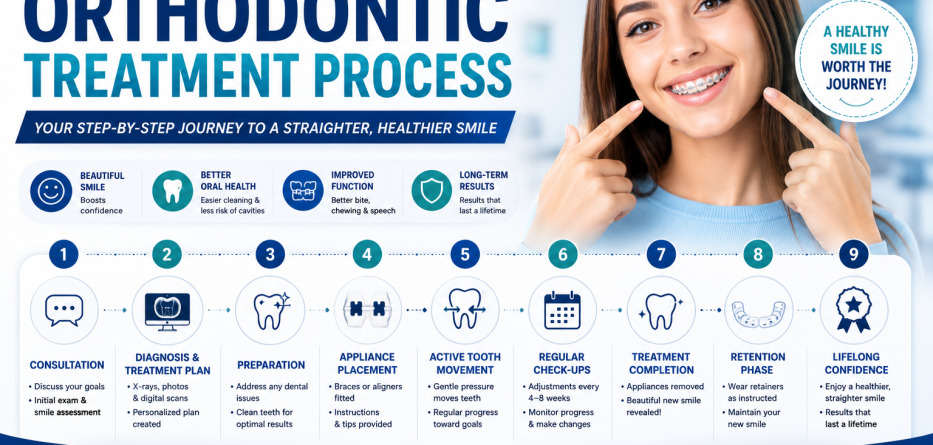
A healthy, well-aligned smile is about more than appearance—it plays a vital role in oral health, chewing function, speech, and self-confidence. Orthodontic treatment is designed to correct misaligned teeth and jaw issues, helping patients achieve a straighter smile and improved bite function.
Whether you’re considering traditional braces, clear aligners, or other orthodontic solutions, understanding the orthodontic treatment process can help you feel more confident about your journey. From the initial consultation to the final retainer, every stage plays an important role in achieving long-lasting results.
In this guide, we’ll walk you through the complete orthodontic treatment process, explain what to expect at each stage, and answer common questions patients ask before starting treatment.
What Is Orthodontic Treatment?
Orthodontic treatment is a specialized branch of dentistry that focuses on diagnosing, preventing, and correcting misaligned teeth and jaw irregularities.
Common orthodontic issues include:
- Crooked teeth
- Crowded teeth
- Gaps between teeth
- Overbite
- Underbite
- Crossbite
- Open bite
Treatment helps improve both aesthetics and oral function.
Why Is Orthodontic Treatment Important?
Straight teeth are easier to clean and maintain, reducing the risk of:
- Tooth decay
- Gum disease
- Excessive tooth wear
- Jaw discomfort
Benefits of orthodontic treatment include:
- Improved smile appearance
- Better oral hygiene
- Enhanced chewing ability
- Improved speech
- Increased self-confidence
Step 1: Initial Orthodontic Consultation
The orthodontic journey begins with a comprehensive evaluation.
During the consultation, the orthodontist will:
- Examine your teeth and bite
- Review your dental history
- Discuss treatment goals
- Identify orthodontic concerns
This appointment helps determine whether orthodontic treatment is needed and which option is most suitable.
What Happens During the Visit?
The orthodontist may take:
- Digital photographs
- Dental X-rays
- 3D scans
- Dental impressions
These records are used to create a personalized treatment plan.
Step 2: Diagnosis and Treatment Planning
After gathering diagnostic information, the orthodontist develops a customized treatment plan.
The plan may include:
- Type of orthodontic appliance
- Estimated treatment duration
- Cost and payment options
- Expected results
Common Treatment Options
Traditional Metal Braces
Highly effective for correcting complex alignment issues.
Ceramic Braces
Less noticeable than metal braces.
Clear Aligners
Removable and nearly invisible.
Lingual Braces
Attached behind the teeth for maximum discretion.
Step 3: Preparing for Treatment
Before orthodontic treatment begins, any existing dental problems should be addressed.
This may include:
- Treating cavities
- Managing gum disease
- Professional cleaning
- Tooth extractions (if necessary)
A healthy mouth provides the best foundation for successful treatment.
Step 4: Appliance Placement
Once preparation is complete, the orthodontic appliance is placed.
For Braces
The orthodontist will:
- Clean the teeth.
- Attach brackets.
- Insert archwires.
- Secure the braces.
For Clear Aligners
The patient receives a series of custom-made aligners designed to gradually move the teeth.
This appointment typically takes one to two hours.
Step 5: Active Tooth Movement
This is the longest phase of treatment.
The orthodontic appliance applies gentle, continuous pressure to move teeth into their desired positions.
How Teeth Move
Orthodontic pressure stimulates bone remodeling.
The process involves:
- Bone breakdown on one side
- Bone formation on the other side
This allows teeth to shift safely over time.
Typical Duration
| Treatment Type | Average Treatment Time |
|---|---|
| Mild Cases | 6–12 Months |
| Moderate Cases | 12–24 Months |
| Complex Cases | 24–36 Months |
Treatment time varies depending on individual needs.
Step 6: Regular Adjustment Appointments
Patients visit the orthodontist periodically throughout treatment.
Purpose of Adjustments
- Monitor progress
- Tighten braces
- Change archwires
- Provide new aligners
- Address concerns
Most appointments occur every 4–8 weeks.
These visits ensure treatment stays on track.
Step 7: Maintaining Oral Hygiene During Treatment
Good oral hygiene is essential throughout orthodontic treatment.
Recommended Habits
- Brush after meals
- Floss daily
- Use interdental brushes
- Limit sugary foods
- Attend regular dental cleanings
Proper care helps prevent cavities and gum problems.
Step 8: Completion of Treatment
Once the desired tooth positions are achieved, the orthodontic appliance is removed.
Braces Removal
The orthodontist:
- Removes brackets
- Cleans the teeth
- Polishes enamel
Patients often notice an immediate improvement in their smile.
Step 9: Retention Phase
Retention is one of the most important stages of orthodontic treatment.
Without retention, teeth may gradually shift back toward their original positions.
Types of Retainers
Removable Retainers
Can be taken out for eating and cleaning.
Fixed Retainers
Bonded behind the teeth for continuous support.
Why Retainers Matter
Retainers help:
- Maintain alignment
- Protect treatment results
- Prevent relapse
Many patients wear retainers long-term to preserve their smile.
Common Orthodontic Treatment Timeline
| Stage | Estimated Time |
|---|---|
| Consultation | 1 Visit |
| Diagnostics | 1–2 Weeks |
| Appliance Placement | 1 Visit |
| Active Treatment | 6–36 Months |
| Retention Phase | Ongoing |
What Can Affect Treatment Time?
Several factors influence treatment duration.
Complexity of the Case
More severe misalignment often requires longer treatment.
Age
Children and teenagers may experience faster tooth movement than adults.
Patient Compliance
For clear aligners, wearing them as instructed is essential.
Oral Health
Healthy gums and teeth support efficient tooth movement.
Tips for a Successful Orthodontic Treatment Journey
Follow these recommendations:
- Attend all scheduled appointments.
- Maintain excellent oral hygiene.
- Follow dietary recommendations.
- Wear aligners consistently.
- Use retainers as instructed.
- Report any issues promptly.
Patient cooperation plays a major role in treatment success.
Frequently Asked Questions
How long does orthodontic treatment take?
Most treatments last between 12 and 24 months, although some cases may be shorter or longer.
Does orthodontic treatment hurt?
Patients may experience mild discomfort after adjustments, but it is usually temporary.
Can adults get orthodontic treatment?
Yes. Adults of all ages can benefit from braces or clear aligners.
How often are adjustment appointments?
Most patients visit their orthodontist every 4 to 8 weeks.
Are clear aligners as effective as braces?
For many cases, yes. However, severe alignment problems may require braces.
Why are retainers necessary?
Retainers help prevent teeth from shifting after treatment is completed.
Conclusion
The orthodontic treatment process is a carefully planned journey designed to create a healthier, straighter, and more confident smile. From the initial consultation and treatment planning to active tooth movement and long-term retention, each stage plays a critical role in achieving successful results.
By understanding what to expect and following your orthodontist’s recommendations, you can enjoy a smoother treatment experience and long-lasting benefits. Whether you choose braces or clear aligners, orthodontic treatment is an investment in both your oral health and your self-confidence.
