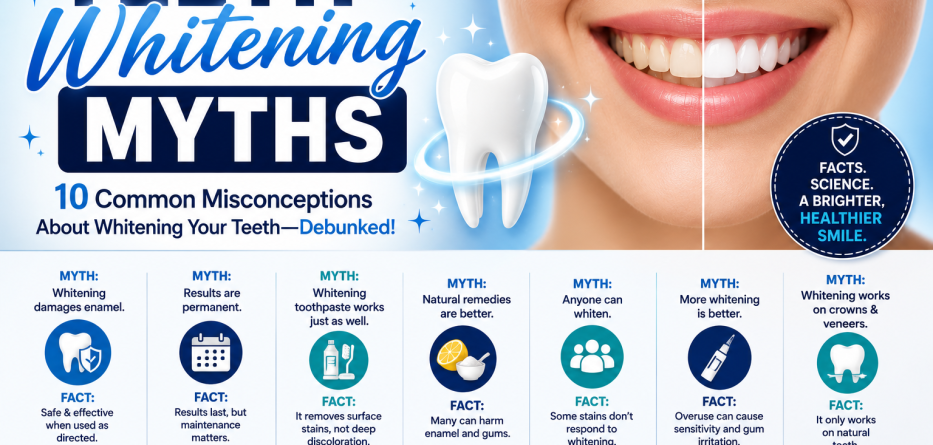
Teeth whitening is one of the most popular cosmetic dental treatments worldwide. A brighter smile can boost confidence, improve appearance, and help people feel more comfortable in social and professional situations. However, with the growing popularity of whitening products and treatments, many myths and misconceptions have emerged.
From claims that whitening damages teeth to beliefs that natural remedies work better than professional treatments, misinformation can prevent people from making informed decisions about their oral health.
In this article, we’ll debunk the most common teeth whitening myths and explain what science and dental professionals really say about achieving a whiter smile safely and effectively.
What Is Teeth Whitening?
Teeth whitening is a cosmetic dental procedure designed to remove stains and lighten the color of teeth.
Whitening treatments typically use:
- Hydrogen peroxide
- Carbamide peroxide
These ingredients penetrate tooth enamel and break down stain molecules, resulting in a brighter appearance.
Teeth whitening can be performed through:
- Professional in-office treatments
- Dentist-supervised take-home kits
- Over-the-counter whitening products
Myth #1: Teeth Whitening Damages Tooth Enamel
The Truth
One of the most common misconceptions is that teeth whitening permanently damages enamel.
Professional whitening treatments and approved whitening products do not remove or weaken enamel when used correctly.
What Actually Happens?
Whitening agents:
- Penetrate enamel safely
- Break apart stain molecules
- Do not shave off tooth structure
Temporary sensitivity may occur, but enamel itself remains intact.
Expert Insight
Dentists worldwide safely perform whitening procedures every day using evidence-based protocols.
Myth #2: Whitening Makes Teeth Permanently White
The Truth
Teeth whitening results are not permanent.
The longevity of whitening depends on:
- Diet
- Oral hygiene habits
- Smoking
- Age
- Genetics
Foods and beverages that can cause new staining include:
- Coffee
- Tea
- Red wine
- Cola
- Dark sauces
Most patients require occasional touch-ups to maintain results.
Myth #3: Whitening Toothpaste Can Dramatically Whiten Teeth
The Truth
Whitening toothpaste can help remove surface stains, but it cannot significantly change the natural color of teeth.
What Whitening Toothpaste Does
- Removes mild surface discoloration
- Polishes teeth
- Helps maintain whitening results
What It Cannot Do
- Deeply bleach teeth
- Remove internal stains
- Match professional whitening results
Professional treatments typically produce far more noticeable improvements.
Myth #4: Natural Remedies Work Better Than Professional Whitening
The Truth
Many popular internet remedies lack scientific evidence and may even damage teeth.
Examples include:
- Lemon juice
- Baking soda overuse
- Charcoal toothpaste
- Apple cider vinegar
Potential Risks
These substances may:
- Erode enamel
- Increase sensitivity
- Cause gum irritation
Professional whitening remains the safest and most predictable option.
Myth #5: Teeth Whitening Works for Everyone
The Truth
Not all types of discoloration respond equally to whitening.
Whitening Works Best On:
- Yellow stains
- Food and beverage stains
- Age-related discoloration
Whitening May Be Less Effective For:
- Gray discoloration
- Tetracycline stains
- Fluorosis
- Dental restorations
A dental examination helps determine the most appropriate treatment.
Myth #6: Whitening Results Are Immediate for Everyone
The Truth
Results vary depending on several factors.
These include:
- Initial tooth color
- Stain severity
- Treatment method
- Tooth structure
Some patients notice dramatic improvements quickly, while others require multiple sessions.
Patience is often necessary for optimal results.
Myth #7: Over-the-Counter Products Are as Strong as Professional Treatments
The Truth
Professional whitening systems typically contain stronger whitening agents and are customized to individual needs.
Professional Whitening Advantages
- Faster results
- Greater whitening potential
- Customized treatment
- Professional supervision
While over-the-counter products can be effective for minor whitening, they generally cannot match professional outcomes.
Myth #8: Teeth Whitening Causes Permanent Sensitivity
The Truth
Temporary tooth sensitivity is common after whitening, but it usually resolves within a few days.
Why Sensitivity Occurs
Whitening agents temporarily expose microscopic pathways within the tooth.
Most patients experience:
- Mild sensitivity
- Temporary discomfort
- Short-term temperature sensitivity
Dentists can recommend products to minimize these effects.
Myth #9: Crowns, Veneers, and Fillings Can Be Whitened
The Truth
Whitening treatments only affect natural tooth structure.
They do not whiten:
- Porcelain veneers
- Dental crowns
- Composite fillings
- Bridges
Patients with visible restorations may require replacement to match newly whitened teeth.
Myth #10: More Whitening Means Better Results
The Truth
Overusing whitening products can increase sensitivity and irritate gums without providing significantly better results.
Common Mistakes
- Using products too frequently
- Exceeding recommended treatment times
- Combining multiple whitening systems
Always follow professional recommendations and manufacturer instructions.
Professional Teeth Whitening vs DIY Whitening
| Feature | Professional Whitening | DIY/Home Remedies |
|---|---|---|
| Safety | High | Variable |
| Effectiveness | Excellent | Limited |
| Customization | Yes | No |
| Predictability | High | Low |
| Risk of Enamel Damage | Low | Potentially Higher |
| Dentist Supervision | Yes | No |
Professional treatment provides the most reliable and safest whitening experience.
How to Maintain Whitening Results
To keep your smile bright:
Daily Habits
- Brush twice daily
- Floss regularly
- Use whitening toothpaste as recommended
Lifestyle Tips
- Limit staining beverages
- Drink through a straw when possible
- Avoid tobacco products
- Schedule regular dental cleanings
These habits can help extend whitening results significantly.
Frequently Asked Questions
Is teeth whitening safe?
Yes. Professional whitening and approved whitening products are considered safe when used correctly.
Does whitening damage enamel?
No. Properly performed whitening does not damage healthy enamel.
How long do whitening results last?
Results often last several months to a few years depending on lifestyle habits and maintenance.
Are natural whitening remedies safe?
Some may be abrasive or acidic and can potentially damage enamel if overused.
Can yellow teeth become white again?
In many cases, yes. Professional whitening can significantly improve the appearance of yellow-stained teeth.
Can everyone whiten their teeth?
Most people can benefit from whitening, but results vary depending on the cause of discoloration.
Conclusion
Teeth whitening is one of the safest and most effective ways to enhance your smile, but misinformation can create unnecessary concerns. Understanding the truth behind common teeth whitening myths helps patients make informed decisions and avoid ineffective or potentially harmful practices.
Professional whitening treatments, combined with good oral hygiene and realistic expectations, can deliver noticeable and long-lasting results. If you’re considering teeth whitening, consulting a dental professional is the best way to determine the safest and most effective option for your unique smile.