
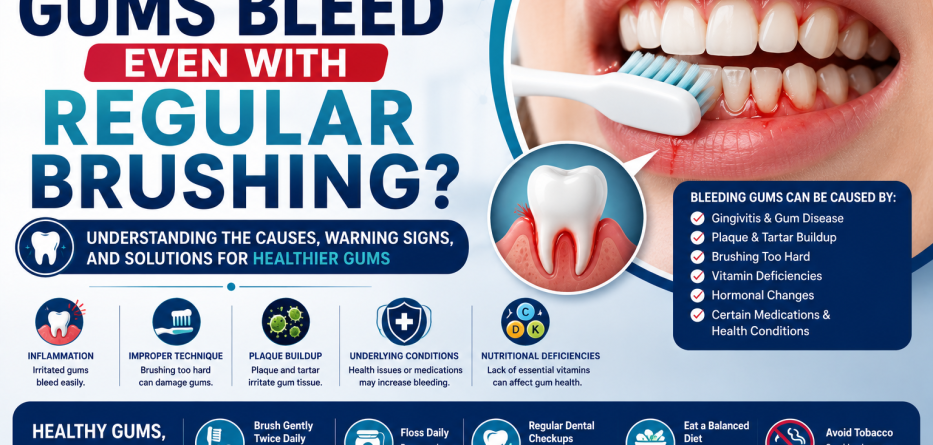
Seeing blood in the sink after brushing your teeth can be alarming, especially if you maintain a regular oral hygiene routine. Many people assume that brushing daily should completely prevent gum problems. However, bleeding gums can occur even in individuals who brush regularly.
While occasional bleeding may result from minor irritation, persistent bleeding gums often indicate an underlying issue that requires attention. In many cases, bleeding is an early warning sign of gum disease, improper brushing technique, or other oral and systemic health conditions.
In this article, we’ll explore the common causes of bleeding gums despite regular brushing, when to seek professional help, and how to keep your gums healthy.
Is It Normal for Gums to Bleed When Brushing?
Quick Answer
No. Healthy gums generally should not bleed during brushing or flossing.
If your gums bleed frequently, it is usually a sign that something is irritating or inflaming the gum tissue.
Occasional bleeding may occur when:
- Starting a new flossing routine
- Using a new toothbrush
- Brushing too aggressively
However, persistent bleeding should never be ignored.
The Most Common Cause: Gingivitis
What Is Gingivitis?
Gingivitis is the earliest stage of gum disease and one of the leading causes of bleeding gums.
It occurs when plaque accumulates along the gumline and causes inflammation.
Symptoms of Gingivitis
- Red gums
- Swollen gums
- Tender gums
- Bleeding while brushing or flossing
- Bad breath
The good news is that gingivitis is often reversible with proper dental care and improved oral hygiene.
Brushing Too Hard
Many people believe that brushing harder cleans teeth better.
In reality, excessive force can damage gum tissue and cause bleeding.
Signs You’re Brushing Too Hard
- Worn toothbrush bristles
- Gum recession
- Tooth sensitivity
- Bleeding after brushing
What to Do
Use a soft-bristled toothbrush and gentle circular motions rather than aggressive scrubbing.
Improper Flossing Technique
Even if you brush regularly, improper flossing can irritate the gums.
Common mistakes include:
- Snapping floss into the gums
- Using excessive force
- Inconsistent flossing habits
Better Flossing Practices
- Slide floss gently between teeth
- Curve it around each tooth
- Move it carefully beneath the gumline
With proper technique, bleeding often decreases within a few days or weeks.
Plaque and Tartar Buildup
Brushing alone may not remove all plaque, especially in hard-to-reach areas.
When plaque hardens into tartar, it can irritate the gums and increase inflammation.
Consequences of Tartar Buildup
- Bleeding gums
- Bad breath
- Gum recession
- Increased risk of periodontal disease
Professional dental cleanings are necessary to remove tartar.
Periodontitis: Advanced Gum Disease
If gingivitis is left untreated, it can progress to periodontitis.
Symptoms of Periodontitis
- Persistent bleeding
- Gum recession
- Loose teeth
- Deep gum pockets
- Bone loss
- Chronic bad breath
Periodontitis requires professional treatment and ongoing maintenance.
Vitamin Deficiencies
Certain nutritional deficiencies can weaken gum tissue and increase bleeding.
Common Deficiencies Linked to Bleeding Gums
Vitamin C Deficiency
Vitamin C supports gum tissue repair and immune function.
Low levels may cause:
- Swollen gums
- Easy bleeding
- Delayed healing
Vitamin K Deficiency
Vitamin K plays a role in blood clotting.
Insufficient levels may increase bleeding tendencies.
Foods That Support Gum Health
- Citrus fruits
- Leafy greens
- Bell peppers
- Broccoli
- Strawberries
Hormonal Changes
Hormonal fluctuations can make gums more sensitive and prone to bleeding.
Common Situations
- Pregnancy
- Puberty
- Menstruation
- Menopause
These changes increase blood flow to gum tissues, making them more susceptible to irritation.
Certain Medications
Some medications can contribute to bleeding gums.
Examples include:
- Blood thinners
- Aspirin
- Certain blood pressure medications
- Some anti-seizure medications
If you suspect medication is affecting your gums, consult your healthcare provider before making any changes.
Smoking and Tobacco Use
Although smoking often masks bleeding initially by reducing blood flow, it significantly increases the risk of gum disease.
Long-term tobacco use can lead to:
- Gum recession
- Bone loss
- Tooth loss
- Delayed healing
Quitting tobacco can greatly improve gum health.
Medical Conditions That Cause Bleeding Gums
Sometimes bleeding gums may indicate a broader health issue.
Conditions Associated with Bleeding Gums
- Diabetes
- Blood clotting disorders
- Leukemia
- Autoimmune diseases
- Liver disease
Persistent bleeding should be evaluated by both a dentist and physician when necessary.
How Dentists Diagnose the Cause
A dental examination may include:
Gum Evaluation
Checking for:
- Swelling
- Redness
- Bleeding points
- Pocket depth
Dental X-Rays
Used to assess:
- Bone levels
- Hidden infections
- Periodontal damage
Medical History Review
Your dentist may discuss:
- Medications
- Medical conditions
- Lifestyle habits
Accurate diagnosis is essential for effective treatment.
How to Stop Your Gums from Bleeding
Improve Daily Oral Hygiene
- Brush twice daily
- Floss every day
- Use fluoride toothpaste
- Clean along the gumline
Switch to a Soft-Bristled Toothbrush
Soft bristles effectively remove plaque while minimizing gum trauma.
Schedule Professional Cleanings
Regular cleanings help eliminate plaque and tartar buildup.
Eat a Balanced Diet
Focus on foods rich in:
- Vitamin C
- Vitamin K
- Calcium
- Antioxidants
Stay Hydrated
Adequate hydration supports healthy saliva production and oral tissues.
When Should You See a Dentist?
Schedule a dental appointment if:
- Bleeding persists for more than a week
- Gums are swollen or painful
- Teeth feel loose
- You notice gum recession
- Bleeding occurs frequently despite proper oral care
Early treatment can prevent more serious complications.
How to Prevent Bleeding Gums
Prevention Tips
- Brush gently with a soft toothbrush.
- Floss daily using proper technique.
- Attend regular dental checkups.
- Avoid tobacco products.
- Maintain a nutritious diet.
- Treat gum disease early.
- Stay consistent with oral hygiene.
Healthy habits are the best defense against gum problems.
Frequently Asked Questions
Why do my gums bleed even though I brush every day?
Bleeding gums often result from gingivitis, plaque buildup, improper brushing technique, or underlying health conditions.
Can bleeding gums heal on their own?
Mild irritation may improve, but persistent bleeding usually requires attention to the underlying cause.
Is bleeding while flossing normal?
Some bleeding may occur when beginning a flossing routine, but it should improve within a few days.
Should I stop brushing if my gums bleed?
No. Continue brushing gently and maintain oral hygiene while seeking professional advice if bleeding persists.
Are bleeding gums a sign of serious disease?
Sometimes. Persistent bleeding can indicate gum disease or other medical conditions that require evaluation.
Conclusion
If your gums bleed even with regular brushing, it’s important not to ignore the problem. While brushing daily is essential, bleeding gums often signal inflammation, gum disease, improper technique, or other underlying health concerns.
The good news is that most causes of bleeding gums can be successfully treated when identified early. By maintaining proper oral hygiene, visiting your dentist regularly, and addressing symptoms promptly, you can protect your gums and maintain a healthy smile for years to come.
