
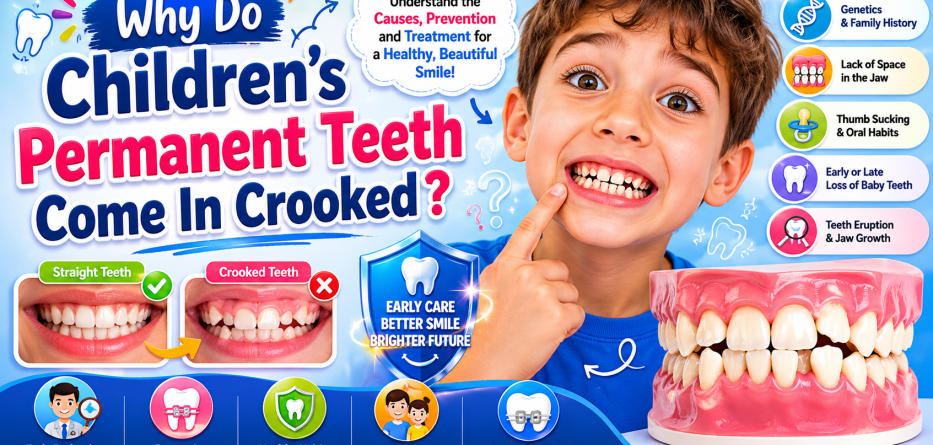
Many parents become concerned when their child’s permanent teeth begin to emerge and appear crooked, crowded, or misaligned. While baby teeth often seem straight and evenly spaced, permanent teeth may not always follow the same pattern. Fortunately, crooked permanent teeth are common and can often be corrected with proper dental care and orthodontic treatment.
Understanding why children’s permanent teeth come in crooked can help parents identify potential issues early and seek professional guidance when necessary. Early intervention may prevent more serious alignment problems in the future and contribute to better oral health.
In this article, we’ll explore the most common reasons permanent teeth come in crooked, how orthodontists evaluate alignment issues, and what treatment options are available.
Is It Normal for Permanent Teeth to Come In Crooked?
Yes, it is relatively common.
When permanent teeth first erupt, they may not immediately appear perfectly aligned. As additional teeth emerge and the jaw continues to grow, some minor irregularities may naturally improve.
However, significant crowding, twisting, overlapping, or spacing problems often require professional evaluation.
Common Signs
- Teeth overlapping each other
- Rotated teeth
- Crowding
- Large gaps
- Teeth erupting behind or in front of existing teeth
- Bite misalignment
Regular dental checkups help monitor these changes as children grow.
Common Causes of Crooked Permanent Teeth
Several factors can contribute to misaligned permanent teeth.
1. Lack of Space in the Jaw
One of the most common causes of crooked teeth is insufficient jaw space.
Permanent teeth are much larger than baby teeth. If the jaw does not provide enough room, the teeth may erupt in abnormal positions.
Results May Include
- Crowding
- Overlapping teeth
- Rotated teeth
- Teeth erupting outside the dental arch
Crowding is one of the leading reasons children require orthodontic treatment.
2. Genetics and Family History
Genetics play a major role in tooth alignment.
Children may inherit the following:
- Small jaws
- Large teeth
- Bite irregularities
- Crowding tendencies
If parents required braces or had alignment problems, their children may face similar challenges.
Genetic Factors Affecting Alignment
- Jaw size
- Tooth size
- Facial structure
- Bite relationships
Family history often provides important clues about future orthodontic needs.
3. Early Loss of Baby Teeth
Baby teeth serve as placeholders for permanent teeth.
When a baby tooth is lost too early due to
- Decay
- Trauma
- Extraction
Neighboring teeth may drift into the empty space.
This can block the proper eruption path of permanent teeth and lead to crowding or misalignment.
4. Delayed Loss of Baby Teeth
Sometimes baby teeth remain in place longer than expected.
When this occurs:
- Permanent teeth may erupt behind baby teeth.
- Teeth can emerge at unusual angles.
- Alignment problems may develop.
A common example is “shark teeth,” where permanent teeth erupt behind lower baby teeth.
5. Thumb Sucking and Prolonged Pacifier Use
Certain oral habits can affect jaw and tooth development.
Habits That May Contribute
- Thumb sucking
- Finger sucking
- Extended pacifier use
- Tongue thrusting
These habits may cause the following:
- Protruding front teeth
- Open bite
- Misaligned teeth
- Changes in jaw growth
The risk increases when habits continue beyond age four.
6. Mouth Breathing
Chronic mouth breathing can influence facial growth and dental development.
Common causes include:
- Enlarged adenoids
- Allergies
- Nasal congestion
- Airway issues
Long-term mouth breathing may contribute to:
- Narrow dental arches
- Crowding
- Improper jaw development
Pediatric dentists and orthodontists often evaluate airway concerns when assessing orthodontic problems.
7. Impacted or Ectopic Teeth
Sometimes permanent teeth fail to erupt properly.
A tooth may become
Impacted
Unable to emerge due to obstruction.
Ectopic
Erupting in an abnormal position.
These conditions can cause:
- Crooked teeth
- Crowding
- Delayed eruption
- Bite problems
Dental X-rays help identify these issues early.
8. Jaw Growth Differences
Upper and lower jaws do not always grow at the same rate.
Growth discrepancies may result in:
Overbite
Upper teeth excessively overlap lower teeth.
Underbite
Lower teeth extend beyond upper teeth.
Crossbite
Upper teeth fit inside lower teeth.
Jaw growth differences often require orthodontic treatment to correct.
How Dentists Diagnose Alignment Problems
Regular dental visits help identify orthodontic concerns before they become severe.
Evaluation Methods
- Clinical examination
- Dental X-rays
- Bite assessment
- Jaw growth evaluation
- Orthodontic consultation
The American Association of Orthodontists recommends an orthodontic evaluation by age seven.
Early assessment allows for timely intervention if needed.
When Should Parents Be Concerned?
Parents should consider scheduling an orthodontic evaluation if they notice:
- Severe crowding
- Teeth erupting in unusual locations
- Difficulty chewing
- Speech problems
- Persistent thumb sucking
- Bite irregularities
- Delayed tooth eruption
Early treatment can often simplify future orthodontic care.
Treatment Options for Crooked Permanent Teeth
Modern orthodontics offers several effective solutions.
Traditional Braces
Metal braces remain one of the most effective treatments for complex alignment issues.
Ceramic Braces
A more discreet alternative to metal braces.
Clear Aligners
Suitable for selected orthodontic cases and older children or teenagers.
Space Maintainers
Used when baby teeth are lost prematurely.
Palatal Expanders
Help widen narrow upper jaws and create additional space for erupting teeth.
Treatment recommendations depend on the child’s age and specific orthodontic needs.
Can Crooked Permanent Teeth Correct Themselves?
Minor irregularities sometimes improve naturally, as
- Additional teeth erupt
- The jaw grows
- Bite relationships develop
However, significant crowding and alignment problems rarely resolve completely without professional treatment.
Monitoring by a dentist or orthodontist is essential.
How to Help Promote Healthy Tooth Development
Parents can support proper dental development by:
- Scheduling regular dental visits
- Encouraging good oral hygiene
- Limiting prolonged pacifier use
- Addressing thumb-sucking habits early
- Monitoring eruption patterns
- Ensuring a balanced diet
- Seeking early orthodontic evaluation when needed
Preventive care can reduce the risk of severe orthodontic problems.
Frequently Asked Questions
Is it normal for permanent teeth to come in crooked?
Yes. Many children experience temporary or permanent alignment issues as their adult teeth erupt.
At what age should a child see an orthodontist?
Most experts recommend an orthodontic evaluation by age seven.
Can crooked teeth straighten naturally?
Minor irregularities may improve, but significant crowding often requires orthodontic treatment.
Do all children with crooked teeth need braces?
Not necessarily. Treatment depends on the severity of the alignment issue and overall bite development.
What causes teeth to erupt behind baby teeth?
Delayed baby tooth loss, crowding, and eruption timing can cause permanent teeth to emerge behind existing teeth.
Conclusion
Crooked permanent teeth are a common part of childhood dental development, but they should not be ignored. Factors such as genetics, jaw size, early tooth loss, oral habits, and growth patterns can all influence how permanent teeth emerge.
Understanding why children’s permanent teeth come in crooked allows parents to recognize potential problems early and seek professional advice when necessary. With modern orthodontic treatments and early intervention, most alignment issues can be successfully corrected, helping children enjoy healthy, functional, and confident smiles for years to come.
