Tooth replacement technology has come a long way from traditional dentures and bridges. Today, dental implants provide highly successful, natural-looking solutions for missing teeth. However, the future of tooth replacement technology promises even more exciting advancements that could revolutionize the way dentists restore smiles.
From artificial intelligence and 3D printing to regenerative dentistry and smart implants, researchers and dental professionals are continuously developing innovative solutions to improve patient outcomes, comfort, and treatment efficiency.
In this article, we’ll explore the future of tooth replacement technology, emerging trends in implant dentistry, and how these innovations may transform oral healthcare in the years ahead.
Why Tooth Replacement Technology Continues to Evolve
Millions of people worldwide experience tooth loss due to:
- Tooth decay
- Gum disease
- Injury or trauma
- Aging
- Medical conditions
While current solutions are highly effective, ongoing research aims to address challenges such as the following:
- Treatment time
- Bone loss
- Surgical complexity
- Implant healing
- Long-term maintenance
The goal is to create faster, safer, more durable, and more personalized tooth replacement options.
The Evolution of Tooth Replacement
Traditional Solutions
Historically, tooth replacement options included the following:
- Removable dentures
- Partial dentures
- Dental bridges
Although effective, these treatments often lacked the stability and bone-preserving benefits of modern implants.
Modern Dental Implants
Today, dental implants are considered the gold standard because they:
- Mimic natural tooth roots
- Preserve jawbone health
- Offer excellent durability
- Provide a natural appearance
- Improve chewing efficiency
Future innovations aim to build upon these strengths.
1. Artificial Intelligence in Implant Dentistry
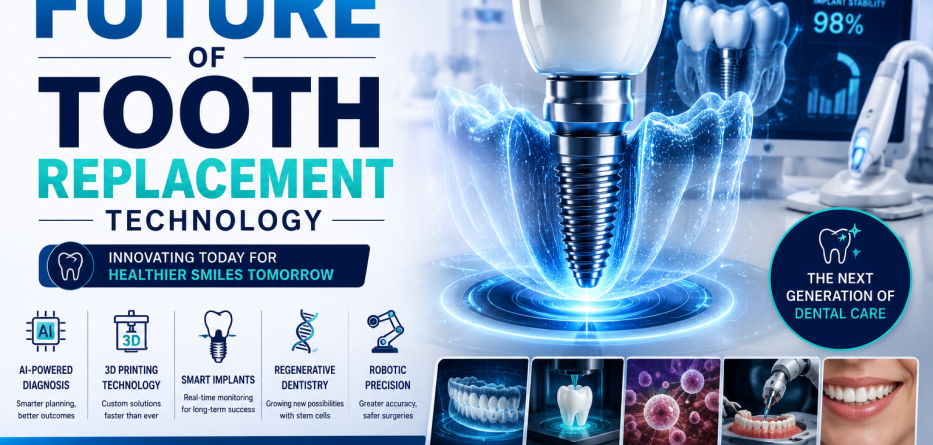
Artificial Intelligence (AI) is rapidly transforming dental treatment planning.
How AI Is Changing Tooth Replacement
AI-powered systems can:
- Analyze dental scans
- Evaluate bone quality
- Predict treatment outcomes
- Identify risk factors
- Improve implant positioning
Benefits
- Greater precision
- Reduced complications
- Faster treatment planning
- Improved patient outcomes
AI-assisted dentistry may soon become a standard component of implant procedures.
2. 3D Printing and Customized Tooth Replacements
One of the most exciting developments is the use of advanced 3D printing technology.
Future Applications
Dentists may soon create the following:
- Custom crowns
- Surgical guides
- Temporary restorations
- Implant components
Advantages
- Faster production
- Personalized fit
- Reduced treatment costs
- Enhanced patient comfort
As materials continue to improve, fully customized same-day restorations may become increasingly common.
3. Regenerative Dentistry and Tooth Regrowth
Perhaps the most revolutionary advancement is the possibility of growing new teeth.
Researchers are investigating:
- Stem cell therapy
- Tissue engineering
- Tooth germ regeneration
- Biological tooth replacement
Potential Benefits
- Natural tooth regeneration
- Elimination of artificial materials
- Improved biological compatibility
Although still under development, regenerative dentistry could fundamentally change how missing teeth are treated.
4. Smart Dental Implants
Future implants may do much more than replace missing teeth.
Smart Implant Technology
Researchers are exploring implants equipped with sensors capable of monitoring:
- Bite pressure
- Bone health
- Inflammation
- Implant stability
Potential Advantages
- Early detection of complications
- Improved long-term monitoring
- Personalized maintenance recommendations
These innovations could significantly improve implant longevity and patient care.
5. Advanced Biomaterials
Current implants are primarily made from titanium, but future materials may offer additional advantages.
Emerging Materials
Researchers are studying:
- Zirconia implants
- Bioactive coatings
- Nanotechnology-enhanced surfaces
- Hybrid biomaterials
Benefits
- Faster osseointegration
- Improved aesthetics
- Reduced inflammation
- Enhanced durability
Material science continues to play a critical role in the evolution of dental implants.
6. Faster Osseointegration Technologies
Osseointegration is the process by which the implant fuses with the jawbone.
Future technologies may significantly reduce healing times.
Innovations Under Investigation
- Bioactive implant coatings
- Growth factor therapies
- Surface modifications
- Laser-assisted healing
Expected Outcomes
- Faster recovery
- Earlier crown placement
- Reduced treatment duration
Patients may eventually receive fully functional restorations much sooner than current protocols allow.
7. Robotics in Implant Surgery
Robotic-assisted dentistry is becoming increasingly sophisticated.
What Robots Can Do
Robotic systems can help dentists.
- Improve implant placement accuracy
- Reduce human error
- Enhance surgical precision
- Optimize treatment outcomes
Patient Benefits
- Minimally invasive procedures
- Improved predictability
- Shorter recovery times
Robotic guidance may become more common as technology advances.
8. Digital Smile Design and Virtual Planning
Future implant treatments will likely become even more personalized.
Digital Dentistry Innovations
Advanced software allows dentists to:
- Simulate treatment outcomes
- Design smiles digitally
- Customize restorations
- Improve patient communication
Patients can often preview their future smile before treatment begins.
9. Improved Full-Arch Tooth Replacement Solutions
Full-mouth restoration continues to evolve rapidly.
Future systems may offer:
- Stronger materials
- Faster procedures
- Better aesthetics
- Longer-lasting restorations
Innovations in implant-supported prosthetics will continue improving outcomes for patients with extensive tooth loss.
10. Personalized Dentistry Through Genetic Research
Scientists are studying how genetics influence oral health and healing.
Future applications may include:
- Personalized implant recommendations
- Customized healing protocols
- Individualized risk assessments
This precision-based approach could improve treatment success rates even further.
Challenges Facing Future Tooth Replacement Technology
While these innovations are promising, several challenges remain:
- Regulatory approval
- Treatment affordability
- Clinical testing requirements
- Long-term safety evaluations
- Technology accessibility
Continued research and development will be necessary before many of these solutions become widely available.
What Patients Can Expect in the Next 10–20 Years
The future of tooth replacement is likely to include:
- Faster treatment timelines
- Greater customization
- More natural-looking restorations
- Enhanced digital planning
- Improved implant materials
- AI-assisted treatment decisions
- Smart monitoring systems
These advancements will make tooth replacement more precise, comfortable, and predictable than ever before.
Frequently Asked Questions
Will dentists be able to regrow teeth naturally?
Researchers are actively studying tooth regeneration through stem cells and tissue engineering, but widespread clinical use is still years away.
Are smart dental implants already available?
Some technologies are currently being researched, but fully integrated smart implants are not yet widely available.
Will dental implants become more affordable?
Advancements in digital workflows and manufacturing technologies may help reduce costs over time.
Is 3D printing used in dentistry today?
Yes. Many dental clinics already use 3D printing for surgical guides, crowns, and treatment planning models.
Will AI replace dentists?
No. AI is expected to assist dentists by improving diagnostics, planning, and decision-making rather than replacing professional expertise.
Conclusion
The future of tooth replacement technology is filled with exciting possibilities. Innovations such as artificial intelligence, regenerative dentistry, smart implants, advanced biomaterials, and robotic-assisted surgery are poised to transform how missing teeth are treated.
While dental implants remain the most effective tooth replacement solution available today, emerging technologies promise even greater precision, faster healing, improved comfort, and more personalized care. As research continues to advance, patients can look forward to a future where restoring a healthy, confident smile becomes easier and more effective than ever before.