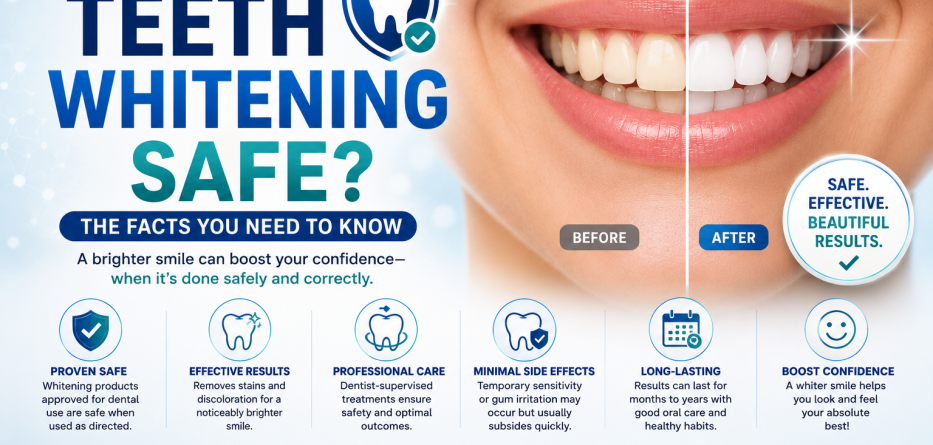
A bright, white smile is often associated with confidence, youth, and good oral health. As a result, teeth whitening has become one of the most popular cosmetic dental treatments worldwide. Whether performed by a dentist or using at-home whitening products, millions of people whiten their teeth every year to improve their smile.
However, one common question remains: Is teeth whitening safe?
The good news is that teeth whitening is generally considered safe when performed correctly and under professional guidance. Modern whitening treatments are designed to effectively remove stains while minimizing risks to your teeth and gums.
In this guide, we’ll explore how teeth whitening works, its safety, potential side effects, and tips for achieving the best results without harming your oral health.
What Is Teeth Whitening?
Teeth whitening is a cosmetic dental procedure that lightens the color of teeth by removing stains and discoloration.
Common causes of tooth staining include:
- Coffee
- Tea
- Red wine
- Tobacco use
- Aging
- Certain medications
- Poor oral hygiene
Whitening treatments use bleaching agents to break down stain molecules and brighten tooth enamel.
Is Teeth Whitening Safe?
Quick Answer
Yes. Teeth whitening is generally safe when performed according to professional recommendations and product instructions.
Most whitening treatments use ingredients that have been extensively studied and approved for cosmetic dental use.
Professional whitening treatments and reputable over-the-counter products can safely improve tooth color without causing permanent damage when used appropriately.
How Does Teeth Whitening Work?
Most whitening systems use one of two active ingredients:
Hydrogen Peroxide
A powerful whitening agent that penetrates enamel and breaks apart stain molecules.
Carbamide Peroxide
A compound that gradually releases hydrogen peroxide over time.
These ingredients work by oxidizing stain particles, making teeth appear brighter and whiter.
Types of Teeth Whitening Treatments
Professional In-Office Whitening
Performed by a dentist using higher-strength whitening agents.
Benefits include:
- Fast results
- Professional supervision
- Customized treatment
- Reduced risk of misuse
Many patients see dramatic improvements after a single appointment.
Take-Home Professional Whitening Kits
Dentists provide custom trays and professional-grade whitening gel.
Advantages:
- Better fit
- Controlled application
- Professional guidance
- More predictable results
Over-the-Counter Whitening Products
Popular options include:
- Whitening strips
- Whitening gels
- Whitening toothpaste
- Whitening mouthwashes
These products can be effective but typically produce slower results.
What Are the Benefits of Teeth Whitening?
Improved Appearance
Whiter teeth can enhance your overall smile and facial aesthetics.
Increased Confidence
Many patients report feeling more comfortable smiling, speaking, and socializing after whitening treatment.
Non-Invasive Treatment
Unlike veneers or crowns, whitening preserves natural tooth structure.
Affordable Cosmetic Enhancement
Teeth whitening is often one of the most cost-effective cosmetic dental procedures available.
Are There Any Side Effects?
Although teeth whitening is generally safe, temporary side effects may occur.
Tooth Sensitivity
The most common side effect is temporary tooth sensitivity.
Symptoms may include:
- Sensitivity to cold foods
- Sensitivity to hot beverages
- Mild discomfort
Sensitivity usually subsides within a few days.
Gum Irritation
Whitening gel that comes into contact with gum tissue may cause temporary irritation.
Professional treatments minimize this risk through careful application.
Uneven Whitening
Certain dental restorations such as crowns, veneers, and fillings do not respond to whitening agents.
This may result in uneven color matching.
Can Teeth Whitening Damage Enamel?
One of the biggest myths surrounding teeth whitening is that it permanently damages enamel.
The Truth
When used correctly, professionally recommended whitening products do not remove or weaken healthy enamel.
Research has shown that properly supervised whitening treatments are safe for enamel and oral tissues.
Problems generally occur when products are:
- Overused
- Used too frequently
- Applied incorrectly
- Purchased from unreliable sources
Following professional recommendations helps protect enamel health.
Who Should Avoid Teeth Whitening?
Teeth whitening may not be suitable for everyone.
You should consult a dentist before whitening if you have:
- Untreated cavities
- Gum disease
- Severe tooth sensitivity
- Cracked teeth
- Dental restorations in visible areas
Pregnant and breastfeeding individuals should also consult their healthcare provider before undergoing whitening treatment.
Professional Whitening vs At-Home Whitening
| Feature | Professional Whitening | At-Home Products |
|---|---|---|
| Safety Monitoring | Excellent | Limited |
| Whitening Strength | Higher | Lower |
| Speed of Results | Faster | Slower |
| Customization | High | Minimal |
| Cost | Higher | Lower |
| Predictability | Excellent | Moderate |
Professional treatment offers greater control and often produces more consistent results.
How to Whiten Teeth Safely
To maximize safety and effectiveness:
1. Consult Your Dentist First
A dental examination can identify issues that should be treated before whitening.
2. Follow Instructions Carefully
Never exceed recommended application times.
3. Avoid Excessive Whitening
Over-whitening can increase sensitivity and gum irritation.
4. Use Reputable Products
Choose products approved by dental professionals and reputable manufacturers.
5. Maintain Good Oral Hygiene
Healthy teeth respond better to whitening treatments.
How Long Do Whitening Results Last?
Results vary depending on lifestyle habits.
Factors that affect longevity include:
- Smoking
- Coffee consumption
- Tea consumption
- Red wine intake
- Oral hygiene habits
Typical whitening results may last
- Several months
- One to three years with proper maintenance
Touch-up treatments can help maintain brightness.
Common Myths About Teeth Whitening
Myth 1: Teeth Whitening Damages Enamel
Fact: Properly used whitening products do not permanently damage enamel.
Myth 2: Whitening Results Are Permanent
Fact: Teeth can become stained again over time.
Myth 3: Whitening Works on Crowns and Veneers
Fact: Whitening agents only affect natural teeth.
Myth 4: More Whitening Means Better Results
Fact: Overuse can increase sensitivity without significantly improving outcomes.
Frequently Asked Questions
Is teeth whitening safe for sensitive teeth?
Yes, although patients with sensitivity should consult their dentist and may benefit from specialized whitening products.
Can whitening weaken my teeth?
No. Professional whitening does not weaken healthy teeth when used properly.
How often can I whiten my teeth?
The frequency depends on the treatment method and individual needs. Your dentist can recommend an appropriate schedule.
Is professional whitening safer than store-bought products?
Professional whitening offers greater supervision, customization, and safety controls.
Can teenagers whiten their teeth?
Teens should consult a dentist before beginning whitening treatments.
Does whitening work on yellow teeth?
Yes. Yellow discoloration often responds very well to whitening treatment.
Conclusion
So, is teeth whitening safe?
Yes. Teeth whitening is generally a safe and effective cosmetic dental treatment when performed correctly and under professional guidance. Modern whitening products are designed to brighten smiles while protecting enamel and oral tissues.
Whether you choose professional in-office whitening or a dentist-approved take-home kit, following proper instructions and maintaining good oral health can help you achieve a brighter, more confident smile safely. Consulting with your dentist before treatment is the best way to ensure optimal results and minimize potential side effects.