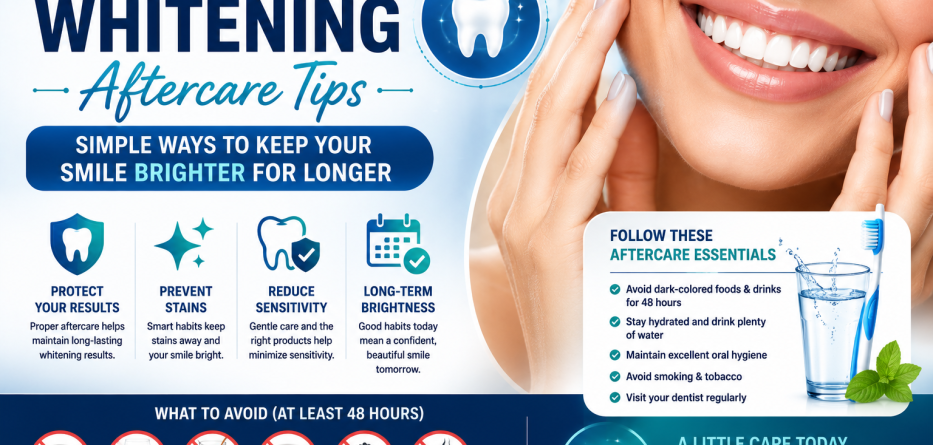
Teeth whitening is one of the most popular cosmetic dental treatments, helping patients achieve a brighter, more confident smile. Whether you’ve undergone professional in-office whitening or used a dentist-approved take-home kit, proper aftercare is essential for maintaining your results.
Many people assume that whitening treatment alone is enough, but the truth is that what you do after the procedure can significantly impact how long your teeth stay white. Certain foods, beverages, and habits can quickly stain newly whitened teeth if proper precautions aren’t taken.
In this guide, we’ll cover the most effective teeth whitening aftercare tips to help you protect your investment and enjoy a sparkling smile for as long as possible.
Why Teeth Whitening Aftercare Matters
Immediately after whitening treatment, your tooth enamel becomes more porous and susceptible to staining.
During this period:
- Teeth absorb pigments more easily.
- Sensitivity may temporarily increase.
- Staining can occur faster than usual.
Following proper aftercare guidelines helps:
- Maintain whitening results
- Reduce sensitivity
- Protect enamel
- Extend treatment longevity
The first 24–48 hours after whitening are especially important.
1. Follow the “White Diet” for 48 hours.
One of the most important aftercare recommendations is following a “white diet.”
What Is a White Diet?
A white diet consists of light-colored foods and beverages that are less likely to stain teeth.
Safe Foods
- White rice
- Plain pasta
- Chicken breast
- Turkey
- White fish
- Potatoes
- Cauliflower
- Bananas
- Yogurt
- Cottage cheese
Foods to Avoid
- Coffee
- Tea
- Red wine
- Cola
- Soy sauce
- Curry
- Berries
- Tomato sauce
- Beetroot
- Dark chocolate
Think of your teeth like a white T-shirt—anything that can stain fabric can potentially stain your teeth.
2. Avoid Dark-Colored Beverages
Dark beverages are among the biggest causes of post-whitening discoloration.
Drinks to Limit
- Coffee
- Black tea
- Green tea
- Red wine
- Sports drinks
- Colored sodas
- Fruit juices
If you choose to drink them:
- Use a straw whenever possible.
- Rinse with water afterward.
This simple habit can significantly reduce staining.
3. Stay Hydrated
Water plays an important role in maintaining a bright smile.
Benefits include:
- Washing away food particles
- Neutralizing acids
- Supporting saliva production
- Reducing stain buildup
Aim to drink water throughout the day, especially after meals.
4. Avoid Smoking and Tobacco Products
Tobacco is one of the fastest ways to discolor newly whitened teeth.
Smoking can cause:
- Yellow stains
- Brown discoloration
- Plaque buildup
- Gum problems
Patients who quit smoking often maintain whitening results much longer.
5. Practice Excellent Oral Hygiene
Good oral hygiene helps preserve your whitening results.
Daily Routine
- Brush twice daily
- Floss once daily
- Use fluoride toothpaste
- Clean your tongue
- Rinse after meals
Consistent care prevents plaque accumulation that can dull your smile.
6. Use a Whitening Toothpaste Carefully
Whitening toothpaste can help maintain results between treatments.
Look for products that:
- Remove surface stains
- Strengthen enamel
- Are approved by dental professionals
Avoid highly abrasive products that may damage enamel over time.
7. Manage Tooth Sensitivity
Temporary sensitivity is common after whitening treatment.
Ways to Reduce Sensitivity
- Use desensitizing toothpaste
- Avoid extremely hot foods
- Avoid icy beverages
- Use a soft-bristled toothbrush
Most sensitivity improves within a few days.
8. Avoid Acidic Foods and Drinks
Acidic foods can temporarily weaken enamel after whitening.
Examples
- Citrus fruits
- Lemon water
- Vinegar-based dressings
- Carbonated drinks
Limiting acidic exposure helps protect both enamel and whitening results.
9. Schedule Regular Dental Cleanings
Professional cleanings remove surface stains that brushing cannot.
Benefits include:
- Plaque removal
- Tartar removal
- Polished teeth
- Longer-lasting whiteness
Most dentists recommend cleanings every six months.
10. Consider Touch-Up Treatments
Even with excellent care, teeth naturally accumulate stains over time.
Touch-up treatments may help:
- Maintain brightness
- Extend whitening results
- Reduce the need for full whitening sessions
Your dentist can recommend an appropriate maintenance schedule.
How Long Do Teeth Whitening Results Last?
Results vary depending on lifestyle and oral hygiene habits.
Typical Whitening Longevity
| Whitening Method | Average Results Duration |
|---|---|
| Professional In-Office Whitening | 1–3 Years |
| Take-Home Whitening Trays | 6–18 Months |
| Over-the-Counter Products | Several Months |
Proper aftercare can significantly extend these timelines.
Common Mistakes After Teeth Whitening
Avoid these mistakes to protect your results:
Drinking Coffee Too Soon
Many patients resume coffee consumption immediately after treatment.
Waiting at least 48 hours is recommended.
Skipping Oral Hygiene
Plaque buildup quickly dulls whitened teeth.
Smoking
Tobacco stains can appear rapidly after whitening.
Overusing Whitening Products
Excessive whitening may increase sensitivity and damage enamel.
Moderation is key.
Best Foods After Teeth Whitening
For the first two days, choose foods such as:
- Plain chicken
- White fish
- Eggs
- White rice
- Pasta
- Yogurt
- Oatmeal
- Potatoes
- Bananas
- Milk
These foods help protect your whitening results during the critical recovery period.
Frequently Asked Questions
How long should I avoid coffee after teeth whitening?
Most dentists recommend avoiding coffee for at least 48 hours after treatment.
Can I brush my teeth immediately after whitening?
Yes, but use a soft-bristled toothbrush and avoid aggressive brushing.
Why are my teeth sensitive after whitening?
Whitening agents temporarily open microscopic pores in enamel, which can increase sensitivity.
Can smoking ruin whitening results?
Yes. Smoking is one of the leading causes of rapid post-whitening discoloration.
How often should I whiten my teeth?
The frequency depends on your treatment type and dental recommendations. Most patients only need periodic touch-ups.
Is a whitening toothpaste enough to maintain results?
Whitening toothpaste can help remove surface stains but may not replace professional touch-up treatments.
Conclusion
Teeth whitening can dramatically improve your smile, but maintaining those results requires proper aftercare. Following a white diet, avoiding staining foods and beverages, practicing excellent oral hygiene, staying hydrated, and attending regular dental visits can all help preserve your brighter smile.
By adopting these teeth whitening aftercare tips, you can extend the life of your whitening treatment, reduce sensitivity, and enjoy a healthier, more radiant smile for months or even years to come.