Maintaining good oral health becomes increasingly important with age. Seniors are more likely to experience dental concerns such as tooth decay, gum disease, dry mouth, tooth sensitivity, and tooth loss. While regular dental checkups and proper oral hygiene play a crucial role in preserving oral health, diet is equally important.
Certain foods can increase the risk of cavities, damage dental restorations, worsen gum disease, and contribute to oral discomfort. Understanding which foods to limit or avoid can help seniors protect their teeth, gums, and overall health.
In this article, we’ll explore the foods seniors should avoid for better oral health and discuss healthier alternatives that support a strong, healthy smile.
Why Oral Health Matters for Seniors
As people age, changes in oral health become more common.
Common dental challenges among seniors include:
- Dry mouth
- Gum disease
- Tooth sensitivity
- Root decay
- Tooth loss
- Wear and tear on teeth
- Dental restorations such as crowns, bridges, and implants
A healthy diet can help reduce these risks and improve overall oral wellness.
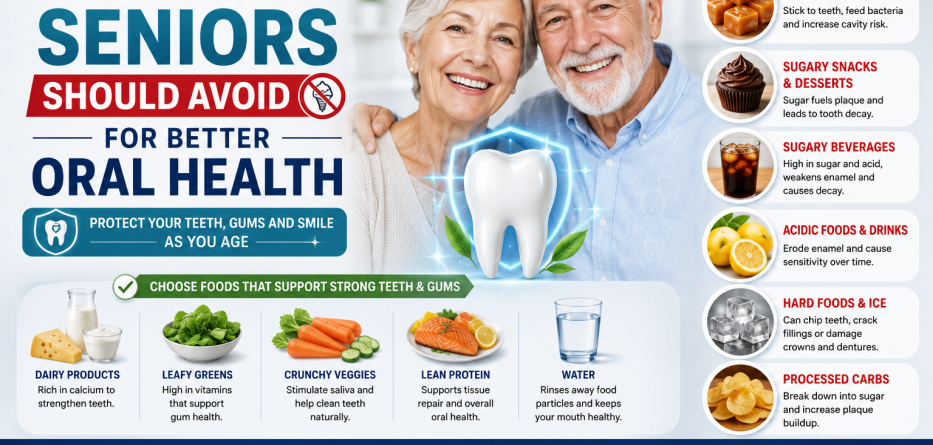
1. Sticky and Chewy Candies
Sticky candies cling to teeth for extended periods, allowing harmful bacteria to feed on sugar and produce acids that attack tooth enamel.
Examples
- Caramel
- Taffy
- Gummy candies
- Toffee
- Fruit chews
Why They’re Harmful
- Increase cavity risk
- Difficult to remove from teeth
- Can loosen crowns and fillings
- May damage dentures or dental work
Better Alternative
Choose fresh fruit or sugar-free gum when craving something sweet.
2. Sugary Snacks and Desserts
Sugar is one of the leading contributors to tooth decay.
Examples
- Cookies
- Cakes
- Donuts
- Pastries
- Sweet breakfast cereals
Oral Health Risks
- Feeds cavity-causing bacteria
- Increases plaque buildup
- Promotes enamel erosion
Better Alternative
Opt for yogurt, nuts, or fresh fruit with minimal added sugar.
3. Hard Candies
Hard candies may seem harmless because they dissolve slowly, but they can be particularly damaging.
Problems They Cause
- Prolonged sugar exposure
- Increased cavity risk
- Potential tooth fractures
- Damage to crowns and dental restorations
Better Alternative
Sugar-free mints or xylitol-containing products.
4. Sugary Beverages
Many beverages contain large amounts of sugar and acid.
Examples
- Soft drinks
- Sweetened iced tea
- Sports drinks
- Energy drinks
- Flavored coffee beverages
Why Seniors Should Limit Them
- Contribute to enamel erosion
- Increase decay risk
- Worsen dry mouth
- Promote bacterial growth
Better Alternative
Water remains the best beverage for oral health.
5. Acidic Foods and Drinks
Acid weakens tooth enamel and can increase sensitivity.
Common Sources
- Citrus fruits
- Lemon water
- Vinegar-based foods
- Tomatoes
- Soft drinks
Potential Effects
- Enamel erosion
- Tooth sensitivity
- Increased cavity risk
Tips
Consume acidic foods in moderation and rinse with water afterward.
6. Ice
Many people enjoy chewing ice, but it can be surprisingly harmful.
Risks Include
- Chipped teeth
- Cracked fillings
- Broken crowns
- Damage to dental implants
Better Alternative
Allow ice to melt rather than chewing it.
7. Hard Foods
Seniors with weakened teeth, dental work, or dentures should be cautious with hard foods.
Examples
- Popcorn kernels
- Hard nuts
- Hard pretzels
- Hard candy
- Unpopped popcorn
Risks
- Tooth fractures
- Broken restorations
- Denture damage
Better Alternative
Choose softer versions of nuts or foods prepared to reduce hardness.
8. Alcoholic Beverages
Alcohol can negatively affect oral health in several ways.
Effects on the Mouth
- Reduces saliva production
- Increases dry mouth
- Irritates oral tissues
- May increase gum disease risk
Better Alternative
Drink water regularly and moderate alcohol consumption.
9. Processed Carbohydrates
Refined carbohydrates quickly break down into sugars.
Examples
- White bread
- Crackers
- Potato chips
- Pretzels
Oral Health Concerns
- Feed oral bacteria
- Contribute to plaque formation
- Increase cavity risk
Better Alternative
Choose whole-grain options whenever possible.
10. Extremely Hot or Cold Foods
Many seniors experience tooth sensitivity due to gum recession or enamel wear.
Examples
- Ice cream
- Frozen beverages
- Hot coffee
- Hot soups
Potential Problems
- Trigger tooth pain
- Increase sensitivity to discomfort
Better Alternative
Consume foods and drinks at moderate temperatures.
Foods That Support Better Oral Health
Avoiding harmful foods is only part of the equation. Seniors should also include foods that promote healthy teeth and gums.
Recommended Foods
Dairy Products
- Milk
- Cheese
- Yogurt
Benefits:
- Rich in calcium
- Supports strong teeth
- Helps neutralize acids
Leafy Greens
- Spinach
- Kale
- Lettuce
Benefits:
- High in vitamins and minerals
- Supports gum health
Crunchy Vegetables
- Carrots
- Celery
- Cucumbers
Benefits:
- Stimulate saliva production
- Help clean teeth naturally
Lean Proteins
- Fish
- Chicken
- Eggs
Benefits:
- Support tissue repair
- Promote overall health
Water
Water is the most important beverage for oral health.
Benefits include:
- Rinses away food particles
- Reduces acid levels
- Supports saliva production
Tips for Maintaining Oral Health as You Age
Practice Good Oral Hygiene
- Brush twice daily
- Use fluoride toothpaste
- Floss every day
Visit the Dentist Regularly
Routine dental examinations help detect problems early.
Stay Hydrated
Hydration helps combat dry mouth and supports oral health.
Choose Nutrient-Rich Foods
A balanced diet benefits both oral and overall health.
Manage Medical Conditions
Conditions such as diabetes can significantly impact oral health.
Frequently Asked Questions
Why are seniors more prone to dental problems?
Aging, medications, dry mouth, gum recession, and existing dental restorations can increase oral health risks.
What foods contribute most to cavities?
Sugary snacks, sticky candies, sugary drinks, and processed carbohydrates are major contributors.
Is coffee bad for senior oral health?
Coffee itself is not necessarily harmful, but sugary additives and excessive consumption may contribute to staining and dry mouth.
How does dry mouth affect oral health?
Reduced saliva allows bacteria to thrive, increasing the risk of cavities and gum disease.
What is the best drink for oral health?
Water is the healthiest choice for maintaining oral hygiene and protecting teeth.
Conclusion
Good nutrition plays a vital role in maintaining oral health throughout the senior years. By limiting sugary foods, acidic beverages, hard snacks, and alcohol, seniors can reduce their risk of tooth decay, gum disease, enamel erosion, and dental emergencies.
Choosing nutrient-rich foods, staying hydrated, and practicing excellent oral hygiene can help preserve a healthy smile for years to come. Small dietary changes today can make a significant difference in long-term oral health and overall well-being.