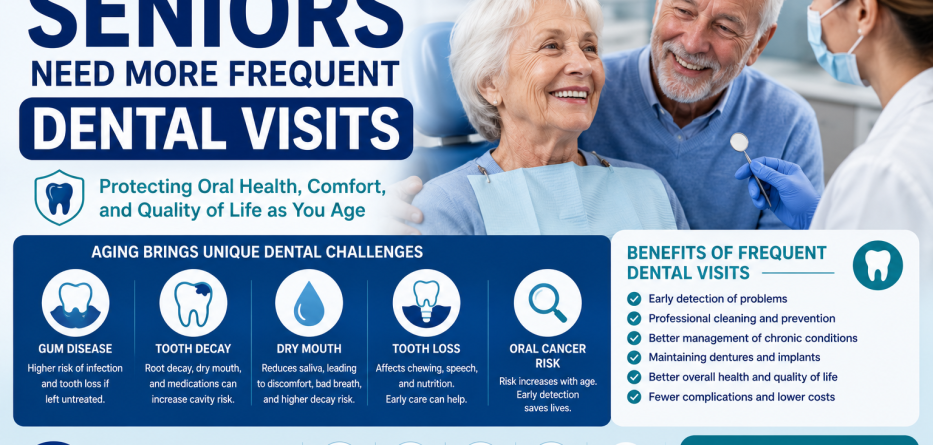
As we age, our oral health needs change significantly. While brushing, flossing, and maintaining good oral hygiene remain important throughout life, seniors often face unique dental challenges that require closer professional monitoring. From gum disease and tooth loss to dry mouth and oral cancer risks, aging can increase the likelihood of developing oral health problems.
Unfortunately, many older adults believe that losing teeth or experiencing dental issues is simply a normal part of aging. In reality, many age-related dental problems can be prevented or managed through regular dental care.
In this article, we’ll explore why seniors need more frequent dental visits, the common oral health concerns associated with aging, and how routine dental checkups can help maintain a healthy smile and overall well-being.
Why Oral Health Becomes More Important with Age
Oral health is closely connected to overall health, especially in older adults.
Poor oral health has been linked to several serious health conditions, including:
- Heart disease
- Diabetes complications
- Respiratory infections
- Stroke
- Cognitive decline
Regular dental visits help detect problems early before they affect overall health and quality of life.
Common Dental Problems Seniors Face
1. Gum Disease
Gum disease is one of the most common oral health issues among seniors.
Over time, plaque and tartar buildup can cause inflammation and infection of the gums.
Symptoms include:
- Red or swollen gums
- Bleeding while brushing
- Gum recession
- Persistent bad breath
- Loose teeth
Without treatment, advanced gum disease can lead to tooth loss.
Regular dental cleanings help prevent and manage periodontal disease.
2. Tooth Decay
Many people associate cavities with children, but seniors remain highly susceptible to tooth decay.
Older adults may experience:
- Root decay
- Recurrent decay around fillings
- Increased cavity risk due to dry mouth
Professional examinations can identify cavities before they become painful or require extensive treatment.
3. Dry Mouth (Xerostomia)
Dry mouth is a common issue among older adults.
It is often caused by:
- Prescription medications
- Medical treatments
- Chronic health conditions
Why Dry Mouth Matters
Saliva plays an important role in the following:
- Washing away food particles
- Neutralizing acids
- Protecting teeth from decay
Reduced saliva increases the risk of cavities, gum disease, and oral infections.
Dentists can recommend treatments to help manage dry mouth symptoms.
4. Tooth Loss
Although modern dentistry has reduced tooth loss rates, many seniors still experience missing teeth.
Consequences of tooth loss include:
- Difficulty chewing
- Nutritional deficiencies
- Speech problems
- Bone loss
- Reduced self-confidence
Frequent dental visits allow dentists to monitor oral health and recommend restorative options when needed.
5. Worn Teeth
Years of chewing, grinding, and normal use can cause significant tooth wear.
Excessive wear may lead to:
- Tooth sensitivity
- Cracks
- Bite problems
- Increased fracture risk
Routine checkups help identify wear patterns and prevent further damage.
Increased Risk of Oral Cancer
One of the most important reasons seniors should visit the dentist regularly is oral cancer screening.
The risk of oral cancer increases with age.
Common Risk Factors
- Tobacco use
- Alcohol consumption
- HPV infection
- Previous cancer history
Early detection dramatically improves treatment outcomes.
During routine exams, dentists check for:
- Unusual sores
- White or red patches
- Lumps or growths
- Changes in oral tissues
These screenings can be life-saving.
The Impact of Medical Conditions on Oral Health
Many chronic health conditions become more common with age.
Conditions affecting oral health include:
- Diabetes
- Osteoporosis
- Arthritis
- Cardiovascular disease
- Autoimmune disorders
These conditions can influence:
- Gum health
- Bone density
- Healing ability
- Infection risk
Dentists play an important role in monitoring these effects.
Medications Can Affect Oral Health
Many seniors take multiple medications daily.
Common side effects include:
- Dry mouth
- Gum overgrowth
- Altered taste sensation
- Increased cavity risk
Regular dental visits allow dentists to identify medication-related oral health concerns and recommend solutions.
Denture and Dental Implant Maintenance
Many seniors rely on dentures, dental implants, or other restorations.
These restorations require regular monitoring.
Denture Evaluations
Dentists check for:
- Proper fit
- Wear and damage
- Oral tissue irritation
Implant Maintenance
Dental implants require:
- Professional cleaning
- Gum health monitoring
- Evaluation of surrounding bone
Routine care helps extend the lifespan of these restorations.
How Often Should Seniors Visit the Dentist?
While many adults visit the dentist every six months, some seniors may benefit from more frequent visits.
Recommended Frequency
| Oral Health Status | Suggested Visits |
|---|---|
| Healthy Mouth | Every 6 Months |
| Gum Disease History | Every 3–4 Months |
| Dental Implants | Every 3–6 Months |
| High Cavity Risk | Every 3–4 Months |
| Dry Mouth Issues | Every 3–6 Months |
Your dentist can recommend a schedule based on your individual needs.
Benefits of Frequent Dental Visits for Seniors
Regular dental appointments provide numerous benefits.
Early Detection
Identify problems before they become serious.
Professional Cleaning
Remove plaque and tartar that brushing cannot eliminate.
Preventive Care
Reduce the risk of tooth loss and gum disease.
Better Overall Health
Support long-term wellness and quality of life.
Cost Savings
Preventive care is often less expensive than treating advanced dental problems.
Tips for Maintaining Oral Health as a Senior
In addition to regular dental visits, seniors should:
- Brush twice daily with fluoride toothpaste.
- Floss every day.
- Stay hydrated.
- Limit sugary foods and drinks.
- Avoid tobacco products.
- Clean dentures properly.
- Attend all scheduled dental appointments.
Consistent habits help maintain healthy teeth and gums for years to come.
Frequently Asked Questions
Why do seniors need more dental checkups?
Seniors are at higher risk for gum disease, cavities, dry mouth, oral cancer, and tooth loss, making regular monitoring important.
Is tooth loss a normal part of aging?
No. With proper dental care, many people maintain their natural teeth throughout life.
How often should seniors get dental cleanings?
Many seniors benefit from cleanings every six months, although some may need more frequent visits.
Can dentures replace regular dental visits?
No. Denture wearers still need routine exams to monitor oral tissues and overall oral health.
Are dental implants safe for seniors?
Yes. Healthy older adults are often excellent candidates for dental implants.
Conclusion
As people age, maintaining oral health becomes increasingly important. Seniors face unique challenges such as gum disease, dry mouth, tooth decay, oral cancer risks, and restorative maintenance needs that require professional attention.
Frequent dental visits help detect problems early, protect natural teeth, maintain restorations, and support overall health. By combining regular dental checkups with good oral hygiene habits, seniors can enjoy healthier smiles, greater comfort, and improved quality of life for years to come.