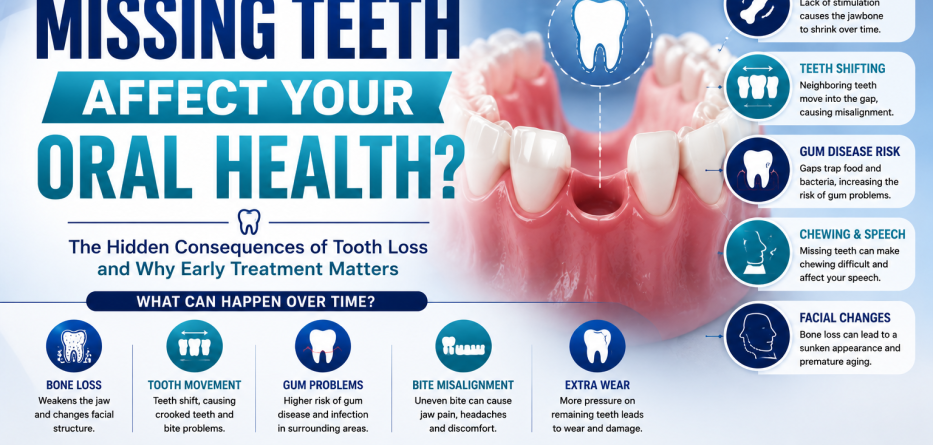
Many people assume that losing a tooth is primarily a cosmetic concern. While gaps in your smile can certainly affect your appearance and confidence, the impact of missing teeth goes far beyond aesthetics. In reality, even a single missing tooth can trigger a series of oral health problems that affect your gums, jawbone, bite, speech, and overall quality of life.
Understanding how missing teeth affect your oral health can help you make informed decisions about treatment and prevent long-term complications. Whether you’ve recently lost a tooth or have been living with missing teeth for years, it’s important to know the potential consequences and available solutions.
In this article, we’ll explore the ways missing teeth impact oral health and why replacing them promptly is often the best choice.
Why Missing Teeth Matter
Every tooth in your mouth plays an important role.
Teeth help you:
- Chew food properly
- Speak clearly
- Maintain facial structure
- Support neighboring teeth
- Preserve jawbone health
When a tooth is lost, these functions can become compromised, leading to both dental and overall health issues.
1. Bone Loss in the Jaw
One of the most significant effects of missing teeth is jawbone deterioration.
How It Happens
Natural tooth roots stimulate the jawbone whenever you chew. When a tooth is lost, that stimulation disappears.
As a result:
- Bone tissue begins to shrink
- Jawbone density decreases
- Facial structure changes over time
Studies show that significant bone loss can occur within the first year after tooth loss.
Consequences of Bone Loss
- Sunken facial appearance
- Premature aging
- Reduced support for neighboring teeth
- Difficulty placing future dental implants
2. Shifting of Surrounding Teeth
Teeth naturally help keep one another in proper alignment.
When a tooth is missing, neighboring teeth may gradually drift into the empty space.
Problems Caused by Tooth Movement
- Crooked teeth
- Bite misalignment
- Increased wear on teeth
- Difficulty cleaning between teeth
Even one missing tooth can affect the position of the entire dental arch over time.
3. Increased Risk of Gum Disease
Gaps created by missing teeth can become areas where bacteria and food debris accumulate.
This may lead to:
- Gum inflammation
- Gingivitis
- Periodontal disease
- Bone loss around adjacent teeth
Healthy gums are essential for maintaining the stability of remaining teeth.
4. Difficulty Chewing Food
Missing teeth can significantly reduce chewing efficiency.
Common challenges include:
- Difficulty eating hard foods
- Reduced ability to chew evenly
- Avoidance of nutritious foods
- Digestive issues caused by poor chewing
Many patients unconsciously favor one side of their mouth, creating uneven pressure on remaining teeth.
5. Speech Problems
Teeth play an important role in forming sounds and pronouncing words.
Depending on the location of the missing tooth, patients may experience the following:
- Lisping
- Slurred speech
- Difficulty pronouncing certain sounds
Front tooth loss often has the greatest impact on speech clarity.
6. Increased Wear on Remaining Teeth
When teeth are missing, the remaining teeth must handle greater chewing forces.
This additional stress can cause:
- Tooth wear
- Cracks
- Fractures
- Sensitivity
Over time, excessive pressure may weaken healthy teeth.
7. Changes in Bite Alignment
The loss of a tooth can alter how the upper and lower teeth come together.
This condition is known as malocclusion.
Symptoms May Include
- Jaw pain
- Headaches
- Uneven tooth wear
- Difficulty chewing
- TMJ (temporomandibular joint) problems
Proper bite alignment is essential for long-term oral health.
8. Higher Risk of Additional Tooth Loss
Missing teeth can create a chain reaction within the mouth.
Bone loss, gum disease, and shifting teeth may eventually compromise nearby teeth.
Without treatment, patients may experience:
- Progressive tooth loss
- Reduced oral function
- Increased treatment costs
Replacing missing teeth early can help prevent these complications.
9. Impact on Self-Confidence and Mental Well-Being
Tooth loss can affect more than physical health.
Many people experience:
- Reduced self-confidence
- Embarrassment when smiling
- Social anxiety
- Lower quality of life
A healthy smile often plays an important role in personal and professional interactions.
10. Facial Changes and Premature Aging
Missing teeth can alter facial appearance over time.
As bone loss progresses, patients may develop the following:
- Sunken cheeks
- Thinner lips
- Wrinkles around the mouth
- Collapsed facial profile
These changes can make individuals appear older than their actual age.
How Quickly Do Problems Develop After Tooth Loss?
The timeline varies from person to person.
Typical Progression
| Time After Tooth Loss | Possible Changes |
|---|---|
| First Few Months | Bone begins shrinking |
| 6–12 Months | Noticeable bone loss |
| 1–3 Years | Tooth shifting may occur |
| Several Years | Significant bite changes and facial alterations |
The earlier treatment is pursued, the easier it is to preserve oral health.
Treatment Options for Missing Teeth
Fortunately, several effective solutions are available.
Dental Implants
Benefits include:
- Bone preservation
- Natural appearance
- Long-term durability
- Excellent stability
Dental Bridges
Useful for replacing one or more missing teeth without surgery.
Dentures
Available as partial or full restorations for patients missing multiple teeth.
Your dentist can recommend the most appropriate option based on your needs.
Why Dental Implants Are Often Recommended
Among modern tooth replacement options, dental implants provide unique advantages.
Key Benefits
- Replace both the tooth and root
- Prevent bone loss
- Restore chewing function
- Maintain facial structure
- Last for decades with proper care
Because implants integrate with the jawbone, they closely mimic natural teeth.
How to Prevent Tooth Loss
Preventive care remains the best strategy.
Oral Health Tips
- Brush twice daily
- Floss regularly
- Visit your dentist every six months
- Avoid tobacco products
- Wear a mouthguard during sports
- Treat dental problems early
Healthy habits can significantly reduce the risk of future tooth loss.
Frequently Asked Questions
Is losing one tooth really a big problem?
Yes. Even a single missing tooth can lead to bone loss, tooth shifting, bite changes, and increased wear on surrounding teeth.
Can missing teeth affect overall health?
Yes. Difficulty chewing may impact nutrition, while oral infections can contribute to broader health concerns.
How long can I leave a missing tooth untreated?
The sooner a tooth is replaced, the better. Bone loss often begins within months of tooth extraction.
Do dental implants prevent bone loss?
Yes. Dental implants stimulate the jawbone similarly to natural tooth roots, helping preserve bone density.
Can missing teeth cause jaw pain?
Yes. Changes in bite alignment and uneven chewing forces can contribute to jaw discomfort and TMJ issues.
Conclusion
So, how do missing teeth affect your oral health?
The effects extend far beyond appearance. Missing teeth can lead to bone loss, gum disease, shifting teeth, bite problems, chewing difficulties, speech changes, and even premature aging. Left untreated, these issues often worsen over time and may increase the risk of additional tooth loss.
Fortunately, modern dental treatments such as dental implants, bridges, and dentures can restore function, protect oral health, and improve confidence. If you’ve lost a tooth, consulting a dentist promptly can help you preserve your smile and prevent long-term complications.