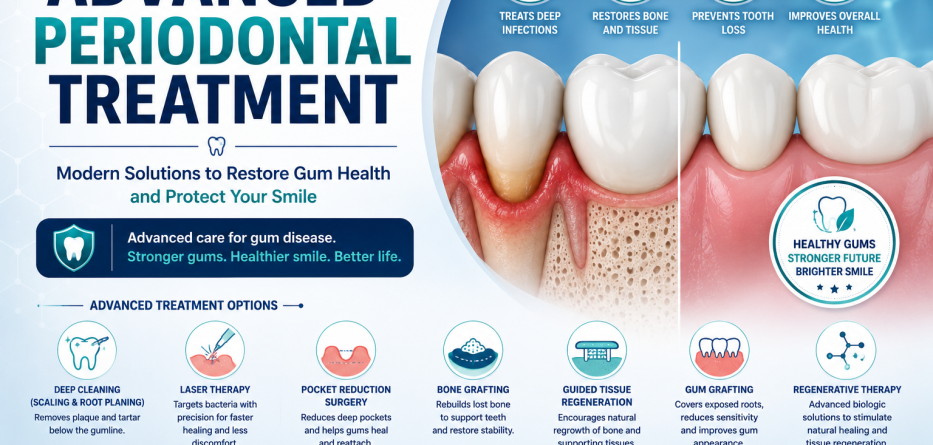
Healthy gums are the foundation of a healthy smile. However, when gum disease progresses beyond its early stages, it can threaten not only your teeth but also your overall oral health. Advanced periodontal treatment offers effective solutions for managing severe gum disease, restoring gum health, and preventing tooth loss.
Periodontal disease affects millions of people worldwide and remains one of the leading causes of tooth loss among adults. Fortunately, advancements in periodontal care have made it possible to treat even complex cases using minimally invasive techniques, regenerative therapies, and modern surgical procedures.
In this article, we’ll explore what advanced periodontal treatment involves, when it’s needed, available treatment options, benefits, and how these procedures can help preserve your smile.
What Is Periodontal Disease?
Periodontal disease, commonly known as gum disease, is a bacterial infection that affects the tissues supporting the teeth.
It typically progresses through two stages:
Gingivitis
The earliest stage of gum disease is characterized by the following:
- Red gums
- Swollen gums
- Bleeding during brushing or flossing
Gingivitis is usually reversible with proper treatment.
Periodontitis
When gingivitis is left untreated, it can advance into periodontitis.
Symptoms may include:
- Gum recession
- Bone loss
- Deep periodontal pockets
- Loose teeth
- Persistent bad breath
Advanced periodontal treatment is often necessary at this stage.
What Is Advanced Periodontal Treatment?
Advanced periodontal treatment refers to specialized procedures designed to treat moderate to severe gum disease and restore the health of the gums and supporting bone structures.
Goals of Treatment
- Eliminate infection
- Reduce periodontal pockets
- Regenerate lost bone and tissue
- Prevent tooth loss
- Improve oral health
- Restore gum appearance
Modern periodontal therapy focuses on both disease control and tissue regeneration.
Signs You May Need Advanced Periodontal Treatment
You may require specialized periodontal care if you experience:
- Bleeding gums
- Chronic bad breath
- Receding gums
- Loose teeth
- Pain while chewing
- Pus between teeth and gums
- Deep gum pockets
- Changes in bite alignment
Early intervention often improves treatment outcomes.
Types of Advanced Periodontal Treatments
1. Scaling and Root Planing
Often referred to as a deep cleaning, scaling and root planing is one of the most common periodontal treatments.
Scaling
Removes:
- Plaque
- Tartar
- Bacteria below the gumline
Root Planing
Smooths tooth roots to encourage gum reattachment.
Benefits
- Reduces inflammation
- Eliminates bacteria
- Helps shrink gum pockets
This procedure is often the first step in treating moderate gum disease.
2. Laser Periodontal Therapy
Laser dentistry has transformed periodontal treatment.
Specialized dental lasers can:
- Remove infected tissue
- Eliminate bacteria
- Stimulate healing
- Minimize bleeding
Advantages
- Less discomfort
- Faster recovery
- Reduced swelling
- Greater precision
Many patients prefer laser therapy because it is minimally invasive.
3. Periodontal Pocket Reduction Surgery
As gum disease progresses, deep pockets form around the teeth.
These pockets can trap bacteria and make cleaning difficult.
Procedure
During pocket reduction surgery:
- The gums are gently lifted.
- Bacteria and tartar are removed.
- Damaged tissue is cleaned.
- The gums are repositioned.
Benefits
- Reduces pocket depth
- Improves oral hygiene access
- Slows disease progression
4. Bone Grafting
Advanced periodontitis often causes jawbone loss.
Bone grafting helps rebuild lost bone around teeth.
Types of Bone Grafts
- Autografts
- Allografts
- Xenografts
- Synthetic grafts
Benefits
- Restores bone support
- Stabilizes teeth
- Supports future dental implants
5. Guided Tissue Regeneration
Guided tissue regeneration encourages the body’s natural healing process.
How It Works
A special membrane is placed between the gum tissue and bone.
This allows:
- Bone cells to regenerate
- Supporting structures to rebuild
- Improved periodontal stability
This technique is frequently combined with bone grafting.
6. Gum Grafting Procedures
Gum recession is a common consequence of advanced gum disease.
Gum grafting can:
- Cover exposed tooth roots
- Reduce sensitivity
- Improve aesthetics
- Protect against further recession
Types of Gum Grafts
- Connective tissue grafts
- Free gingival grafts
- Pedicle grafts
7. Regenerative Periodontal Therapy
Modern regenerative treatments focus on rebuilding damaged tissues.
Techniques may include:
- Growth factors
- Protein-based regenerative materials
- Tissue-stimulating agents
Benefits
- Promotes natural healing
- Encourages bone growth
- Improves long-term tooth retention
Benefits of Advanced Periodontal Treatment
Preserves Natural Teeth
One of the primary goals of periodontal therapy is avoiding tooth extraction.
Improves Gum Health
Treatment eliminates infection and restores healthy gum tissue.
Reduces Tooth Loss Risk
Managing advanced gum disease helps maintain long-term oral function.
Supports Overall Health
Research suggests periodontal health may influence:
- Heart health
- Diabetes management
- Systemic inflammation
Enhances Smile Appearance
Healthier gums contribute to a more attractive smile.
Recovery After Periodontal Treatment
Recovery varies depending on the procedure performed.
Common Recovery Tips
- Follow post-operative instructions
- Maintain excellent oral hygiene
- Eat soft foods initially
- Avoid smoking
- Attend follow-up appointments
Most patients return to normal activities within a few days after minimally invasive procedures.
Preventing Future Periodontal Problems
After treatment, ongoing maintenance is essential.
Prevention Strategies
- Brush twice daily.
- Floss every day.
- Attend regular dental cleanings.
- Avoid tobacco products.
- Follow periodontal maintenance schedules.
- Manage chronic health conditions.
Consistent care significantly reduces the risk of recurrence.
Advanced Periodontal Treatment vs Traditional Gum Disease Treatment
| Feature | Traditional Treatment | Advanced Periodontal Treatment |
|---|---|---|
| Focus | Early Disease Control | Severe Disease Management |
| Bone Regeneration | Limited | Yes |
| Gum Restoration | Limited | Yes |
| Laser Technology | Rare | Common |
| Surgical Procedures | Minimal | Often Required |
| Tissue Regeneration | Limited | Advanced Techniques |
Frequently Asked Questions
What is advanced periodontal treatment?
Advanced periodontal treatment includes specialized procedures used to treat severe gum disease, regenerate lost tissue, and prevent tooth loss.
Is periodontal treatment painful?
Modern techniques and anesthesia help minimize discomfort during treatment.
Can advanced gum disease be reversed?
While bone loss cannot always be completely reversed, many advanced treatments can stop progression and regenerate some lost tissue.
How long does recovery take?
Recovery depends on the procedure, but many patients recover within a few days to a few weeks.
Can advanced periodontal treatment save loose teeth?
In many cases, yes. Early intervention improves the likelihood of preserving natural teeth.
Does insurance cover periodontal treatment?
Many dental insurance plans provide partial coverage for periodontal procedures.
Conclusion
Advanced periodontal treatment plays a crucial role in protecting oral health when gum disease reaches more serious stages. Through modern techniques such as laser therapy, bone grafting, gum grafting, and regenerative procedures, dentists can effectively control infection, rebuild supporting structures, and help patients preserve their natural teeth.
If you are experiencing symptoms of advanced gum disease, seeking professional periodontal care as early as possible can significantly improve treatment outcomes and protect your smile for years to come.