
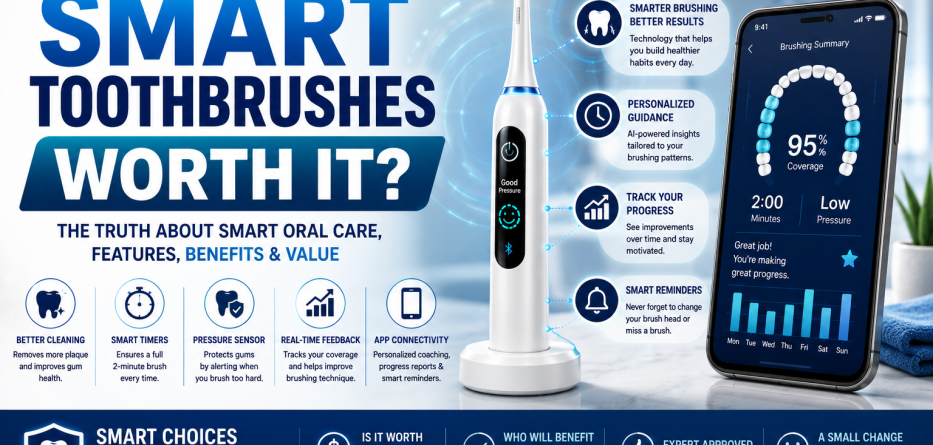
Smart technology has found its way into nearly every aspect of our daily lives—from watches and home security systems to fitness trackers and even toothbrushes. Smart toothbrushes promise to improve oral hygiene by offering real-time feedback, brushing analytics, pressure monitoring, and personalized coaching through smartphone apps.
But are these high-tech dental tools truly worth the investment, or are they simply another gadget with unnecessary features?
The answer depends on your oral health habits, personal goals, and budget. While smart toothbrushes can help many people brush more effectively, they aren’t essential for everyone.
In this guide, we’ll explore how smart toothbrushes work, their advantages and disadvantages, and whether they’re worth buying in 2026.
What Is a Smart Toothbrush?
A smart toothbrush is an electric toothbrush equipped with advanced sensors and Bluetooth technology that connects to a smartphone app.
Unlike traditional toothbrushes, smart toothbrushes can monitor brushing behavior and provide personalized feedback.
Common Features
- Bluetooth connectivity
- Brushing timers
- Pressure sensors
- Position tracking
- AI-powered brushing analysis
- Personalized oral care coaching
- Progress reports
- Brush head replacement reminders
These features are designed to help users develop healthier brushing habits.
How Do Smart Toothbrushes Work?
Smart toothbrushes use motion sensors and artificial intelligence to track brushing activity.
The toothbrush collects data such as the following:
- Brushing duration
- Brushing pressure
- Areas missed
- Frequency of brushing
- Brushing consistency
This information is then displayed in a companion mobile app, helping users improve their technique over time.
Some premium models even provide real-time visual guidance while brushing.
Benefits of Smart Toothbrushes
Better Brushing Habits
Many people believe they brush correctly, but often:
- Miss certain areas
- Brush too hard
- Brush too quickly
Smart toothbrushes help identify these issues and provide immediate feedback.
Improved Plaque Removal
By encouraging proper technique and complete coverage, smart toothbrushes can improve plaque control.
Benefits include:
- Cleaner teeth
- Healthier gums
- Reduced risk of cavities
- Lower risk of gingivitis
Pressure Sensor Protection
One of the most useful features is pressure monitoring.
Brushing too aggressively can cause:
- Gum recession
- Tooth sensitivity
- Enamel wear
Smart toothbrushes alert users when excessive force is detected.
Built-In Two-Minute Timer
Many people brush for less than the dentist-recommended two minutes.
Smart toothbrushes encourage proper brushing time by:
- Tracking duration
- Dividing the mouth into sections
- Notifying users when brushing is complete
Personalized Coaching
Modern smart toothbrush apps can offer the following:
- Daily reports
- Weekly progress tracking
- Customized recommendations
- Oral hygiene goals
This helps users maintain consistency and improve their oral care routines.
Smart Toothbrush vs Electric Toothbrush
| Feature | Smart Toothbrush | Electric Toothbrush |
|---|---|---|
| Bluetooth Connectivity | Yes | No |
| Brushing Reports | Yes | No |
| Pressure Sensors | Usually | Some Models |
| Real-Time Feedback | Yes | No |
| Mobile App Integration | Yes | No |
| Cost | Higher | Lower |
Key Takeaway
The cleaning performance is often similar, but smart toothbrushes offer additional guidance and tracking features.
Are Smart Toothbrushes Better Than Manual Toothbrushes?
Generally, yes.
Electric toothbrushes, including smart models, often provide:
- More consistent brushing motions
- Better plaque removal
- Easier use for individuals with limited dexterity
- Improved brushing habits
However, a manual toothbrush used correctly can still maintain excellent oral health.
Technique remains more important than technology.
Who Benefits Most from a Smart Toothbrush?
Children and Teenagers
Gamification features make brushing more engaging and encourage better habits.
People with Gum Disease
Pressure sensors and brushing analytics help protect sensitive gums.
Orthodontic Patients
Braces make cleaning more challenging.
Smart toothbrushes help ensure complete coverage.
Frequent Dental Problems
People prone to:
- Cavities
- Plaque buildup
- Gingivitis
may benefit from additional brushing guidance.
Technology Enthusiasts
Health-conscious users often enjoy tracking oral hygiene progress.
Potential Drawbacks of Smart Toothbrushes
Higher Cost
Most smart toothbrushes cost significantly more than standard electric models.
App Fatigue
Not everyone wants to open an app every time they brush.
Over-Reliance on Technology
Some users become focused on scores rather than proper oral care habits.
Limited Additional Benefit for Good Brushers
People who already brush properly may see only minor improvements.
What Dentists Say About Smart Toothbrushes
Most dentists view smart toothbrushes as helpful tools—not miracle devices.
Many dental professionals appreciate features such as the following:
- Pressure sensors
- Timers
- Habit tracking
- Coverage monitoring
However, dentists consistently emphasize the following:
“The best toothbrush is the one you use correctly every day.”
Technology supports good habits but cannot replace proper brushing and flossing.
Are Smart Toothbrushes Worth the Money?
They Are Worth It If You
✓ Frequently rush brushing
✓ Have gum sensitivity
✓ Want coaching and feedback
✓ Wear braces
✓ Enjoy health-tracking technology
✓ Need motivation to improve oral hygiene
They May Not Be Worth It If You:
✗ Already maintain excellent oral hygiene
✗ Prefer simplicity
✗ Rarely use health apps
✗ Are on a strict budget
Best Features to Look For
When shopping for a smart toothbrush, prioritize the following:
Essential Features
- Pressure sensor
- Two-minute timer
- Long battery life
- Multiple brushing modes
Premium Features
- AI brushing analysis
- Real-time position tracking
- Personalized coaching
- App integration
Choose the features you’ll actually use rather than paying for unnecessary extras.
Frequently Asked Questions
Do smart toothbrushes really improve oral health?
Yes, especially for people who struggle with brushing technique, consistency, or coverage.
Are smart toothbrushes recommended by dentists?
Many dentists recommend them for patients who need help improving oral hygiene habits.
Can a smart toothbrush prevent cavities?
Not directly. However, better brushing habits can reduce plaque buildup and lower cavity risk.
Is a smart toothbrush worth it for kids?
Yes. Gamification and progress tracking often help children brush more consistently.
How long does a smart toothbrush last?
Most quality models last several years with proper maintenance and regular brush head replacement.
Conclusion
So, are smart toothbrushes worth it?
For many people, the answer is yes. Smart toothbrushes provide valuable feedback, encourage better brushing habits, and help users maintain a healthier oral care routine. Features like pressure sensors, timers, and personalized coaching can make a meaningful difference in long-term oral health.
However, they are not a substitute for proper brushing technique, flossing, and regular dental visits. If you’re motivated by technology and want to improve your brushing habits, a smart toothbrush can be a worthwhile investment in your smile.
