
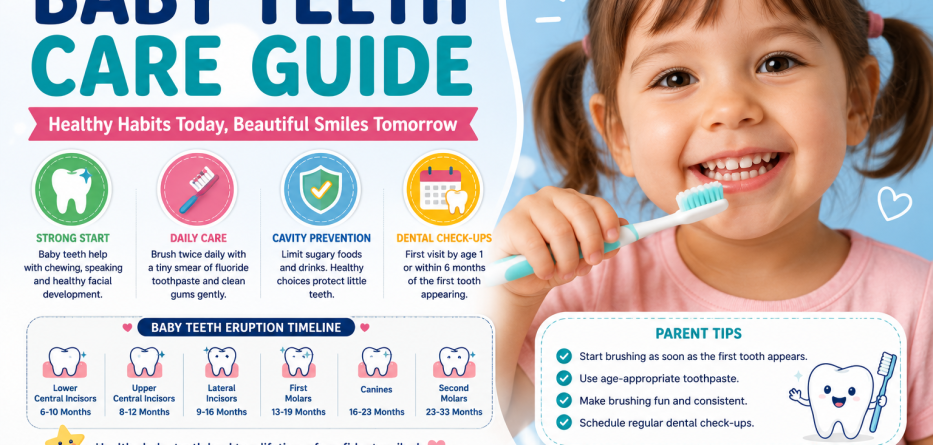
Many parents assume that baby teeth are not important because they eventually fall out. However, primary teeth play a crucial role in a child’s overall oral health, speech development, nutrition, and future smile. Proper baby teeth care helps prevent cavities, supports healthy jaw growth, and creates positive dental habits that can last a lifetime.
According to pediatric dentists, tooth decay is one of the most common childhood health conditions, yet it is largely preventable with proper oral hygiene and regular dental care.
This comprehensive baby teeth care guide covers everything parents need to know—from caring for an infant’s gums to helping older children develop healthy brushing habits.
Why Are Baby Teeth Important?
Baby teeth, also known as primary teeth, serve several essential functions.
They Help Children:
- Chew food properly
- Speak clearly
- Maintain facial structure
- Hold space for permanent teeth
- Develop healthy eating habits
- Build confidence through a healthy smile
Premature loss of baby teeth can lead to alignment problems and orthodontic issues later in life.
When Do Baby Teeth Appear?
Most babies begin teething around 6 months of age, although timing varies.
Typical Baby Teeth Eruption Schedule
| Tooth Type | Approximate Age |
|---|---|
| Lower Central Incisors | 6–10 Months |
| Upper Central Incisors | 8–12 Months |
| Lateral Incisors | 9–16 Months |
| First Molars | 13–19 Months |
| Canines | 16–23 Months |
| Second Molars | 23–33 Months |
Most children have a full set of 20 baby teeth by age 3.
Oral Care Before Teeth Erupt
Good oral hygiene begins before the first tooth appears.
How to Clean Baby Gums
After feedings:
- Use a clean, damp, soft cloth
- Gently wipe gums
- Remove milk residue
- Reduce bacteria buildup
This simple habit helps establish early oral care routines.
How to Care for the First Baby Teeth
Once the first tooth erupts, begin brushing immediately.
Brushing Tips for Infants
Use:
- Soft-bristled infant toothbrush
- Small smear of fluoride toothpaste (grain-of-rice size)
Brush:
- Twice daily
- After the last feeding before bedtime
Early brushing helps prevent baby bottle tooth decay.
Understanding Baby Bottle Tooth Decay
Baby bottle tooth decay occurs when teeth are frequently exposed to sugary liquids.
Common causes include:
- Sleeping with a bottle
- Frequent nighttime feedings
- Juice in bottles
- Sweetened drinks
Prevention Tips
- Avoid putting babies to bed with bottles
- Offer water instead of juice
- Clean teeth after feedings
- Schedule early dental visits
Teething: What Parents Should Expect
Teething can cause temporary discomfort as teeth emerge through the gums.
Common Teething Symptoms
- Irritability
- Excessive drooling
- Gum sensitivity
- Chewing behavior
- Mild sleep disturbances
Safe Teething Relief
- Chilled teething rings
- Gentle gum massage
- Clean, cool washcloths
Avoid teething gels unless specifically recommended by a healthcare professional.
Brushing and Flossing for Toddlers
As more teeth emerge, oral care becomes increasingly important.
Brushing Guidelines
Ages 0–3:
- Rice-sized amount of fluoride toothpaste
Ages 3–6:
- Pea-sized amount of fluoride toothpaste
Parents should supervise brushing until children develop proper technique.
Flossing
Begin flossing when two teeth touch each other.
Daily flossing helps remove plaque from areas toothbrushes cannot reach.
Nutrition and Baby Teeth Health
Diet plays a major role in preventing cavities.
Tooth-Friendly Foods
- Cheese
- Yogurt
- Milk
- Fresh fruits
- Vegetables
- Eggs
- Lean proteins
Foods to Limit
- Candy
- Sticky snacks
- Sugary drinks
- Soda
- Frequent juice consumption
Healthy nutrition supports stronger teeth and gums.
When Should Children Visit the Dentist?
The American Academy of Pediatric Dentistry recommends a child’s first dental visit:
By Age One
Or:
Within Six Months of the First Tooth Erupting
Early dental visits help
- Detect problems early
- Educate parents
- Monitor development
- Prevent cavities
These visits also help children become comfortable with dental care.
Common Baby Teeth Problems
Early Childhood Cavities
Cavities can develop quickly in baby teeth if proper care is neglected.
Tooth Injuries
Falls and accidents may chip or damage baby teeth.
Thumb Sucking
Prolonged thumb sucking can affect tooth alignment and jaw development.
Tooth Grinding
Many children grind their teeth during sleep, often outgrowing the habit naturally.
Regular dental checkups help monitor these concerns.
How to Make Brushing Fun for Kids
Positive experiences encourage lifelong oral hygiene habits.
Ideas for Parents
- Use colorful toothbrushes
- Play brushing songs
- Create reward charts
- Brush together as a family
- Use kid-friendly timers
Making oral care enjoyable improves consistency.
Signs Your Child May Have a Dental Problem
Contact a dentist if you notice:
- White spots on teeth
- Brown or black discoloration
- Tooth sensitivity
- Swollen gums
- Persistent bad breath
- Difficulty chewing
- Tooth pain
Early treatment often prevents more serious problems.
Tips for Lifelong Healthy Smiles
Daily Habits That Matter
- Brush twice daily.
- Floss once daily.
- Limit sugary snacks.
- Drink plenty of water.
- Visit the dentist regularly.
- Use fluoride toothpaste.
- Encourage healthy eating habits.
These habits create a strong foundation for future oral health.
Frequently Asked Questions
When should I start brushing my baby’s teeth?
Begin brushing as soon as the first tooth appears.
How much toothpaste should I use?
Children under age 3 should use a rice-sized amount of fluoride toothpaste.
Are baby teeth really important?
Yes. Baby teeth help with eating, speaking, and guiding permanent teeth into place.
What causes cavities in baby teeth?
Frequent exposure to sugary foods and drinks combined with poor oral hygiene.
When should my child first see a dentist?
By age one or within six months of the first tooth erupting.
Is thumb sucking harmful?
Occasional thumb sucking is normal, but prolonged habits may affect tooth alignment.
Can cavities in baby teeth affect adult teeth?
Yes. Untreated decay can impact developing permanent teeth and overall oral health.
Conclusion
Caring for baby teeth is one of the most important steps parents can take to support their child’s long-term oral health. Healthy primary teeth help children eat, speak, smile, and develop properly while creating a strong foundation for permanent teeth.
By starting oral care early, maintaining healthy habits, and scheduling regular dental visits, parents can help their children enjoy strong, healthy smiles for years to come. A little attention today can prevent significant dental problems in the future.
