
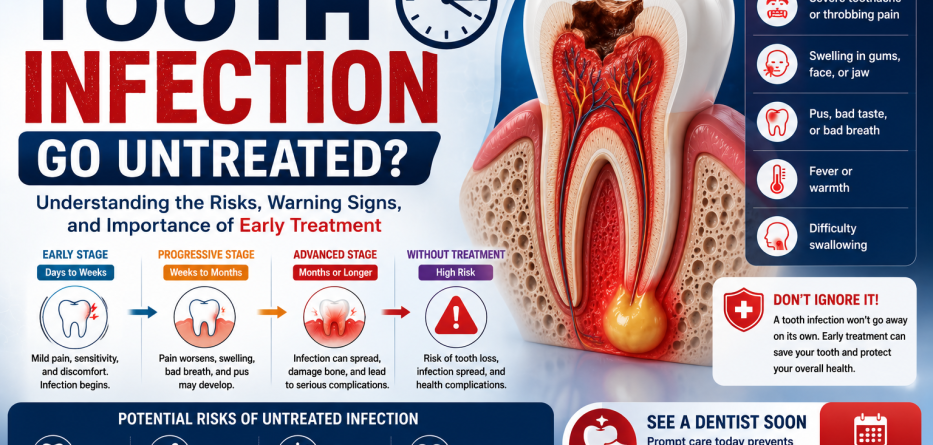
A tooth infection may start as mild discomfort, but it can quickly develop into a serious dental and medical problem if left untreated. Many people delay visiting the dentist because the pain comes and goes, they are busy, or they hope the issue will resolve on its own. Unfortunately, tooth infections rarely heal without professional treatment.
So, how long can a tooth infection go untreated? The answer depends on the severity of the infection, your immune system, and the location of the affected tooth. In some cases, a tooth infection can worsen within days, while in others it may progress over weeks or months. However, delaying treatment significantly increases the risk of complications, including tooth loss, bone damage, and the spread of infection to other parts of the body.
This article explains how tooth infections develop, how long they can remain untreated, warning signs to watch for, and why prompt treatment is essential.
What Is a Tooth Infection?
A tooth infection, also called a dental abscess, occurs when bacteria invade the inner tissues of a tooth or the surrounding gums.
Common causes include:
- Untreated cavities
- Cracked or broken teeth
- Gum disease
- Failed dental restorations
- Dental trauma
When bacteria reach the tooth pulp, an infection develops and may eventually form a pocket of pus known as an abscess.
Can a Tooth Infection Go Away on Its Own?
Quick Answer
No. A tooth infection will not typically go away without professional dental treatment.
While the pain may temporarily decrease if the nerve inside the tooth dies, the infection remains active and can continue spreading.
Without treatment, the infection may affect the following:
- Surrounding teeth
- Jawbone
- Gums
- Sinuses
- Neck tissues
- Bloodstream
This is why dentists recommend immediate evaluation when symptoms appear.
How Long Can a Tooth Infection Go Untreated?
The timeline varies from person to person.
Early Stage (Days to Weeks)
During the early phase, symptoms may include:
- Mild tooth sensitivity
- Intermittent pain
- Discomfort while chewing
At this stage, treatment is often simpler and more successful.
Progressive Stage (Weeks to Months)
As bacteria continue multiplying, symptoms typically worsen.
Common signs include:
- Persistent toothache
- Gum swelling
- Bad breath
- Sensitivity to hot and cold foods
- Facial discomfort
The infection may begin damaging surrounding tissues.
Advanced Stage (Months or Longer)
Without treatment, a severe infection may spread beyond the tooth.
Possible complications include:
- Dental abscess formation
- Bone loss
- Tooth loss
- Facial swelling
- Difficulty swallowing
- Serious systemic infection
At this point, emergency treatment may be required.
Signs That a Tooth Infection Is Getting Worse
Recognizing the warning signs early can help prevent serious complications.
Common Symptoms
- Severe throbbing tooth pain
- Swollen gums
- Redness around the affected tooth
- Pus drainage
- Persistent bad taste in the mouth
- Increased tooth sensitivity
Serious Symptoms
Seek immediate dental or medical attention if you experience:
- Facial swelling
- Fever
- Swollen lymph nodes
- Difficulty swallowing
- Difficulty breathing
- Jaw swelling
These symptoms may indicate that the infection is spreading.
What Happens If a Tooth Infection Is Left Untreated?
Untreated infections can lead to significant oral health problems.
Tooth Loss
As infection destroys supporting tissues, the affected tooth may become unsalvageable.
Bone Damage
The infection can erode the jawbone surrounding the tooth.
Gum Disease Progression
Bacteria can spread into nearby gum tissues and worsen periodontal disease.
Spread of Infection
In severe cases, bacteria may enter the bloodstream and affect other areas of the body.
Although uncommon, advanced dental infections can become life-threatening.
How Fast Can a Tooth Infection Spread?
There is no exact timeline because every case is different.
Factors influencing the speed of spread include:
- Strength of the immune system
- Type of bacteria
- Location of infection
- Overall health
- Presence of underlying medical conditions
In some individuals, significant swelling can develop within a few days.
Risk Factors That Increase Complications
Certain factors may increase the likelihood of severe infection.
Poor Oral Hygiene
Inadequate brushing and flossing allow bacteria to thrive.
Smoking
Smoking weakens the immune response and delays healing.
Diabetes
Uncontrolled diabetes can make infections more difficult to manage.
Weakened Immune System
Patients with immune disorders may experience faster infection progression.
Treatment Options for Tooth Infections
The appropriate treatment depends on the severity of the infection.
Root Canal Therapy
A root canal removes infected tissue while preserving the natural tooth.
Benefits include:
- Pain relief
- Infection removal
- Tooth preservation
Drainage of the Abscess
Dentists may drain accumulated pus to reduce pressure and infection.
Antibiotics
Antibiotics may be prescribed when infection has spread beyond the tooth.
Tooth Extraction
If the tooth cannot be saved, extraction may be necessary.
Early treatment often allows more conservative treatment options.
How to Relieve Tooth Infection Pain Before Seeing a Dentist
While waiting for professional treatment, you may find temporary relief by:
- Rinsing with warm saltwater
- Taking over-the-counter pain relievers
- Applying a cold compress
- Avoiding extremely hot or cold foods
- Keeping the area clean
These measures do not eliminate the infection and should not replace dental care.
How to Prevent Tooth Infections
Prevention is always easier than treatment.
Prevention Tips
- Brush twice daily
- Floss every day
- Schedule regular dental checkups
- Treat cavities early
- Wear a mouthguard during sports
- Avoid excessive sugary foods and drinks
Routine dental care helps identify problems before they become serious infections.
Frequently Asked Questions
Can you live with a tooth infection for years?
Some people may have chronic infections for extended periods, but this is dangerous. Untreated infections can worsen unexpectedly and cause severe complications.
Is a tooth infection a dental emergency?
A tooth infection should be treated promptly. Symptoms such as swelling, fever, difficulty swallowing, or breathing problems require immediate attention.
Will antibiotics cure a tooth infection permanently?
Not usually. Antibiotics may help control the infection temporarily, but definitive treatment such as a root canal or extraction is often necessary.
What are the signs of a tooth abscess?
Common signs include severe pain, swelling, pus drainage, bad taste in the mouth, and facial swelling.
How quickly should I see a dentist for a tooth infection?
As soon as possible. Early treatment reduces the risk of complications and may help save the affected tooth.
Conclusion
So, how long can a tooth infection go untreated?
While a tooth infection may linger for weeks, months, or even longer in some cases, delaying treatment is never safe. What begins as mild discomfort can quickly progress into a serious infection affecting the gums, jawbone, and overall health.
If you notice persistent tooth pain, swelling, sensitivity, or signs of infection, contact your dentist immediately. Prompt treatment can relieve pain, save your tooth, and prevent potentially dangerous complications.
