

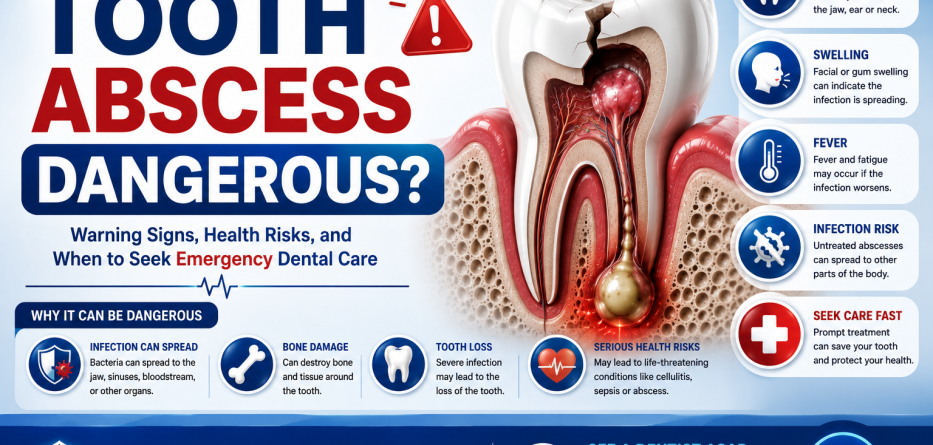
A tooth abscess is more than just a painful dental problem—it can become a serious health concern if left untreated. Many people ignore early symptoms, hoping the pain will go away on its own. Unfortunately, a dental abscess is an infection that typically worsens over time and may spread to other parts of the body.
Understanding the dangers of a tooth abscess, recognizing the warning signs, and seeking prompt treatment can help prevent serious complications. In this guide, we’ll explain what a tooth abscess is, why it can be dangerous, and what you should do if you suspect you have one.
What Is a Tooth Abscess?
A tooth abscess is a pocket of pus caused by a bacterial infection. It can develop in different areas of the tooth or surrounding gum tissue.
Types of Tooth Abscesses
Periapical Abscess
Forms at the tip of a tooth root and is usually caused by untreated tooth decay or trauma.
Periodontal Abscess
Occurs in the gums next to the tooth, often due to advanced gum disease.
Gingival Abscess
Develops in the gum tissue without affecting the tooth root.
Regardless of the type, all dental abscesses require professional treatment.
Is a Tooth Abscess Dangerous?
Quick Answer
Yes. A tooth abscess can be dangerous if left untreated.
Although the infection starts in the mouth, it can spread to nearby tissues, the jawbone, sinuses, and, in severe cases, other parts of the body. This can lead to serious health complications that may require emergency medical treatment.
The sooner an abscess is diagnosed and treated, the lower the risk of complications.
What Causes a Tooth Abscess?
Several dental problems can lead to an abscess.
Common Causes
- Untreated cavities
- Cracked or broken teeth
- Severe gum disease
- Failed dental work
- Poor oral hygiene
- Trauma to the tooth
When bacteria enter the inner pulp of the tooth, infection can develop and spread.
Signs and Symptoms of a Tooth Abscess
Recognizing the symptoms early can help prevent complications.
Common Symptoms
- Severe, throbbing toothache
- Persistent pain that radiates to the jaw, ear, or neck
- Swollen gums
- Facial swelling
- Sensitivity to hot and cold foods
- Pain when chewing
- Bad taste in the mouth
- Bad breath
- Fever
- Swollen lymph nodes
Symptoms may worsen rapidly if the infection spreads.
Why Is a Tooth Abscess Dangerous?
1. Infection Can Spread
One of the biggest risks is that the infection may spread beyond the tooth.
The bacteria can move into the following:
- Surrounding gum tissue
- Jawbone
- Facial tissues
- Sinuses
- Bloodstream
This can create serious health complications.
2. Bone Loss Around the Tooth
An untreated abscess can destroy the bone supporting the tooth.
Potential consequences include the following:
- Loose teeth
- Bone deterioration
- Increased risk of tooth loss
Prompt treatment helps preserve both the tooth and surrounding structures.
3. Tooth Loss
If the infection severely damages the tooth and supporting tissues, extraction may become necessary.
Early treatment increases the likelihood of saving the tooth through procedures such as root canal therapy.
4. Facial Swelling and Cellulitis
The infection may spread into the soft tissues of the face and neck.
This can cause:
- Significant swelling
- Pain
- Difficulty opening the mouth
- Difficulty swallowing
Cellulitis is a serious bacterial infection that requires immediate treatment.
5. Life-Threatening Complications
Although rare, severe untreated dental abscesses can lead to serious systemic infections.
Potential complications include the following:
- Sepsis
- Brain abscess
- Respiratory complications
- Heart infections
These conditions can become medical emergencies.
Warning Signs That Require Immediate Care
Seek emergency dental or medical attention if you experience:
- Difficulty breathing
- Difficulty swallowing
- Rapidly increasing swelling
- Fever above 101°F (38.3°C)
- Severe facial swelling
- Swelling affecting the eye area
- Signs of dehydration
These symptoms may indicate the infection is spreading.
How Is a Tooth Abscess Diagnosed?
A dentist typically diagnoses an abscess through the following:
Clinical Examination
Checking for swelling, tenderness, and visible signs of infection.
Dental X-Rays
X-rays help identify:
- Infection location
- Bone loss
- Root damage
- Spread of infection
Advanced imaging may be used in more severe cases.
Treatment Options for a Tooth Abscess
The goal of treatment is to eliminate the infection and preserve oral health.
Drainage of the Abscess
The dentist may create a small opening to release pus and reduce pressure.
Root Canal Treatment
If the tooth can be saved, root canal therapy removes infected tissue and seals the tooth.
Tooth Extraction
If damage is extensive, extraction may be necessary.
Antibiotics
Antibiotics may be prescribed when:
- Infection has spread
- Swelling is severe
- The immune system is compromised
Antibiotics alone do not cure a tooth abscess and should not replace dental treatment.
What to Do If You Suspect a Tooth Abscess
While waiting to see a dentist:
Do
- Rinse with warm saltwater
- Stay hydrated
- Take recommended pain relievers
- Contact a dentist immediately
Don’t
- Ignore symptoms
- Apply aspirin directly to the gums
- Attempt to drain the abscess yourself
- Delay professional treatment
Quick action can prevent serious complications.
Can a Tooth Abscess Go Away on Its Own?
No.
While the pain may temporarily decrease if the abscess ruptures, the infection remains present and can continue spreading.
Without professional treatment, the infection is unlikely to resolve completely.
How to Prevent a Tooth Abscess
Preventive care significantly reduces the risk of dental infections.
Prevention Tips
- Brush twice daily
- Floss every day
- Schedule regular dental checkups
- Treat cavities early
- Wear a mouthguard during sports
- Avoid excessive sugary foods and drinks
- Address gum disease promptly
Good oral hygiene remains the best defense against abscess formation.
Frequently Asked Questions
Is a tooth abscess an emergency?
Yes. While not every abscess requires an emergency room visit, it should be treated by a dentist as soon as possible.
Can a tooth abscess make you sick?
Yes. Fever, fatigue, swelling, and general illness can occur when the infection spreads.
How long can a tooth abscess go untreated?
There is no safe timeline. Complications can develop within days or weeks depending on the severity of the infection.
Can antibiotics cure a tooth abscess?
Antibiotics help control infection but usually do not eliminate the source. Dental treatment is typically required.
When should I go to the emergency room?
Seek emergency care if you have severe swelling, breathing difficulty, swallowing problems, or signs of systemic infection.
Conclusion
So, is a tooth abscess dangerous?
Absolutely. While it may begin as a localized dental infection, a tooth abscess has the potential to spread and cause serious health complications if left untreated. Recognizing the symptoms early and seeking prompt dental care can prevent tooth loss, bone damage, and potentially life-threatening infections.
If you suspect you have a tooth abscess, don’t wait. Early diagnosis and treatment are the key to protecting both your oral health and your overall well-being.

