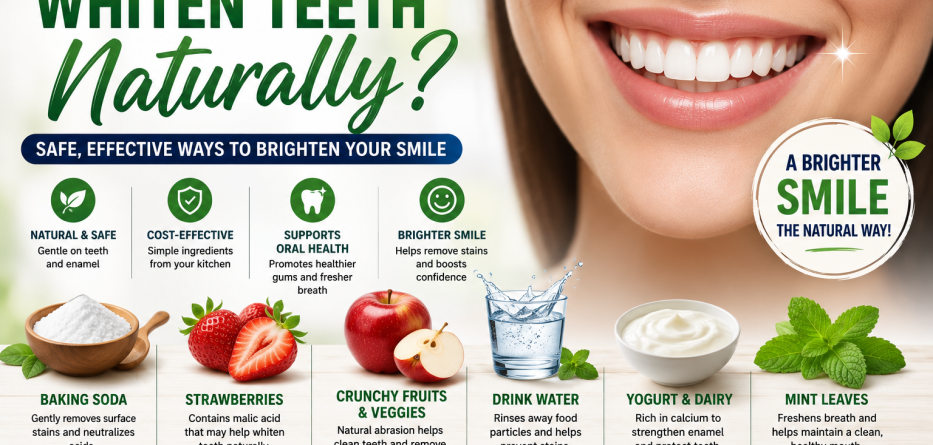
A bright, white smile is often associated with confidence, good health, and excellent oral hygiene. While professional teeth whitening treatments can deliver fast results, many people look for natural ways to improve the appearance of their teeth at home. This raises a common question: How can you whiten teeth naturally?
Natural teeth whitening methods may help reduce surface stains and support overall oral health when used correctly. However, it’s important to understand which methods are safe, which are backed by evidence, and which could potentially harm your teeth.
In this guide, we’ll explore natural teeth whitening techniques, foods that help maintain a brighter smile, habits to avoid, and when professional treatment may be necessary.
What Causes Teeth to Become Yellow?
Before discussing whitening methods, it’s important to understand why teeth become discolored.
Common causes include:
- Coffee and tea
- Red wine
- Tobacco use
- Poor oral hygiene
- Aging
- Certain medications
- Dark-colored foods and beverages
There are two main types of stains:
Extrinsic Stains
These occur on the outer enamel surface and are often caused by food, drinks, and smoking.
Intrinsic Stains
These develop inside the tooth and are more difficult to remove naturally.
Natural whitening methods work best for mild surface stains.
Can Teeth Be Whitened Naturally?
Quick Answer
Yes, natural methods can help reduce surface stains and improve the brightness of your smile. However, they generally cannot change the natural color of your teeth as dramatically as professional whitening treatments.
The best approach combines healthy habits, proper oral hygiene, and stain prevention.
1. Maintain Excellent Oral Hygiene
The simplest and most effective natural whitening strategy is good oral hygiene.
Daily Habits
- Brush twice daily
- Floss every day
- Clean your tongue
- Use fluoride toothpaste
- Visit your dentist regularly
Removing plaque and surface stains can make teeth appear noticeably brighter.
2. Brush with Baking Soda (Occasionally)
Baking soda is a mild abrasive that may help remove surface stains.
Potential Benefits
- Gently polishes enamel
- Removes superficial discoloration
- Helps neutralize acids
Important Note
Use baking soda sparingly. Excessive scrubbing may wear down enamel over time.
3. Eat Crunchy Fruits and Vegetables
Certain foods can help naturally clean teeth while you chew.
Examples include:
- Apples
- Carrots
- Celery
- Cucumbers
- Pears
These foods stimulate saliva production and help remove plaque buildup.
Benefits
- Natural cleaning action
- Increased saliva flow
- Reduced bacterial accumulation
4. Increase Saliva Production
Saliva is one of the body’s natural defenses against stains and tooth decay.
Saliva helps:
- Wash away food particles
- Neutralize acids
- Protect enamel
- Reduce staining
Ways to Increase Saliva
- Drink plenty of water
- Chew sugar-free gum
- Eat fibrous fruits and vegetables
5. Drink More Water
Water helps rinse away pigments and staining substances before they settle on enamel.
Best Practice
Drink water after consuming:
- Coffee
- Tea
- Wine
- Soda
- Dark-colored foods
This simple habit can significantly reduce staining over time.
6. Consume Calcium-Rich Foods
Strong enamel reflects light more effectively, making teeth appear brighter.
Foods rich in calcium include:
- Milk
- Yogurt
- Cheese
- Leafy greens
- Almonds
Calcium supports enamel health and helps maintain a healthy smile.
7. Eat Strawberries in Moderation
Strawberries contain malic acid, which may help reduce surface discoloration.
While they can contribute to a brighter appearance, they should not replace regular brushing and professional dental care.
Important
Rinse your mouth with water afterward because strawberries are acidic and can affect enamel.
8. Limit Staining Foods and Drinks
Preventing stains is often more effective than removing them.
Common Staining Foods
- Coffee
- Black tea
- Red wine
- Cola
- Soy sauce
- Berries
Tips
- Use a straw when possible
- Rinse with water after consumption
- Brush 30 minutes later
9. Quit Smoking
Tobacco is one of the leading causes of yellow and brown tooth stains.
Benefits of quitting include:
- Whiter teeth
- Healthier gums
- Fresher breath
- Reduced risk of oral disease
Smoking cessation improves both oral and overall health.
10. Use Whitening Toothpaste
While not completely natural, whitening toothpastes can help remove surface stains safely.
Look for products approved by dental organizations.
Benefits include:
- Surface stain removal
- Improved brightness
- Daily maintenance
Results are usually gradual.
Natural Teeth Whitening Methods to Avoid
Not all internet remedies are safe.
Lemon Juice
Highly acidic and can erode enamel.
Activated Charcoal
Limited evidence supports its effectiveness, and excessive use may damage enamel.
Hydrogen Peroxide Overuse
Improper use can irritate gums and increase tooth sensitivity.
Excessive Abrasive Scrubbing
Can permanently wear away enamel.
Always prioritize enamel protection over aggressive whitening.
Foods That Help Maintain White Teeth
| Food | Benefit |
|---|---|
| Apples | Natural cleaning action |
| Carrots | Increased saliva production |
| Celery | Helps remove debris |
| Cheese | Supports enamel health |
| Yogurt | Provides calcium |
| Leafy Greens | Rich in minerals |
| Water | Rinses away stains |
Including these foods regularly may support a brighter smile.
When Natural Whitening Isn’t Enough
Natural whitening methods work best for mild discoloration.
Professional treatment may be more appropriate for:
- Deep intrinsic stains
- Severe discoloration
- Tetracycline staining
- Aging-related discoloration
Dentists can provide:
- Professional whitening
- Custom whitening trays
- Veneers
- Bonding
These options offer more dramatic results.
Frequently Asked Questions
Can baking soda whiten teeth naturally?
Yes, baking soda may help remove surface stains when used occasionally and correctly.
How long does natural teeth whitening take?
Results vary, but noticeable improvements may take several weeks or months.
Is lemon juice good for whitening teeth?
No. Lemon juice is acidic and may damage enamel.
What foods naturally clean teeth?
Crunchy fruits and vegetables such as apples, carrots, and celery can help remove surface debris.
Can yellow teeth become white again naturally?
Mild surface stains may improve naturally, but deep discoloration often requires professional treatment.
Is charcoal toothpaste effective?
Evidence is limited, and excessive use may damage enamel.
Conclusion
If you’re wondering how to whiten teeth naturally, the most effective approach involves maintaining excellent oral hygiene, eating a tooth-friendly diet, drinking plenty of water, and avoiding staining habits like smoking. While natural methods can help reduce surface stains and improve the appearance of your smile, they generally provide gradual results compared to professional whitening treatments.
For the healthiest and brightest smile, focus on protecting your enamel while adopting safe whitening practices. If discoloration persists, consult your dentist to explore professional whitening options tailored to your needs.